
What Is TDS in Water?
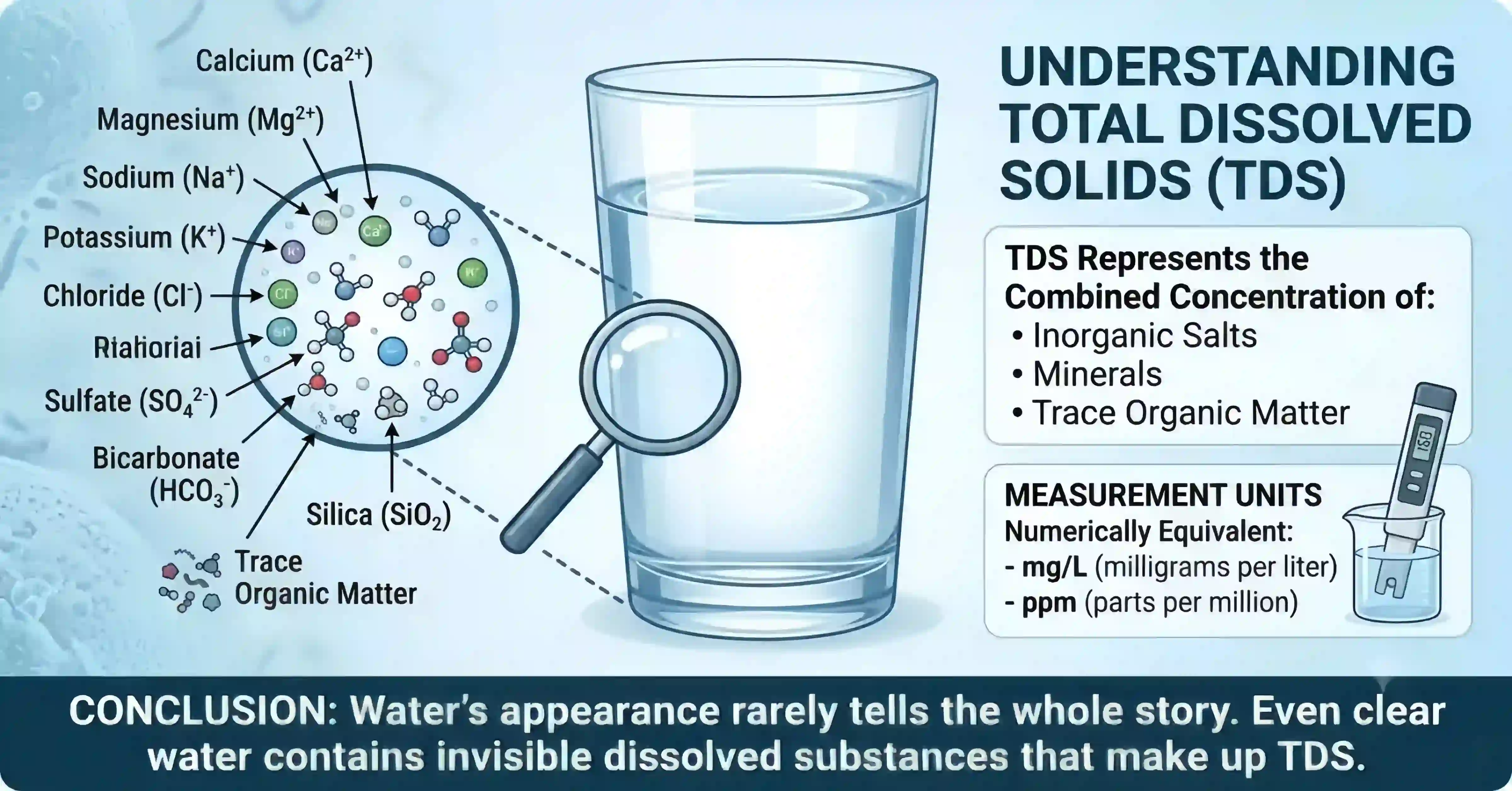
Water may appear crystal clear, but its appearance rarely tells the whole story. Every glass of water contains naturally occurring substances that are invisible to the naked eye. These dissolved substances collectively make up what is known as Total Dissolved Solids (TDS).
TDS represents the combined concentration of inorganic salts, minerals, and trace amounts of organic matter dissolved in water. These substances are measured in milligrams per liter (mg/L) or parts per million (ppm), two units that are numerically equivalent for practical water quality testing.
Common dissolved substances include:
- Calcium
- Magnesium
- Sodium
- Potassium
- Chloride
- Sulfate
- Bicarbonate
- Silica
- Small quantities of organic compounds
Some of these minerals are naturally beneficial and contribute to the taste of drinking water, while others may originate from industrial activities, aging pipelines, agricultural runoff, or seawater intrusion. Understanding the source of these dissolved solids is just as important as knowing their concentration.
Rather than indicating one specific contaminant, TDS serves as an overall indicator of how much material is dissolved in the water. It is one of the quickest ways to gain a general understanding of water quality, although it should never be used as the only measure of water safety.
Why Does TDS Matter?
Many people assume that higher TDS automatically means poor-quality water or that lower TDS always indicates healthier water. In reality, neither assumption is entirely accurate.
TDS influences several aspects of water, including:
- Taste and mouthfeel
- Appliance performance
- Scaling inside pipes and heating equipment
- Efficiency of water treatment systems
- Suitability for specialized industrial applications
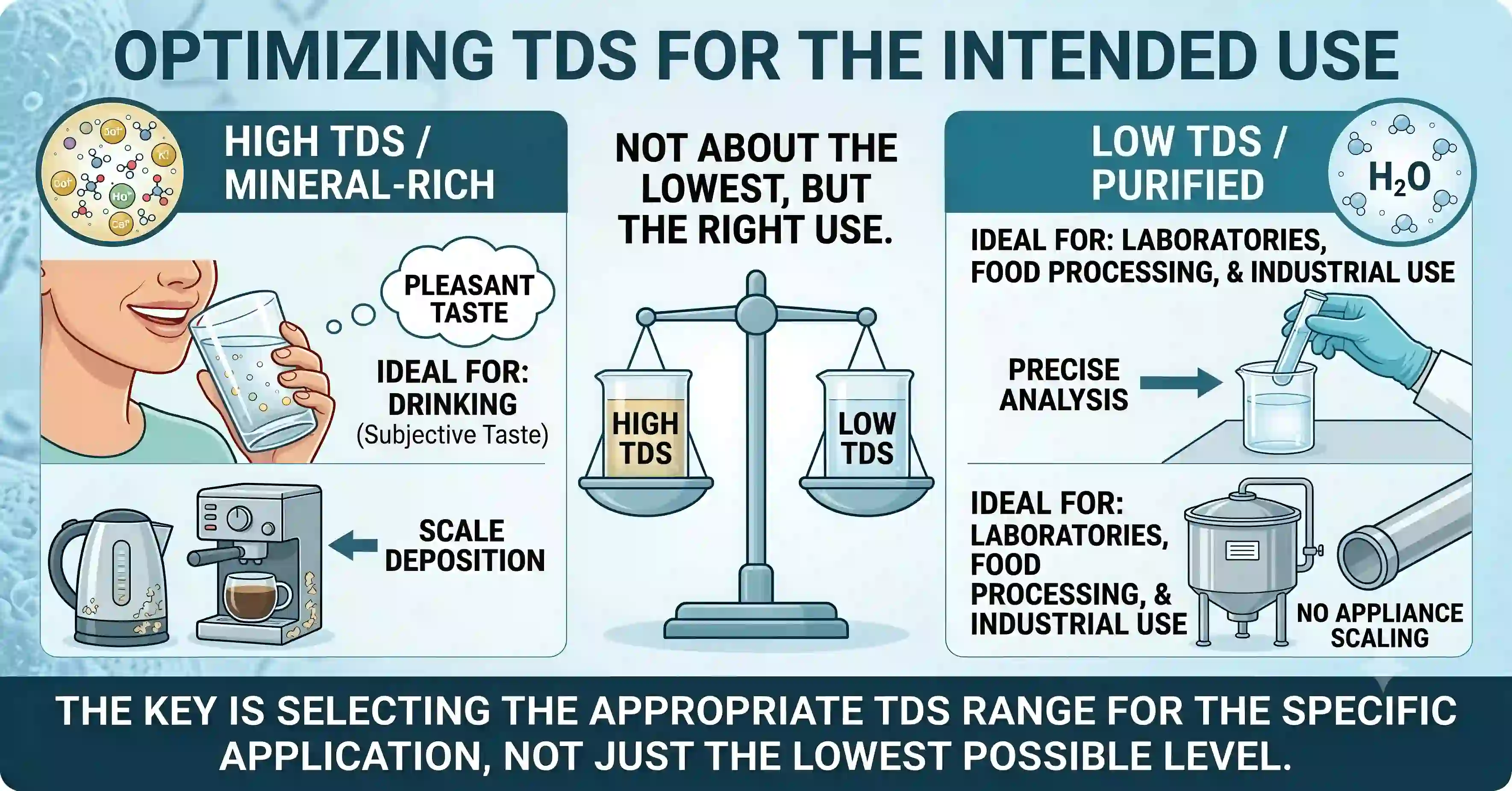
For example, water rich in calcium and magnesium often has a pleasant mineral taste but may also leave scale deposits inside kettles and coffee machines. Conversely, reverse osmosis water typically has very low TDS, making it ideal for laboratories, food processing, and many commercial applications.
The key is not simply achieving the lowest possible TDS, but selecting the appropriate range for the intended use.
What Is Included in TDS?
The following table summarizes the most common dissolved substances found in natural water.
| Dissolved Substance | Typical Source | Effect on Water |
|---|---|---|
| Calcium | Limestone, groundwater | Increases hardness and scale formation |
| Magnesium | Natural rock formations | Contributes to hardness and taste |
| Sodium | Salt deposits, seawater intrusion | Affects flavor at high concentrations |
| Potassium | Soil minerals | Usually present in small amounts |
| Chloride | Road salt, seawater, industrial discharge | Produces salty taste when elevated |
| Sulfate | Gypsum, industrial waste | May create bitter taste at high levels |
| Bicarbonate | Carbon dioxide dissolved in groundwater | Buffers pH and affects alkalinity |
| Silica | Sand and rocks | Forms deposits in boilers and industrial equipment |
TDS Is Not the Same as Water Purity
One of the most common misconceptions is that TDS alone determines whether water is safe to drink.
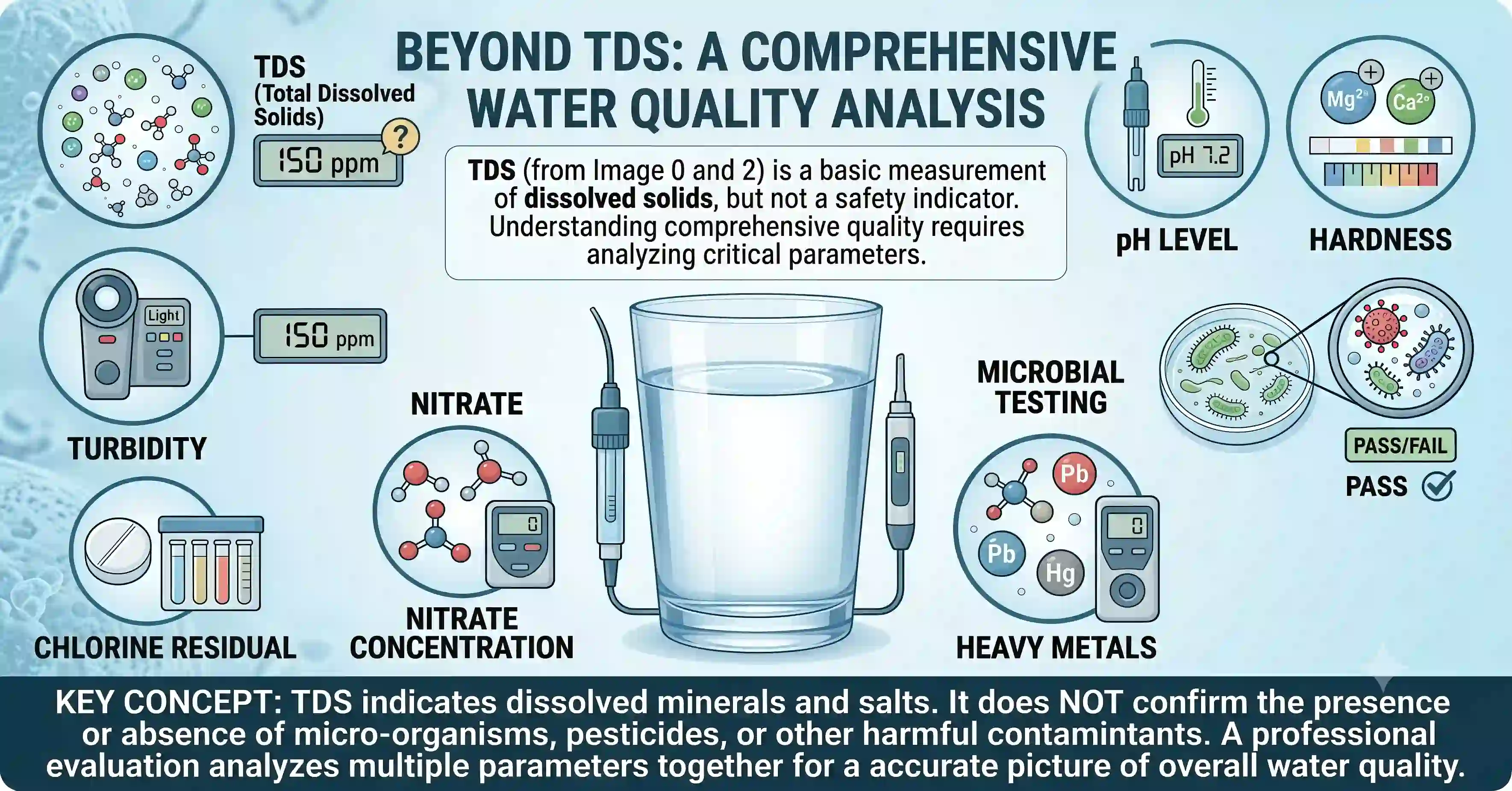
A low TDS reading simply means there are fewer dissolved ions in the water. It does not confirm the absence of microorganisms, viruses, pesticides, pharmaceuticals, or other contaminants that may be harmful to human health.
Similarly, a higher TDS value does not necessarily indicate unsafe water. Many mineral-rich spring waters naturally contain elevated levels of calcium and magnesium while remaining perfectly suitable for consumption.
Because of these limitations, professional water quality evaluations typically combine TDS testing with additional analyses such as:
- pH
- Hardness
- Microbial testing
- Heavy metal analysis
- Nitrate concentration
- Chlorine residual
- Turbidity
Looking at these parameters together provides a much more accurate picture of overall water quality.
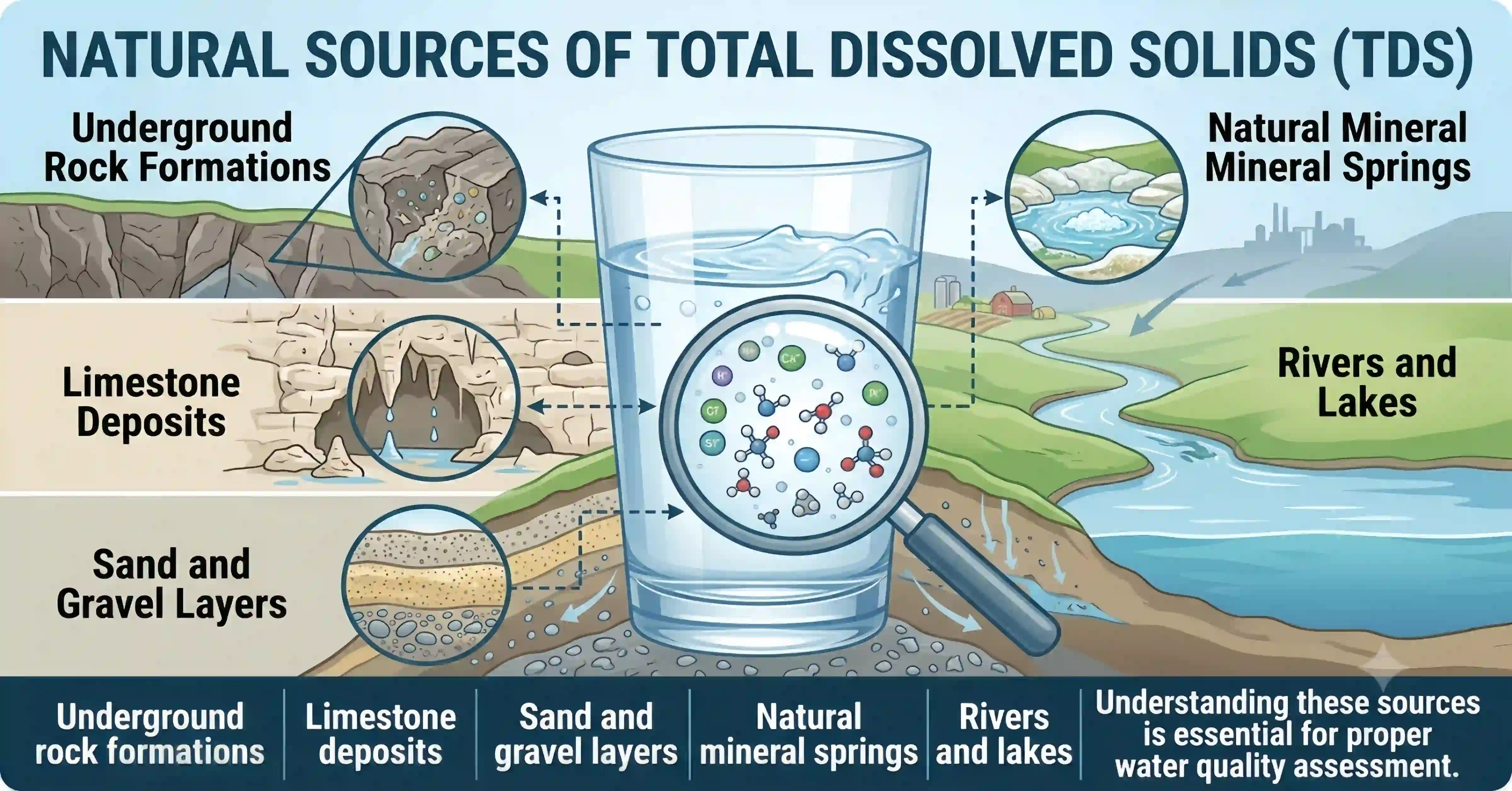
Where Does TDS Come From?
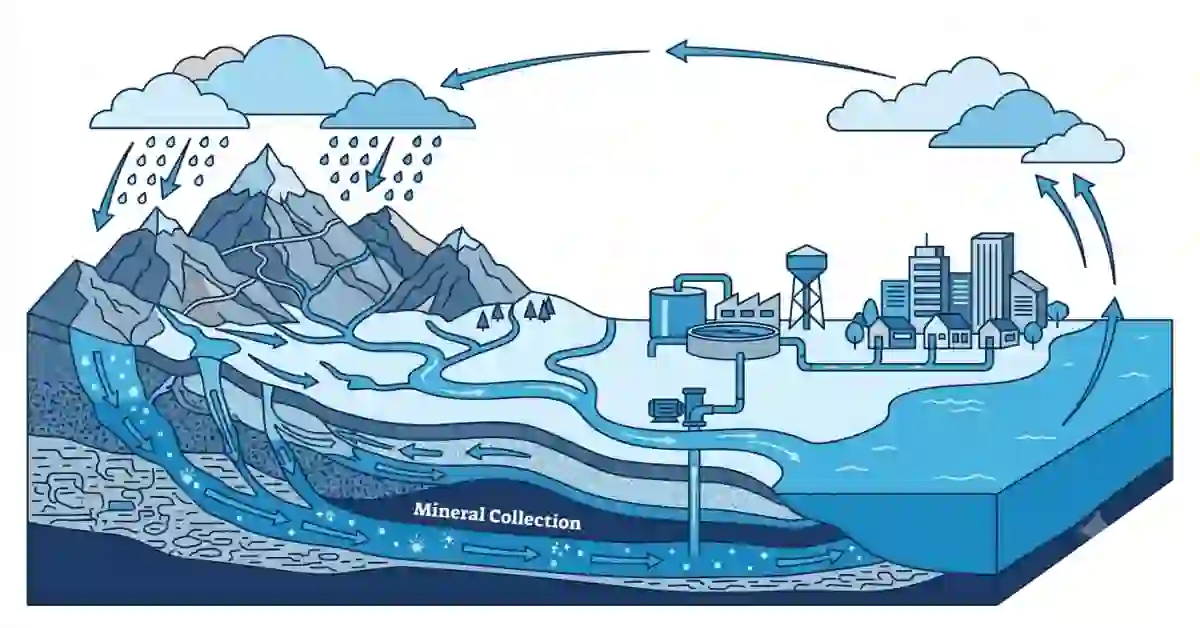
Every drop of water follows a natural journey through the environment before reaching homes, businesses, or industrial facilities. Along this path, it dissolves minerals and other substances from the materials it encounters.
Major natural sources include:
- Underground rock formations
- Limestone deposits
- Sand and gravel layers
- Natural mineral springs
- Rivers and lakes
Human activities can also significantly increase dissolved solids in water supplies. Industrial wastewater, agricultural fertilizers, urban runoff, and deteriorating distribution systems may all contribute additional dissolved substances.
Understanding these sources helps determine whether a specific TDS level is expected for a region or whether further water treatment is advisable.
Learn how modern reverse osmosis water purification systems remove dissolved solids while improving drinking water quality.
Why Water Naturally Contains Dissolved Solids
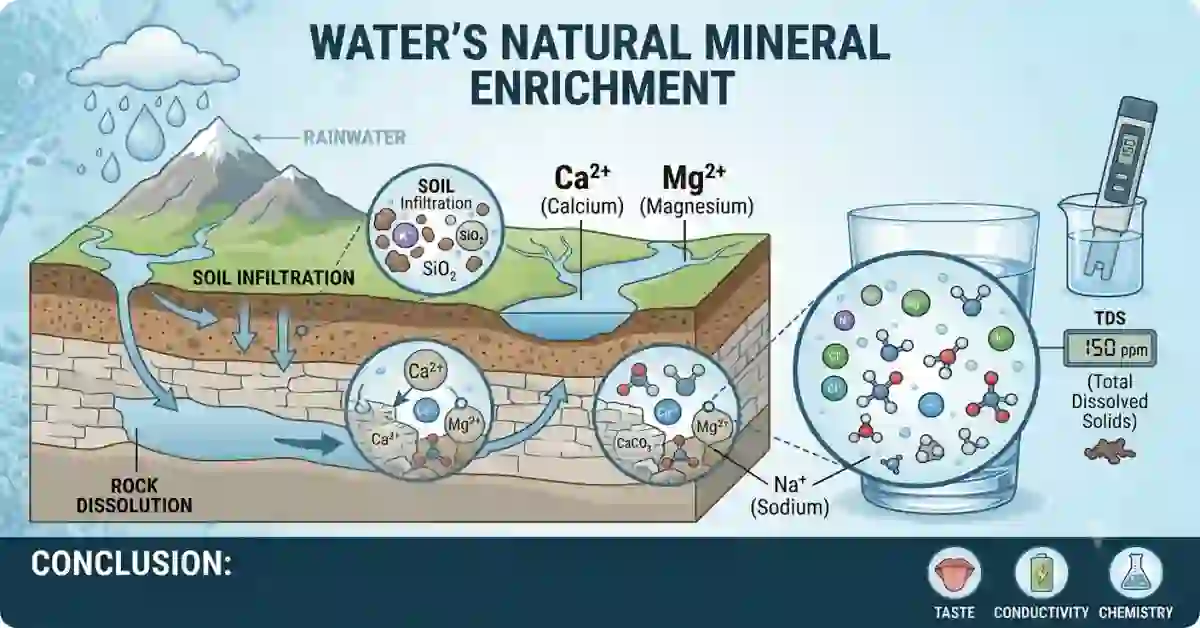
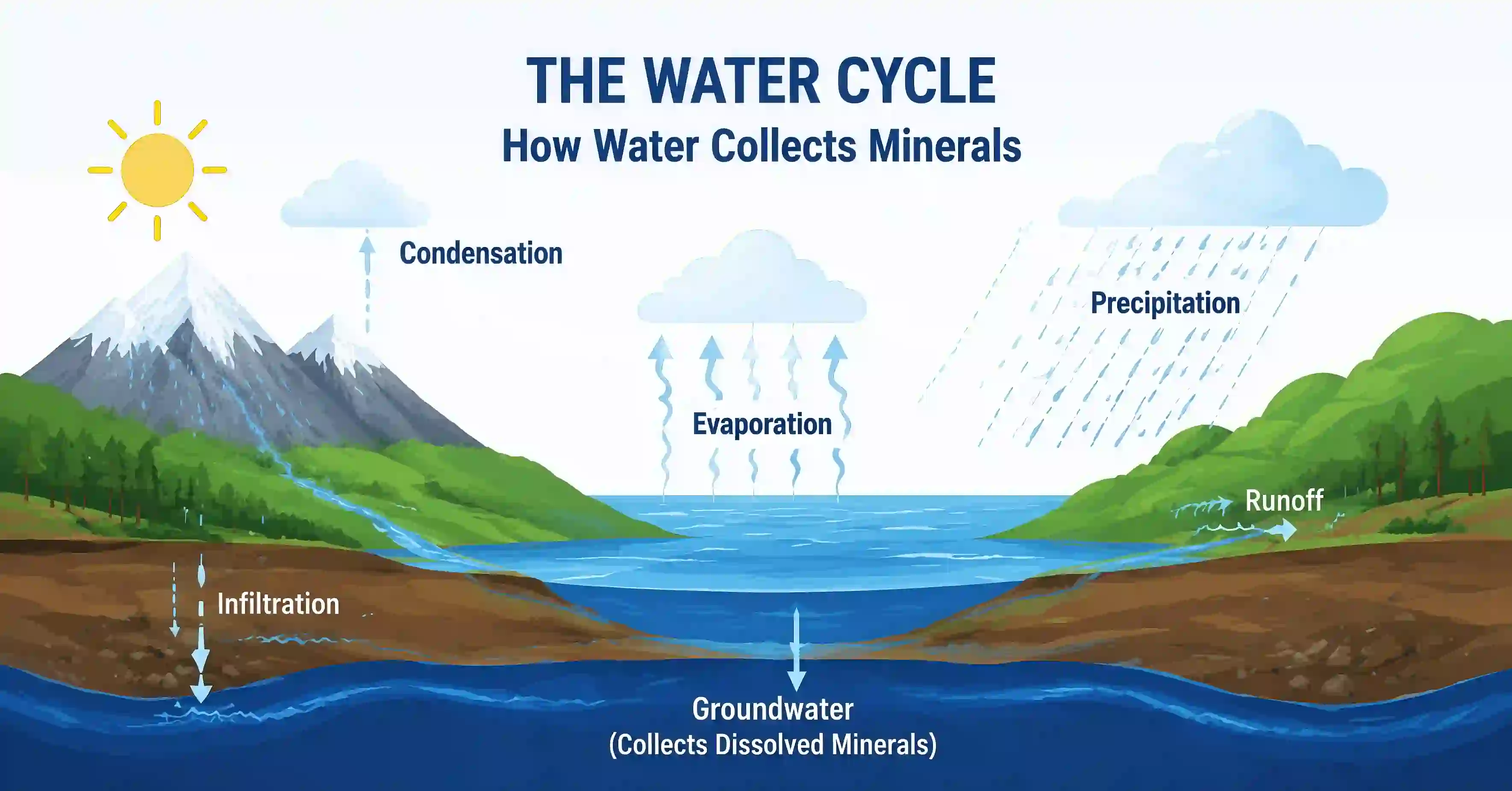
Pure H₂O rarely exists in nature. From the moment rainwater falls through the atmosphere and reaches the ground, it begins interacting with its surroundings. As water travels through soil, rock layers, rivers, and underground aquifers, it gradually dissolves tiny amounts of naturally occurring minerals and salts.
This process is completely normal and plays an essential role in the Earth's water cycle. The resulting dissolved solids contribute to water's taste, mineral composition, and conductivity.
The exact TDS level of a water source depends on several environmental factors, including:
- Geological formations
- Climate and rainfall
- Groundwater residence time
- Seasonal changes
- Human activities near the water source
For example, water flowing through limestone-rich regions often contains higher concentrations of calcium and magnesium, while coastal groundwater may have elevated sodium and chloride due to seawater intrusion.
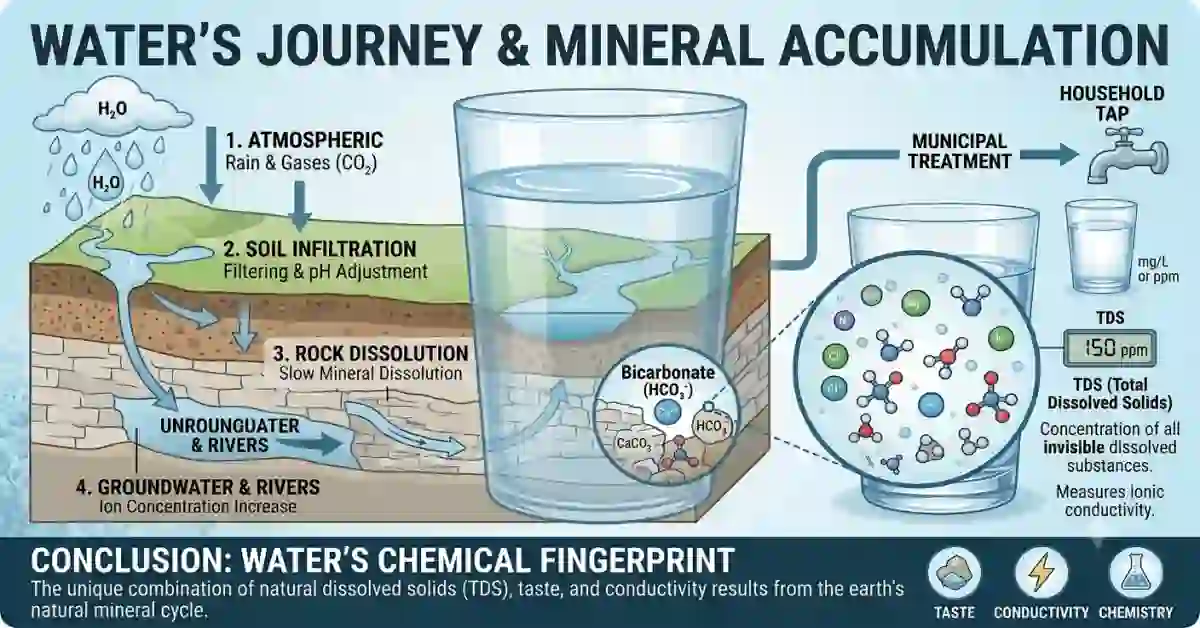
The Natural Journey of Water
Every water source has its own chemical fingerprint. Even two neighboring cities may have noticeably different TDS levels because the surrounding geology differs.
The typical journey looks like this:
- Rainwater absorbs small amounts of gases from the atmosphere.
- Water infiltrates soil and dissolves naturally occurring minerals.
- Groundwater continues moving through layers of rock, increasing mineral content over time.
- Rivers and reservoirs collect additional dissolved substances from tributaries.
- Municipal treatment removes many contaminants, but beneficial minerals often remain.
By the time water reaches a household tap, it usually contains dozens of dissolved ions that are naturally present in the environment.
Common Sources of High TDS
Not all dissolved solids come from natural processes. Modern infrastructure, agriculture, and industrial development can also contribute to elevated TDS levels.
The table below compares the most common natural and human-related sources.
| Source | Natural or Human-Made | Typical Dissolved Components | Potential Impact |
|---|---|---|---|
| Limestone formations | Natural | Calcium, magnesium | Hard water, scale formation |
| Granite and sandstone | Natural | Silica, trace minerals | Moderate mineral content |
| Seawater intrusion | Natural | Sodium, chloride | Salty taste, corrosion |
| Agricultural runoff | Human-made | Nitrates, phosphates | Reduced water quality |
| Industrial discharge | Human-made | Various dissolved salts and chemicals | Requires advanced treatment |
| Aging pipelines | Human-made | Iron, copper, zinc | Metallic taste and discoloration |
| Road de-icing salts | Human-made | Sodium chloride | Seasonal TDS increase |
Natural minerals generally contribute to water quality without posing health concerns at typical concentrations. However, excessive dissolved solids from pollution or infrastructure issues should be investigated and addressed.
How Human Activities Affect TDS
Urbanization has introduced new challenges to maintaining water quality. Activities such as agriculture, mining, manufacturing, and road maintenance can significantly alter the mineral balance of nearby water sources.
Some examples include:
- Agricultural irrigation may wash fertilizers and dissolved nutrients into rivers and groundwater.
- Industrial facilities can release wastewater containing dissolved inorganic compounds if not properly treated.
- Mining operations often expose mineral-rich rocks, increasing the concentration of dissolved metals.
- Corroded plumbing systems may introduce iron, copper, or other metals into household water.
These sources do not always make water unsafe, but they can change its chemical composition and may require additional filtration depending on local regulations and intended use.
Does High TDS Always Mean Unsafe Water?
One of the most frequently asked questions about water quality is whether a high TDS reading automatically indicates unsafe drinking water.
The answer is no.
TDS measures the quantity of dissolved substances—not their quality.
Imagine two glasses of water:
- Glass A contains 350 ppm of naturally occurring calcium and magnesium.
- Glass B contains 350 ppm consisting largely of sodium from seawater intrusion.
Both have the same TDS reading, yet their taste, mineral balance, and suitability for drinking are quite different.
This example highlights why TDS should always be interpreted alongside additional water quality parameters.
Low TDS Is Not Always Better
Similarly, extremely low TDS is not necessarily the ideal goal for every application.
Reverse osmosis systems, deionization units, and distillation equipment can reduce TDS to very low levels. While this is advantageous for laboratories, medical equipment, semiconductor manufacturing, and certain commercial processes, many consumers prefer drinking water that retains a moderate level of naturally occurring minerals for taste.
The "best" TDS level depends on how the water will be used.
Recommended TDS Levels for Different Applications
| Application | Recommended TDS (ppm) | Notes |
|---|---|---|
| Laboratory research | 0–10 | Ultra-pure water required |
| Pharmaceutical production | 0–10 | Strict purity standards |
| Steam boilers | Below 20 | Reduces scaling |
| Reverse osmosis drinking water | 10–80 | Common household RO range |
| Premium bottled water | 50–150 | Balanced mineral taste |
| General household drinking water | 100–300 | Pleasant taste for most consumers |
| Coffee brewing | 75–150 | Supports flavor extraction |
| Food processing | Varies by process | Depends on product requirements |
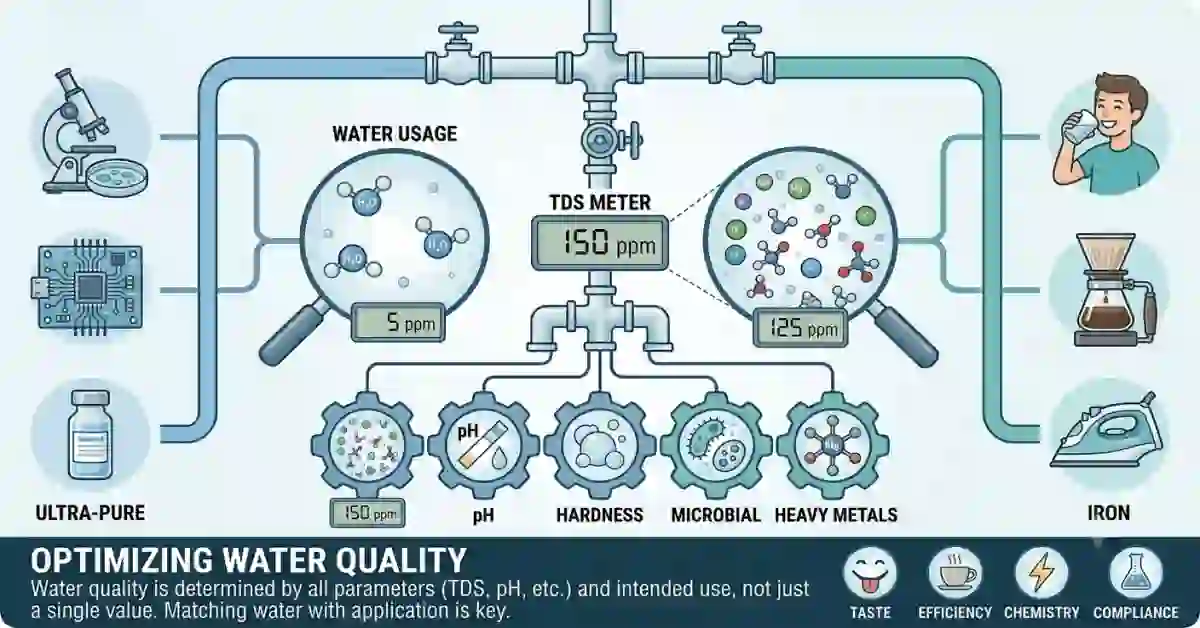
Rather than pursuing the lowest possible number, the objective is to match water quality with the intended application.
Why TDS Should Be Considered Alongside Other Water Tests
A comprehensive water quality assessment typically includes several complementary measurements:
- TDS indicates the total concentration of dissolved ions.
- pH measures acidity or alkalinity.
- Hardness reflects calcium and magnesium content.
- Microbiological testing identifies bacteria and other pathogens.
- Heavy metal analysis detects contaminants such as lead, arsenic, or mercury.
- Residual chlorine confirms the effectiveness of municipal disinfection.
Using these tests together provides a far more accurate understanding of water quality than relying on any single parameter.
Discover how a commercial reverse osmosis water system can reduce dissolved solids while delivering consistent, high-quality purified water for residential, commercial, and industrial applications.
Measuring TDS Accurately and Understanding What the Numbers Mean
How Is TDS Measured?
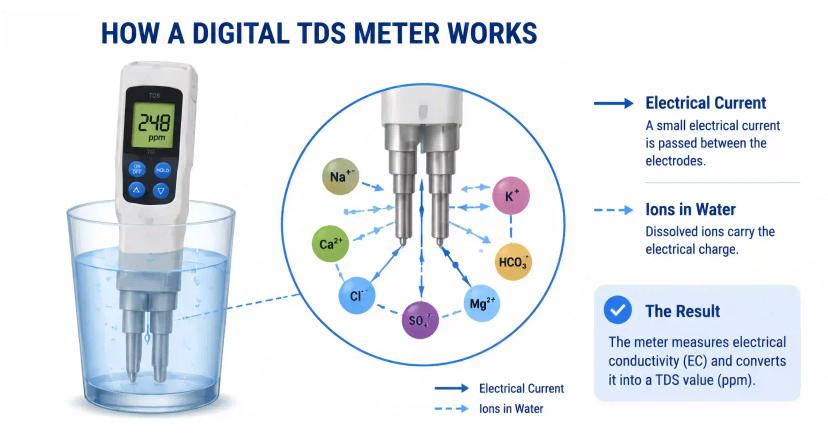
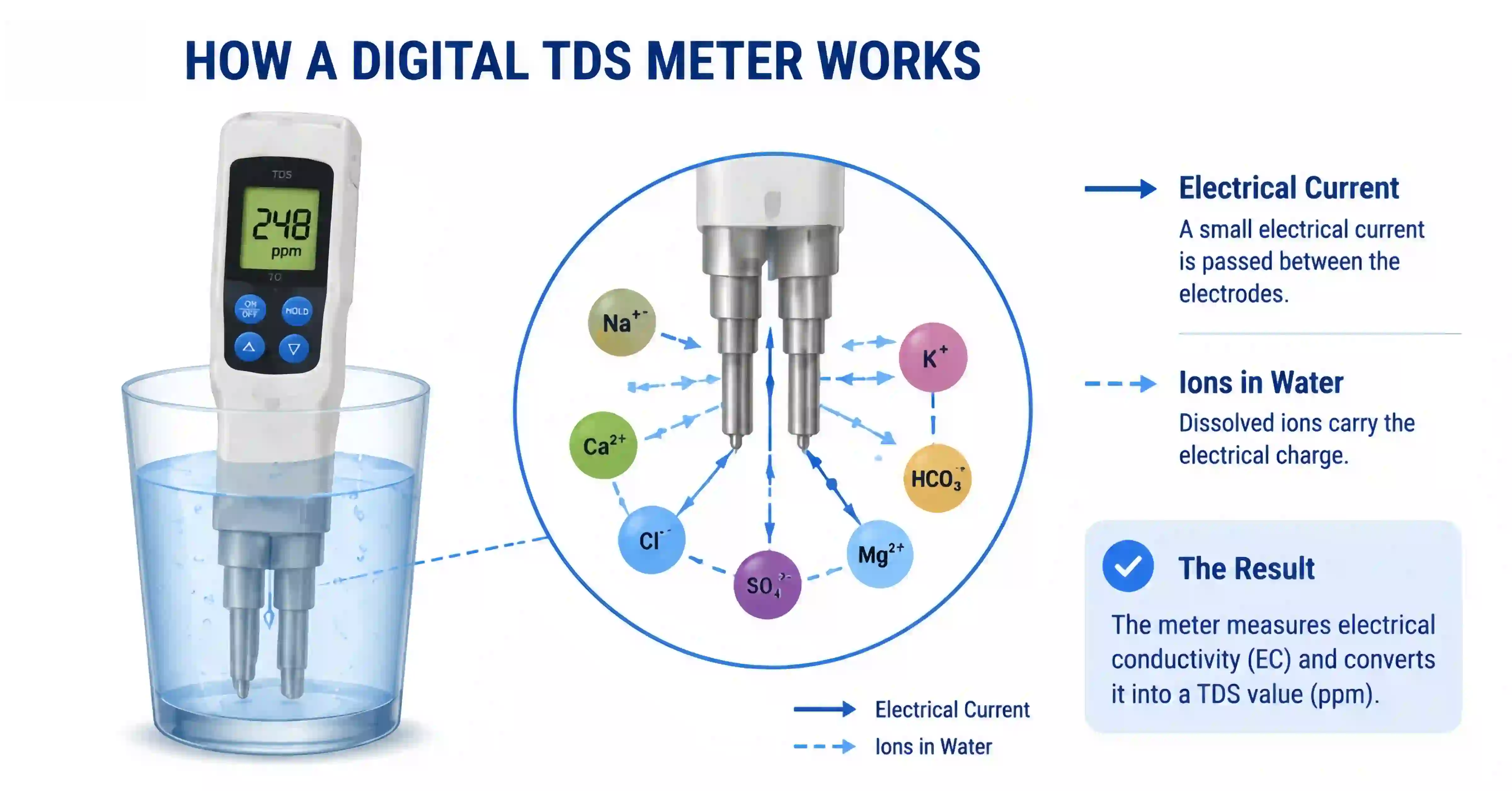
Measuring Total Dissolved Solids is surprisingly simple. In most residential and commercial applications, a handheld digital TDS meter provides results within seconds.
Instead of identifying every dissolved mineral individually, the meter measures the electrical conductivity (EC) of water. Since dissolved ions conduct electricity, conductivity increases as the concentration of dissolved solids rises. The instrument then converts the conductivity value into an estimated TDS reading, usually displayed in ppm (parts per million).
Although this method is indirect, it is fast, affordable, and sufficiently accurate for routine monitoring.
Step-by-Step Guide to Measuring TDS
Follow these steps to obtain the most reliable reading:
Step 1: Use a Clean Container
Always collect the water sample in a clean glass or plastic container. Any residue left in the container can influence the reading.
Step 2: Rinse the Meter
Before testing, rinse the sensor with distilled or purified water to remove contaminants from previous measurements.
Step 3: Immerse the Probe
Insert the probe into the sample without touching the sides or bottom of the container.
Step 4: Wait for Stabilization
Most meters stabilize within 5–15 seconds. Wait until the displayed value no longer changes.
Step 5: Record the Result
For consistent monitoring, record the TDS value, date, water source, and temperature.
Tips for More Accurate Measurements
| Best Practice | Why It Matters |
|---|---|
| Test water at room temperature | Temperature influences conductivity. |
| Keep the sensor clean | Prevents inaccurate readings caused by residue. |
| Calibrate the meter regularly | Maintains long-term accuracy. |
| Test from the same sampling point | Improves data consistency. |
| Replace batteries when needed | Low power may affect measurement stability. |
Factors That Can Affect TDS Readings
Even if the water source remains unchanged, several factors may cause readings to fluctuate.
Water Temperature
Electrical conductivity naturally increases with temperature. Most modern TDS meters feature Automatic Temperature Compensation (ATC), but inexpensive models may not.
Seasonal Changes
Heavy rainfall, droughts, and groundwater recharge can all influence mineral concentrations throughout the year.
Water Source
Surface water, groundwater, municipal tap water, bottled water, and RO water all have distinct TDS characteristics.
Pipe Conditions
Old plumbing systems may release trace amounts of dissolved metals into the water, resulting in slightly higher readings.
Common Mistakes When Using a TDS Meter
A TDS meter is simple to use, but incorrect handling can produce misleading results.
Some of the most common mistakes include:
- Testing immediately after changing an RO filter before the system has been flushed.
- Measuring water immediately after turning on the tap, before stagnant water has cleared.
- Forgetting to clean or calibrate the meter.
- Comparing readings taken at different temperatures.
- Assuming one measurement represents the entire water system.
For household users, testing at the same location and under similar conditions each time provides the most meaningful trend data.
What Can a TDS Meter Detect?
A TDS meter is excellent for monitoring the concentration of dissolved ions in water, but it has clear limitations.
It Can Indicate
- Overall dissolved mineral concentration
- Performance of an RO membrane
- Changes in filtration efficiency
- Mineral consistency over time
- General water quality trends
It Cannot Detect
- Bacteria
- Viruses
- Parasites
- PFAS ("forever chemicals")
- Pesticides
- Microplastics
- Residual chlorine
- Organic contaminants
- Water color or odor
For this reason, TDS testing should be viewed as one component of a broader water quality assessment, not a standalone safety test.
TDS vs. Hardness vs. Conductivity
These three terms are often confused because they are closely related, yet each measures a different characteristic of water.
| Parameter | TDS | Hardness | Conductivity |
|---|---|---|---|
| Measures | Total dissolved ions | Calcium & magnesium concentration | Ability of water to conduct electricity |
| Unit | ppm or mg/L | mg/L as CaCO₃ | μS/cm |
| Indicates | Overall mineral content | Scale-forming minerals | Electrical conductivity |
| Suitable for routine monitoring | ✔ | ✔ | ✔ |
| Direct health indicator | No | No | No |
| Common testing tool | TDS meter | Hardness test kit | Conductivity meter |
How These Parameters Work Together
Imagine filling a glass with mineral water.
- TDS tells you the total amount of dissolved material.
- Hardness focuses specifically on calcium and magnesium.
- Conductivity reflects how easily electricity passes through the dissolved ions.
Together, these measurements provide a more complete understanding of water quality than any single value alone.
Typical TDS Values for Common Water Sources
| Water Source | Typical TDS (ppm) | Characteristics |
|---|---|---|
| Distilled water | 0–5 | Extremely pure |
| Deionized water | 0–10 | Used in laboratories |
| Reverse osmosis water | 10–80 | Low mineral content |
| Bottled purified water | 20–150 | Depends on treatment process |
| Municipal tap water | 100–400 | Varies by region |
| Natural spring water | 150–500 | Rich in natural minerals |
| Well water | 200–800 | Highly variable |
| Seawater | 30,000–40,000 | Not suitable for drinking without desalination |
When Should You Test TDS?
Routine monitoring is recommended in several situations:
- After installing a new water filtration system
- Before and after replacing RO membranes
- When moving into a new home
- If the taste of water changes noticeably
- Before selecting a commercial water treatment solution
- During regular maintenance of industrial water systems
For commercial facilities, periodic testing helps maintain consistent water quality and identify filtration issues before they affect production.
Which Water Filtration Technologies Can Reduce TDS?
Not every water filtration system is designed to reduce Total Dissolved Solids. This is one of the most common misunderstandings among homeowners and even some first-time buyers.
Many filters improve water quality by removing sediment, chlorine, odors, or microorganisms, but only certain technologies can significantly reduce dissolved ions that contribute to TDS.
Understanding the capabilities of each filtration method helps consumers and commercial buyers choose the most appropriate solution for their water source.
Comparison of Common Water Filtration Technologies
| Technology | Removes Sediment | Removes Chlorine | Removes Bacteria | Reduces TDS | Typical Applications |
|---|---|---|---|---|---|
| PP Sediment Filter | ✅ | ❌ | ❌ | ❌ | Sand, rust, suspended particles |
| Activated Carbon | ❌ | ✅ | ❌ | ❌ | Taste, odor, chlorine reduction |
| Ultrafiltration (UF) | ✅ | Partial | ✅ | ❌ | Municipal water with stable quality |
| Reverse Osmosis (RO) | ✅ | ✅ | ✅ | ✅ Excellent | Drinking water, commercial purification |
| UV Sterilization | ❌ | ❌ | ✅ | ❌ | Microbial disinfection |
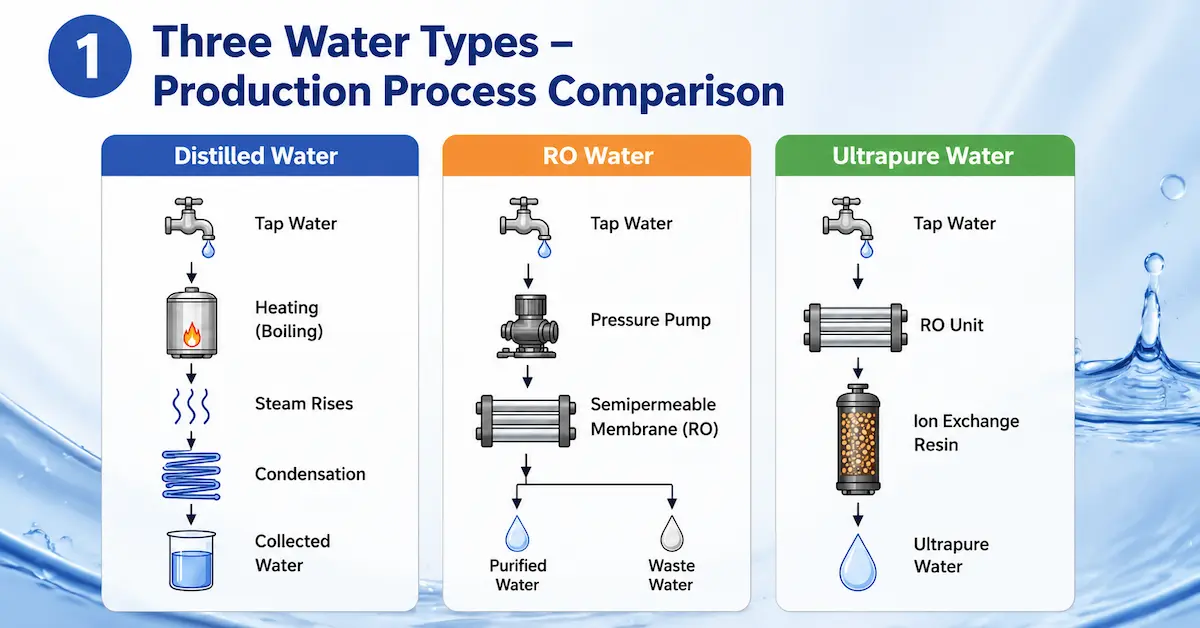
| Distillation | ✅ | ✅ | ✅ | ✅ Excellent | Laboratory, medical applications |
| Deionization (DI) | ❌ | ❌ | ❌ | ✅ Extremely High | Electronics, pharmaceutical production |
As shown above, Reverse Osmosis, Distillation, and Deionization are the primary technologies capable of significantly reducing TDS.
Why Reverse Osmosis Is So Effective
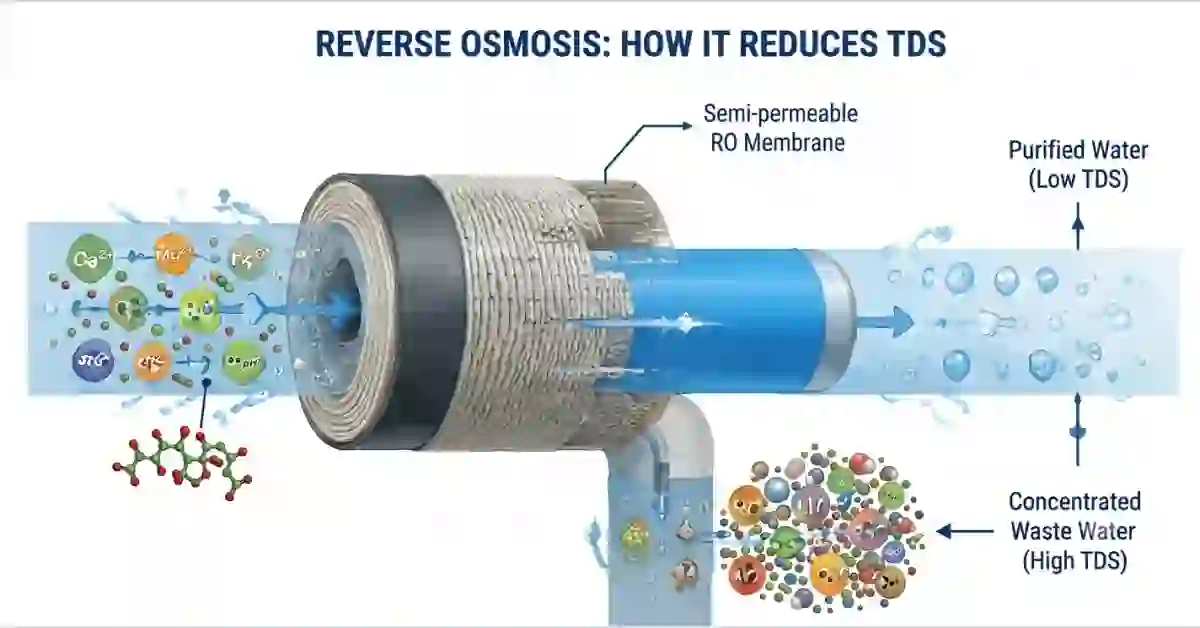
Among all residential and commercial water treatment technologies, Reverse Osmosis (RO) is widely recognized for its ability to remove a broad spectrum of dissolved contaminants.
Unlike conventional filters that rely mainly on mechanical filtration or adsorption, an RO membrane uses pressure to force water molecules through microscopic pores while rejecting most dissolved ions.
Typical rejection rates include:
- Calcium
- Magnesium
- Sodium
- Chloride
- Fluoride
- Nitrate
- Sulfate
- Heavy metals (depending on the specific contaminant)
Modern RO membranes can typically reduce 90–99% of dissolved solids under appropriate operating conditions, making them suitable for both household and commercial water purification.
How an RO Membrane Works
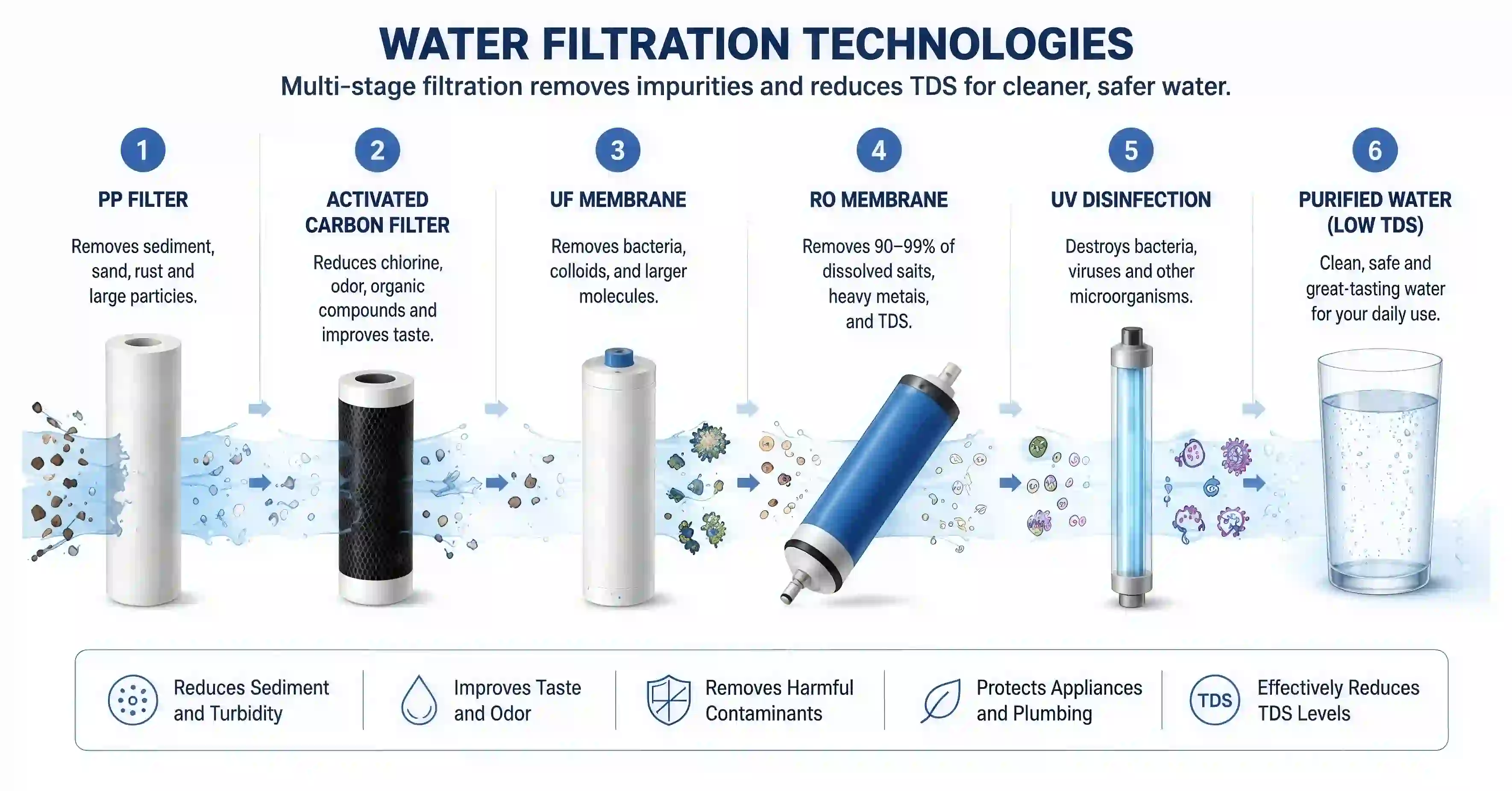
The purification process occurs in several stages:
- Pre-filtration removes sand, rust, and large suspended particles.
- Activated carbon filtration reduces chlorine and organic compounds that could damage the membrane.
- Reverse osmosis membrane separates water molecules from most dissolved ions.
- Post-treatment improves taste and may include remineralization or UV sterilization, depending on system design.
This multi-stage process not only lowers TDS but also enhances overall water quality.
Reverse Osmosis vs. Other Technologies
| Feature | RO | UF | Carbon Filter | Distillation |
|---|---|---|---|---|
| Reduces TDS | ✅ Excellent | ❌ | ❌ | ✅ Excellent |
| Removes Heavy Metals | ✅ | Limited | Limited | ✅ |
| Removes Chlorine | ✅ | Partial | ✅ | ✅ |
| Removes Bacteria | ✅ | ✅ | ❌ | ✅ |
| Energy Consumption | Low–Moderate | Low | None | High |
| Water Production Speed | Moderate | Fast | Fast | Slow |
| Best for Drinking Water | ⭐⭐⭐⭐⭐ | ⭐⭐⭐ | ⭐⭐ | ⭐⭐⭐ |
For most residential and commercial drinking water applications, RO offers the best balance between purification performance, operating cost, and convenience.
Choosing the Right Filtration System Based on TDS
Different water sources require different treatment strategies. Selecting a system based solely on price or filter stages may lead to disappointing results.
The following recommendations can serve as a general guide:
| Measured TDS | Suggested Solution | Notes |
|---|---|---|
| Below 100 ppm | Carbon or UF system | If microbiological quality is acceptable |
| 100–300 ppm | Multi-stage filtration | Suitable for most municipal supplies |
| 300–500 ppm | Reverse Osmosis recommended | Improves taste and reduces scaling |
| 500–1000 ppm | High-performance RO | Consider larger membrane capacity |
| Above 1000 ppm | Commercial RO or specialized treatment | Water analysis recommended before system selection |
It's important to note that TDS is only one factor in system selection. Source water quality, daily water consumption, maintenance requirements, and local regulations should also be considered.
Residential vs. Commercial Water Purification Needs
Although the purification principles are similar, residential and commercial users often have different priorities.
Residential Systems
- Compact design
- Quiet operation
- Easy filter replacement
- Stable drinking water quality
- Energy efficiency
Commercial Systems
- Higher daily production capacity
- Continuous operation
- Stable outlet water quality
- Lower operating cost per liter
- Flexible customization options
For distributors, wholesalers, and project contractors, choosing a manufacturer with strong OEM/ODM capabilities can simplify customization and after-sales support.
Key Factors When Evaluating an RO System
Before purchasing or specifying an RO system, consider the following:
- Membrane quality and rejection rate
- Pump performance for stable pressure
- Filter replacement interval
- Certified food-grade materials
- Daily water production capacity
- Availability of replacement filters
- Ease of maintenance
- Manufacturer's technical support
These factors have a direct impact on system reliability, operating costs, and long-term customer satisfaction.
Best TDS Levels for Different Applications
The ideal TDS level depends on how the water will be used. While moderate mineral content is often preferred for drinking, industries such as healthcare, pharmaceuticals, and electronics require extremely low TDS to ensure product quality and equipment performance.
The following table provides general recommendations for common applications.
| Application | Recommended TDS (ppm) | Why It Matters |
|---|---|---|
| Household drinking water | 50–150 | Balanced taste and everyday consumption |
| Tea and coffee brewing | 75–150 | Enhances flavor extraction |
| Restaurants & cafés | 50–120 | Consistent beverage quality and reduced scale |
| Hotels | 50–150 | Better guest experience and appliance protection |
| Food & beverage manufacturing | Application-specific | Supports product consistency |
| Medical facilities | Below 30 | Protects specialized equipment |
| Laboratories | Below 10 | High analytical accuracy |
| Pharmaceutical production | Below 10 | Meets strict purity requirements |
| Electronics manufacturing | Near 0 | Prevents mineral contamination |
Note: These values are general guidelines. Actual water quality requirements vary by local regulations, equipment specifications, and industry standards.
Frequently Asked Questions (FAQ)
Q1. What is considered a good TDS level for drinking water?
For most households, a TDS range of 50–150 ppm offers a pleasant taste while retaining naturally occurring minerals. However, the ideal value depends on the source water, local regulations, and personal preference.
Q2. Does a high TDS reading mean my water is unsafe?
Not necessarily. TDS measures the total concentration of dissolved substances, but it does not identify what those substances are. Mineral-rich water may have a relatively high TDS while remaining safe to drink, whereas low-TDS water could still contain bacteria or organic contaminants.
Q3. Can a TDS meter detect bacteria or viruses?
No. A TDS meter only estimates dissolved ionic content through electrical conductivity. It cannot detect microorganisms, PFAS, pesticides, chlorine, or many other contaminants. Additional laboratory testing is required for comprehensive water quality analysis.
Q4. Why does my reverse osmosis system still show 20–40 ppm?
This is completely normal for many residential RO systems. Membrane performance, feed water quality, water pressure, and temperature all influence the final TDS reading. A small amount of dissolved minerals typically remains after filtration.
Q5. Does boiling water reduce TDS?
No. Boiling kills many microorganisms but does not remove dissolved minerals. In fact, evaporation can slightly increase TDS because some water is lost while the minerals remain.
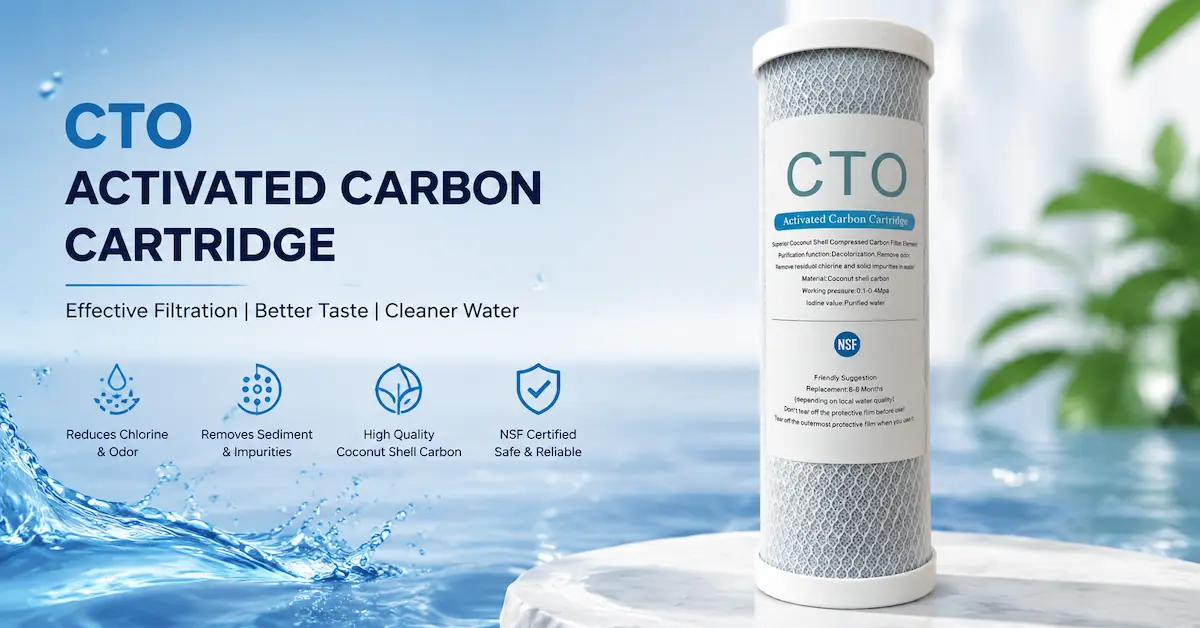
Q6. Can activated carbon filters reduce TDS?
Activated carbon is highly effective at improving taste, odor, and chlorine removal, but it has little impact on dissolved salts and minerals. If lowering TDS is the primary objective, a reverse osmosis system is generally the better choice.
Q7. How often should I check my water's TDS?
For household users, testing every one to three months is usually sufficient. Commercial users and facilities with critical water quality requirements should follow a routine monitoring schedule based on their operational needs.
Q8. Is 0 ppm TDS the best drinking water?
Not necessarily. Ultra-pure water is essential for laboratories and certain industrial processes, but many consumers prefer drinking water that contains a moderate amount of naturally occurring minerals for taste. The appropriate TDS level depends on the intended application.
Q9. Can TDS affect the lifespan of household appliances?
Yes. Water with high levels of calcium and magnesium can cause scale buildup in kettles, coffee machines, dishwashers, and water heaters. Over time, this buildup may reduce efficiency and increase maintenance requirements.
Q10. Should I choose a water purifier based only on TDS?
No. TDS is an important indicator, but it should be considered together with other factors such as microbiological quality, hardness, chlorine levels, source water characteristics, daily water demand, and maintenance requirements.
Key Takeaways
Before selecting a water purification system, remember these essential points:
- TDS measures the total concentration of dissolved solids, not water safety.
- Both very high and very low TDS values require proper interpretation.
- A digital TDS meter is useful for routine monitoring but cannot identify individual contaminants.
- Reverse osmosis is one of the most effective technologies for reducing dissolved solids.
- Water treatment solutions should be selected based on the source water and the intended application—not on TDS alone.
Conclusion
Understanding Total Dissolved Solids is an important first step toward improving water quality, but it should never be the only factor when evaluating drinking water.
A TDS reading provides a convenient snapshot of dissolved mineral content, helping homeowners, businesses, and industrial users monitor changes in water quality over time. However, meaningful decisions should also consider microbial safety, source water characteristics, system performance, and long-term maintenance requirements.
Whether you're selecting a household purifier, designing a commercial water treatment system, or sourcing products for distribution, choosing the right filtration technology is essential. Reverse osmosis remains one of the most effective solutions for reducing dissolved solids while delivering consistently high-quality purified water across a wide range of applications.
By combining regular water testing with a properly designed filtration system, users can improve taste, protect equipment, and ensure water quality that meets the needs of homes, businesses, and specialized industries alike.
About INTOP
If you're looking for reliable water treatment solutions, INTOP specializes in the design and manufacturing of residential and commercial water purification systems.
Our product portfolio includes:
- Under-sink RO water purifiers
- Countertop water purification systems
- Commercial reverse osmosis equipment
- Whole-house water treatment solutions
- Replacement filters and RO membranes
- OEM & ODM manufacturing services
With years of manufacturing experience and global export expertise, INTOP supports distributors, wholesalers, importers, and brand owners with customizable products, stable quality, and professional technical support.