

Dental practitioners need to understand one core point: routine surface disinfection does not resolve biofilm problems inside waterlines.
1. What Is Biofilm?
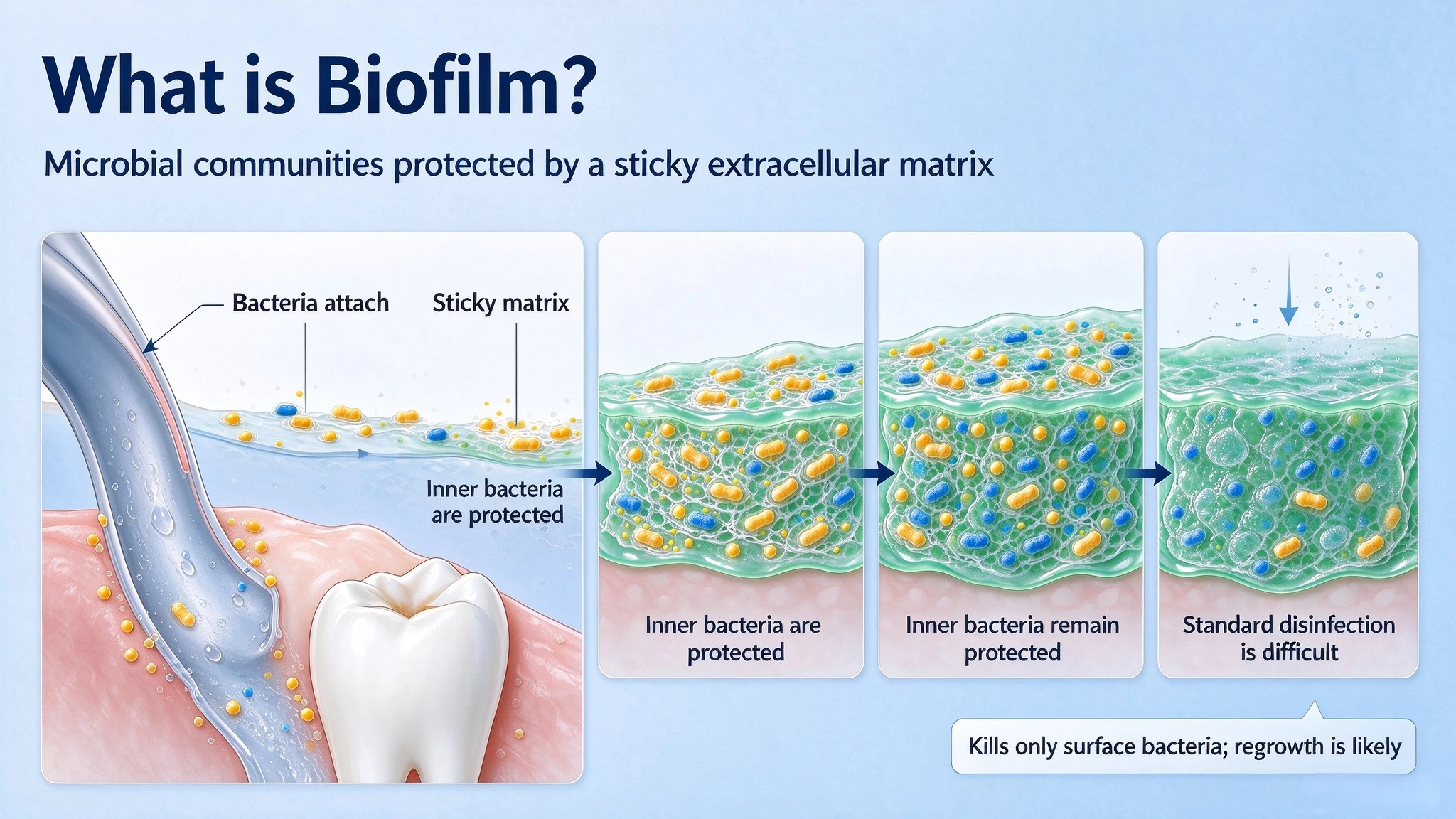
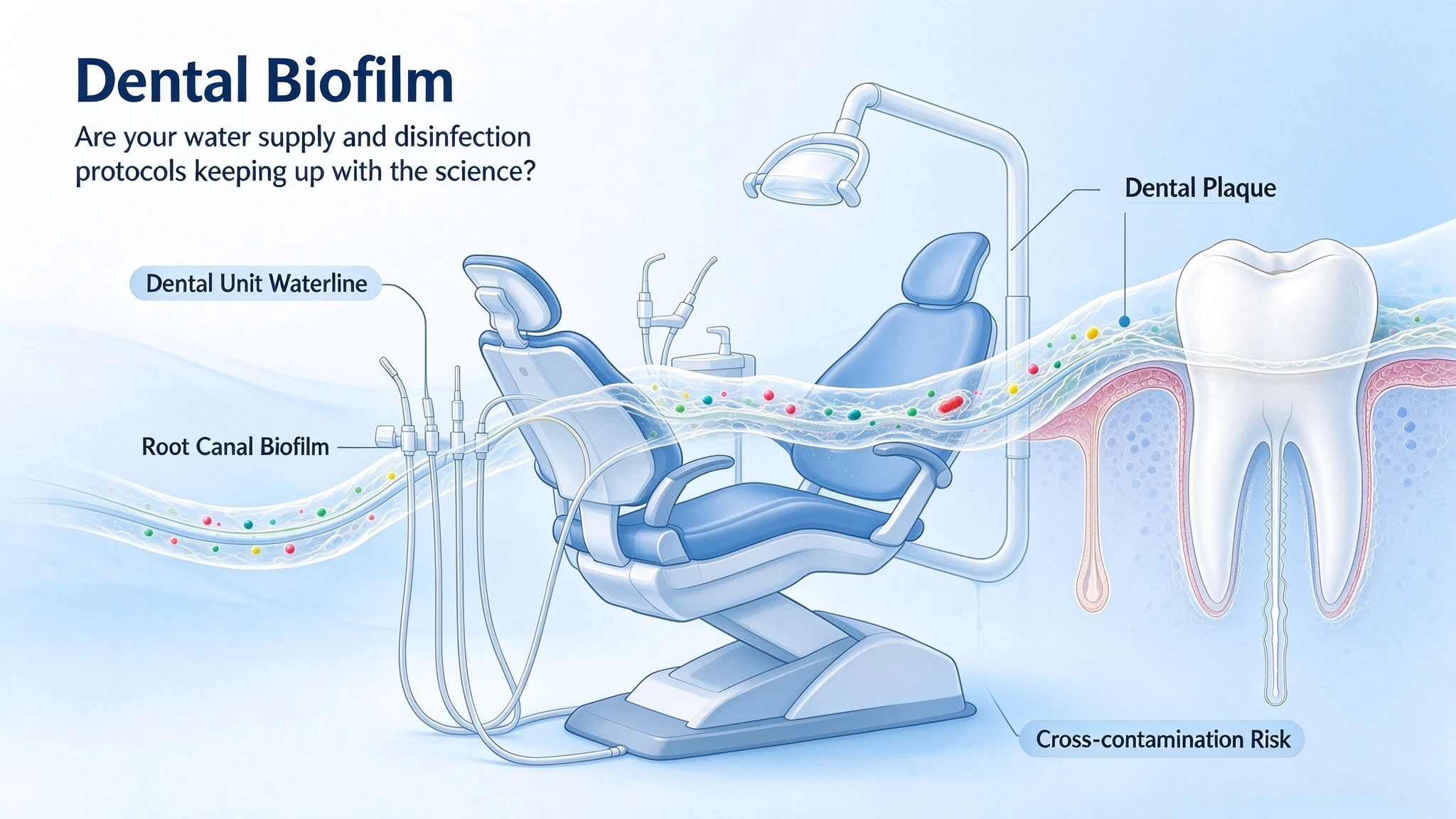
Bacteria do not always float freely in water. When moisture and nutrients are available, large groups of microorganisms cluster together and secrete a sticky matrix that wraps around them, firmly attaching to pipe walls, instruments, tooth surfaces and restorations. This matrix‑protected microbial community is called biofilm.
This sticky shell offers strong protection. Common disinfectants mostly kill free‑floating bacteria in the water and struggle to penetrate the matrix to reach microbes deep inside the biofilm. After a single disinfection cycle, risks may seem gone, but biofilm will regrow over time.
In dental settings, biofilm frequently develops in these areas:
- Fine water tubing inside dental chairs, namely Dental Unit Waterlines (DUWL) — the most commonly overlooked hazard
- Treatment countertops, dental handpieces and operative instruments
- Tooth surfaces, periodontal pockets and root canals (commonly known as dental plaque)
- Implants, dentures, crowns, impression materials and plaster models
The associated risk: aerosols generated by chair water spray and ultrasonic scaling can spread biofilm‑derived microbes throughout the operatory. This raises the chance of cross‑contamination between staff and patients, and it is a key focus for infection control audits and Legionella risk assessment.
Tap water naturally contains minerals, soluble organic matter and contaminants — these serve as nutrients for microbial growth. With a steady supply of these nutrients, biofilm will keep recurring.
2. Limitations of Common Dental Disinfectants
Every antimicrobial product for dentistry has defined application boundaries; no single option works perfectly for all scenarios:
- Alcohol: Rapidly kills planktonic surface bacteria but evaporates quickly and cannot penetrate biofilm matrix.
- Chlorhexidine: Suitable for oral rinse and local periodontal suppression. Long‑term use causes tooth staining and it is not ideal for permanent waterline maintenance.
- Sodium hypochlorite: Powerful for breaking down biofilm matrix, yet highly irritating and corrosive. It carries risks of mucosal burns, requires complex handling, and produces chlorinated disinfection by‑products.
- Quaternary ammonium compounds: Mainly for surface wiping. Poor penetration into dense biofilm, and residue tends to accumulate with repeated use.
Stable hypochlorous acid (HOCl) is well‑supported by clinical evidence in recent years. It is the same substance human white blood cells use to fight pathogens. Its key advantages:
✅ Low molecular weight, enabling penetration through sticky biofilm matrix to reach embedded bacteria
✅ Excellent biocompatibility, no staining, versatile for root canal irrigation, periodontal rinse, mouth rinse, surface spraying and waterline disinfection
✅ Breaks down into salt and water after disinfection, leaving almost no toxic residues
However, many clinics overlook a critical detail: even with HOCl, poor incoming water with abundant contaminants and nutrients drastically reduces disinfection performance. Minerals and organics continuously consume the active ingredient. Microbes keep receiving nutrition, biofilm regrows repeatedly, chemical costs rise, and stable water quality remains hard to achieve.
3. The Role of DI Pure Water: It Is Not a Disinfectant
A common misconception: DI water systems are disinfection devices. DI pure water cannot kill bacteria directly.
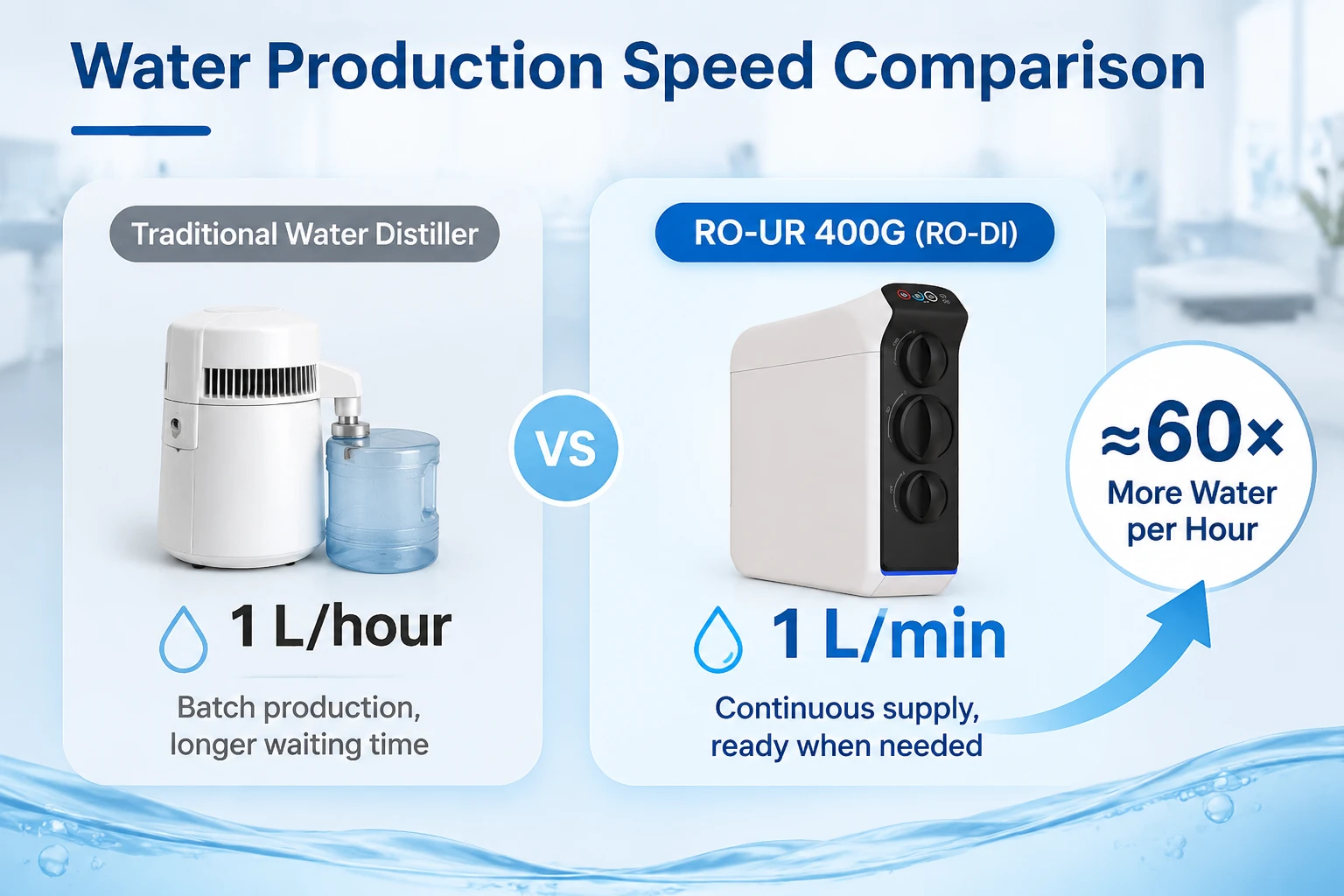
The core function of DI systems is to remove calcium, magnesium, minerals and soluble contaminants from tap water. Simply put: it removes the food source for microbes.
Tap water with high mineral content → rich nutrients; microbes easily attach and build thick biofilm Deionized DI water with minimal contaminants → limited growth substrate; attached microbes rarely mature into dense biofilm
It creates a high‑quality water base, slowing biofilm formation and easing the burden of ongoing disinfection. High‑purity DI water also avoids mineral interference for gypsum mixing and endodontic irrigation.
4. Combined DI Water + HOCl Solution: Roles & Implementation
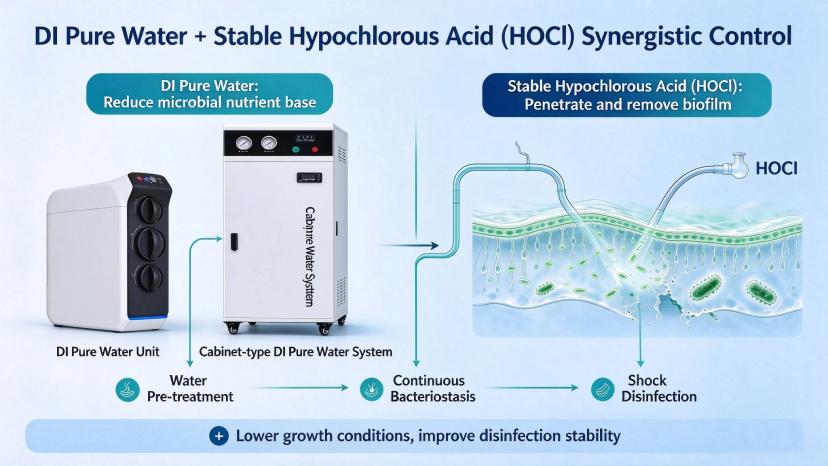
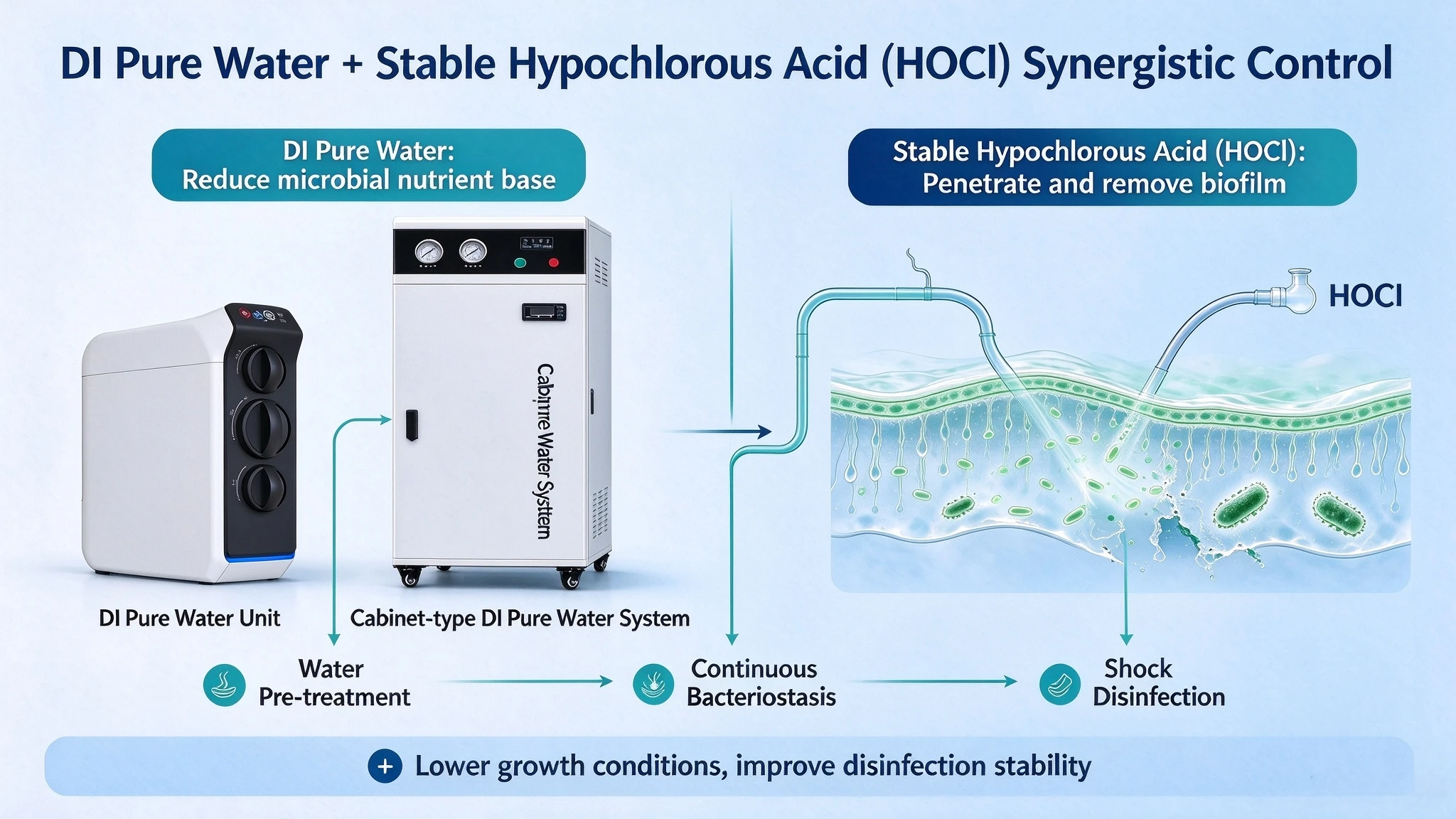
These two tools complement each other instead of replacing one another, with clear responsibilities: 👉 DI pure water: Pre‑emptive control of nutrient conditions to reduce biofilm formation (prevention focus) 👉 Stable HOCl: Penetrates and removes existing biofilm, continuously inhibits microbial adhesion (removal & long‑term suppression focus)
For daily clinic operation, the workflow has three stages:
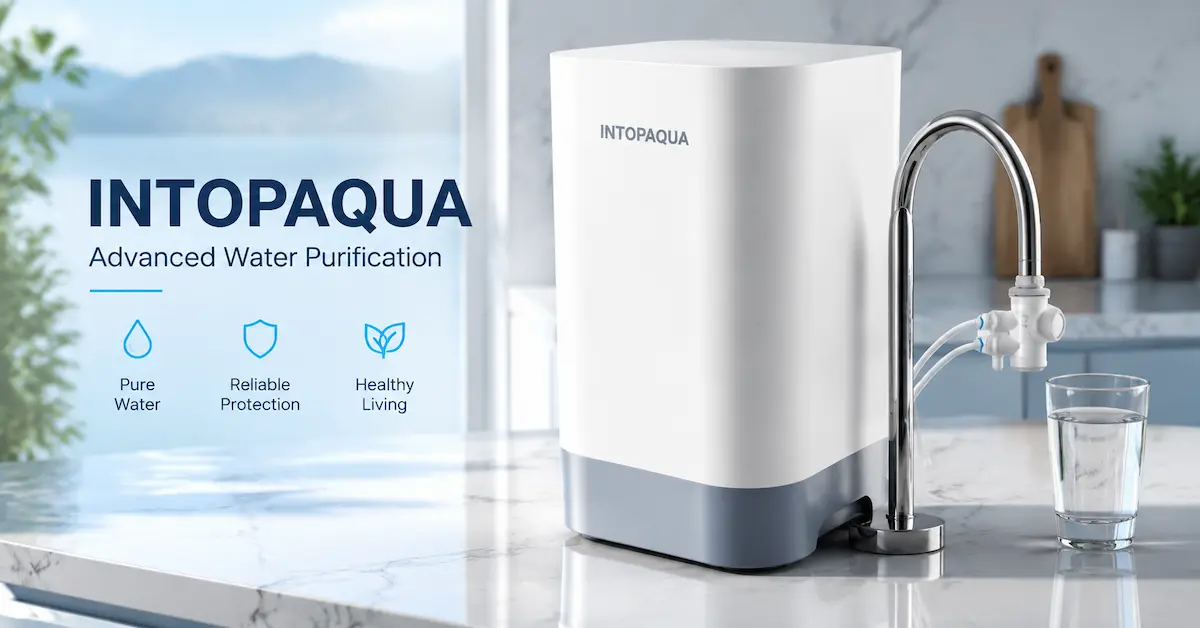
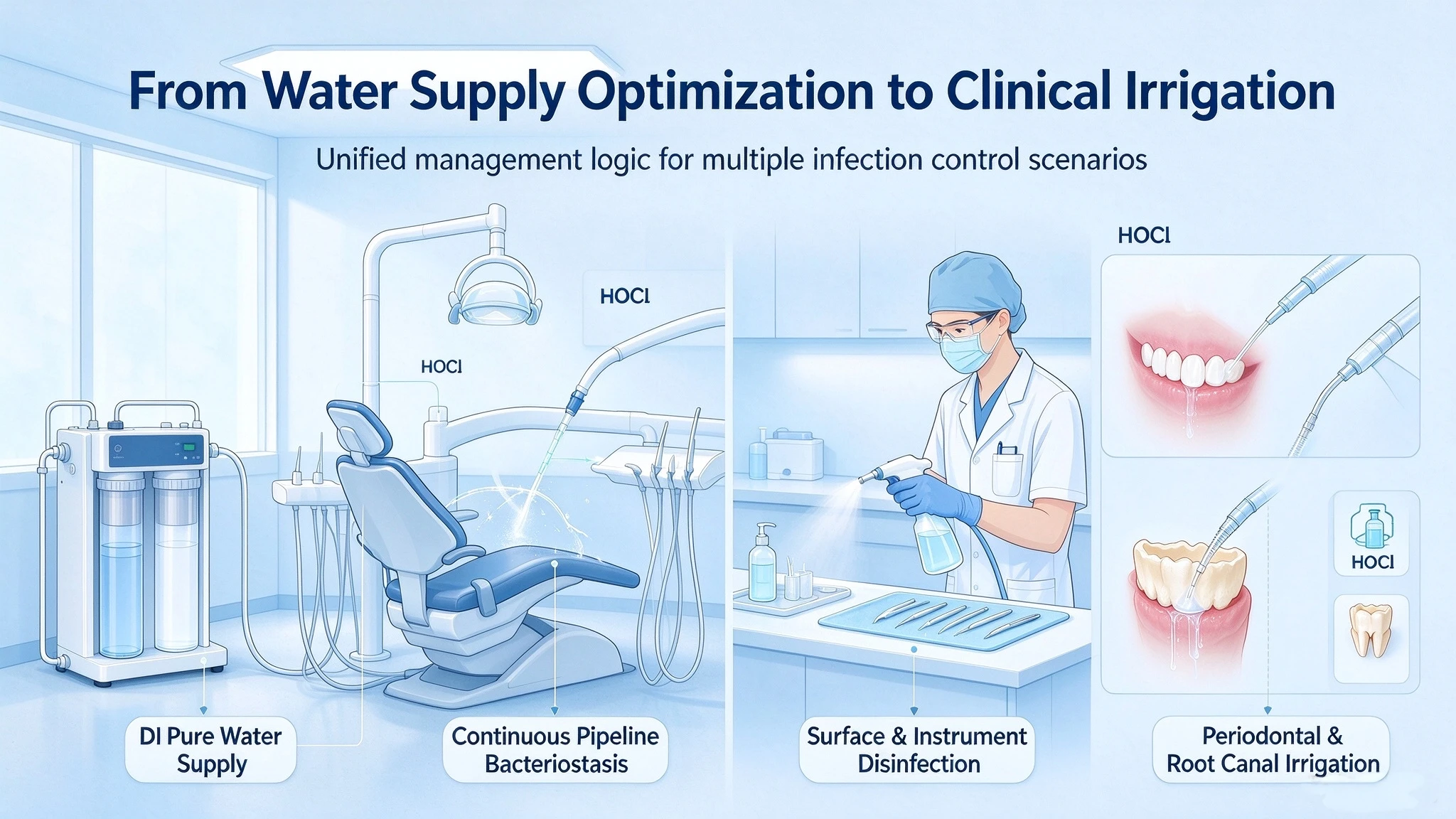
- Tap water passes through the DI purification system to produce low‑contaminant pure water, then supplied to every dental unit.
- Based on DI water supply, low‑concentration HOCl is dosed continuously into pipelines to inhibit bacterial attachment. Periodic shock treatment with properly concentrated HOCl breaks up and removes mature biofilm, following standard schedules.
- The same HOCl product covers multiple applications: countertop and instrument spray disinfection, periodontal irrigation, root canal irrigation and impression disinfection. Using one consistent disinfectant reduces compatibility risks from mixing multiple chemicals.
5. Boundaries of This Solution & Common Misunderstandings
Two frequent misunderstandings need clarification:
- DI water alone without disinfection: Small amounts of microbes will still persist in the water, and biofilm slowly accumulates over time. Routine infection control maintenance cannot be skipped.
- HOCl disinfection alone without water quality improvement: Nutrient‑rich water consumes disinfectant quickly, biofilm recurs constantly, and long‑term running costs become higher.
This system reduces infection risks brought by biofilm, but it does not offer permanent protection after one treatment. Basic infection control work including daily waterline flushing, regular inspections and disinfectant concentration monitoring must still follow official standards.
6. Summary
Remember this core logic: incoming water quality determines how easily microbes multiply; disinfectant performance determines whether biofilm can be penetrated and eliminated.
The old cycle for many clinics is: biofilm develops → disinfect → regrow → disinfect again. A strategy aligned with biofilm growth rules is to first use DI water to cut microbial nutrition and slow biofilm formation at the source, then use stable, highly penetrable HOCl for ongoing control.
This unified management framework covers pipeline water supply, operatory sanitation, root canal and periodontal clinical irrigation. It helps clinics consistently meet infection control requirements long‑term and build a safer treatment environment for patients.