
I. Introduction: The Story Behind a "Malfunction"
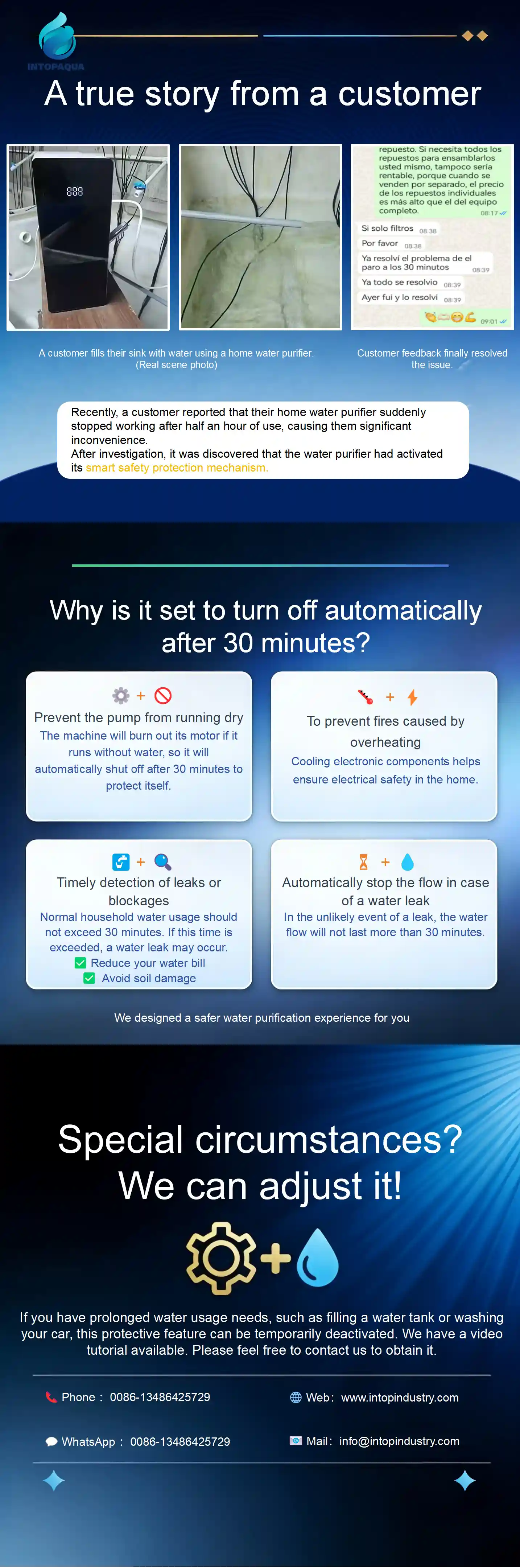
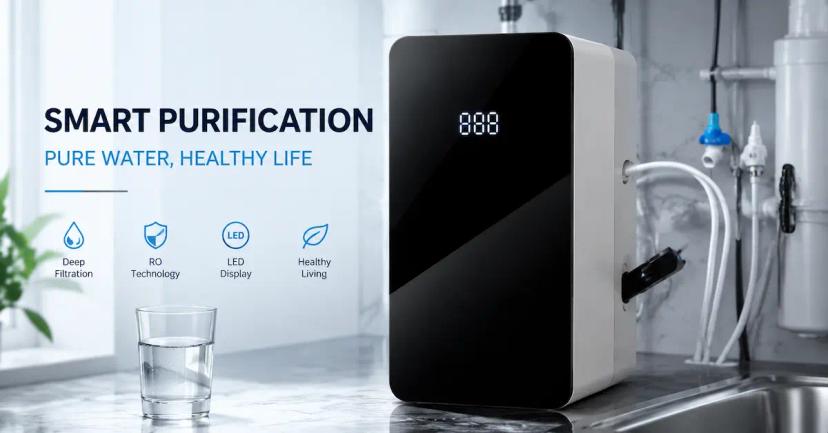
In modern homes, water purifiers have become an indispensable appliance. They provide convenient and safe drinking water, but they can also be misunderstood when users are unfamiliar with their design logic. Recently, a customer contacted our after-sales team, reporting that their home water purifier would automatically shut off after about 30 minutes of use, preventing them from continuing to use the water and causing significant inconvenience in their daily life.
Initially, the customer suspected a product quality issue and was somewhat dissatisfied. However, after a detailed investigation by our technical staff, we discovered this was not a malfunction but the activation of an intelligent safety protection mechanism. This incident prompted deep reflection on product design, user communication, and the importance of safety awareness.
II. Event Reconstruction: From Complaint to Understanding
1. Customer Feedback
The customer described that while using water in the kitchen, the purifier suddenly stopped working and no water came out. Assuming the device was broken, they found it very inconvenient.
2. Investigation Process
Technical staff remotely guided the customer to check the device's status and discovered it hadn't malfunctioned but had entered an "auto shut-off" mode. By reading backend data, they confirmed the device had triggered the protection program after running continuously for 30 minutes.
3. Explanation and Communication
We explained the purpose of this design to the customer in detail: to prevent the pump from running dry, prevent circuit overheating, and mitigate the risk of leaks. The customer ultimately understood the mechanism and agreed to cooperate with its use.
III. Why is it Set to 30 Minutes?
1. Preventing the Pump from Running Dry (Dry Running Protection)
If a pump operates without water, the motor can overheat and even burn out. The 30-minute mark serves as a relatively conservative safety threshold, ensuring normal water usage needs are met while effectively protecting the device's core components.
Supporting Data: Typical single continuous household water use (e.g., washing vegetables, doing dishes) does not exceed 20 minutes. The 30-minute setting provides a buffer.
2. Preventing Overheating and Potential Fires
Water purifiers contain circuit boards and electronic components that generate heat during prolonged operation. The 30-minute auto shut-off allows for heat dissipation, reducing the risk of fire.
Safety Standards: This aligns with requirements for temperature rise control in household appliance safety regulations.
3. Timely Identification of Leaks or Blockages
If a leak or pipe blockage occurs in the user's home, water flow time may be abnormally prolonged. The 30-minute auto shut-off can prevent water damage from escalating, reducing property loss.
Reference Case: A previous user experienced kitchen flooding due to a burst hose, causing significant damage as the purifier ran continuously. A 30-minute protection mechanism would have substantially reduced the loss.
4. Reducing Water Waste and Soil Damage
Excessively long water flow not only wastes water but can also lead to overly saturated soil in areas like balconies or gardens, potentially harming plants or even foundation safety.
IV. What About Users' Special Needs?
1. An Adjustable Protection Mechanism
We do not enforce this setting rigidly. For scenarios requiring prolonged water use, such as filling an aquarium, watering plants, or washing a car, users can temporarily disable the protection function.
2. Video Tutorial Support
To make operation more intuitive, we have created detailed video tutorials guiding users on how to disable or adjust the auto shut-off feature. Customers can simply contact us to obtain it.
3. A Touch of Human-Centric Design
This approach of "safety by default + optional flexibility" reflects our respect for user needs and a deep understanding of various usage scenarios.
V. From Complaint to Trust: The Value of Customer Education
1. Positive Transformation of Feedback
After the customer understood the truth, not only was the misunderstanding resolved, but they also acknowledged the product's safety features. Some customers even remarked, "I didn't realize you had thought of everything so thoroughly."
2. The Key to Building Trust
As smart home products pursue powerful functionality, they must also prioritize user education. Trust in a product is built only when users understand the logic behind its design.
3. Optimizing Communication Strategy
Following this incident, we optimized our product manuals and customer service scripts, adding clearer explanations of the "auto shut-off" function to prevent similar misunderstandings in the future.
VI. Industry Insight: Safety Design Should Not Be a "Hidden Feature"
1. Safety is a Baseline, Not a Selling Point
Many companies treat safety features as an "additional selling point," but safety should fundamentally be the baseline of product design. The 30-minute auto shut-off is a clear reflection of this baseline thinking.
2. The Importance of User Engagement
Involving users in understanding the product's "thought process" can significantly enhance user satisfaction and brand loyalty. Transparent design logic represents the future direction of the smart home industry.
3. Data-Driven Optimization
Through data analysis of user habits, we found that 99% of households use water continuously for less than 25 minutes in a single session. Therefore, the 30-minute setting is both scientifically and practically sound.
VII. Conclusion: The Care Behind a Simple "Shut-off"
A water purifier's 30-minute auto shut-off might seem like a simple function, but it embodies a deep consideration for user safety, device protection, and environmental respect. It's not just a technical feature; it's an expression of design philosophy.
We hope every user who uses our products not only enjoys convenience but also feels the care behind them. Moving forward, we will continue to listen to user feedback and constantly optimize the product experience, ensuring safety and intelligence go hand in hand.
If you have further questions about the safety design of our water purifiers or need to temporarily disable the auto-protection feature, please feel free to contact us:
-
📞 Phone: 0086-13486425729
-
💬 WhatsApp: 0086-13486425729
-
🌐 Web: www.intopindustry.com
-
📧 Email: info@intopindustry.com