

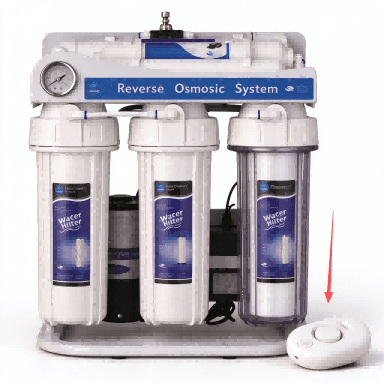
1. Why Leak Protection for Water Purifiers Deserves Attention
Water purifiers are usually installed under the kitchen cabinet or in a corner. These spots are dark, cramped, and rarely checked after installation.
Yet a purifier is one of the few home devices that constantly has water running through it, power connected to it, and pressure on its lines. A loose fitting, an aging seal, or a tiny crack in a tube can let water seep out slowly on a night when no one is paying attention.
The real trouble with a leak is not just water on the floor. Cabinet boards swell and warp when soaked. Flooring buckles. Water seeping downstairs can lead to compensation claims. Many families only start taking leak protection seriously after a leak has already happened.
The problem is that "leak protection" means very different things across products. Some devices only beep. Some can shut off water but need a replacement part each time. Some shut off water automatically and can be reused. Just reading a product page, it is easy to mistake very different levels of protection for the same thing.
This article lays out the four common types, one by one.
2. Four Questions to Ask About Any Leak Protection Device
Whatever the device, you can run it through these four questions:
-
How is it powered? No electricity, purifier-powered, battery, or plugged in?
-
How does it detect a leak? A water-absorbing pad that expands, or an electronic probe that touches water?
-
What does it do after detection? Just beep, or also shut off the water?
-
How does it reset? Replace a consumable part, or dry it off and reuse?
Run any product through these four questions, and you will quickly see which type it is and what level it sits at.
3. The Four Types, One by One
Type 1: Mechanical Leak Stop Valve
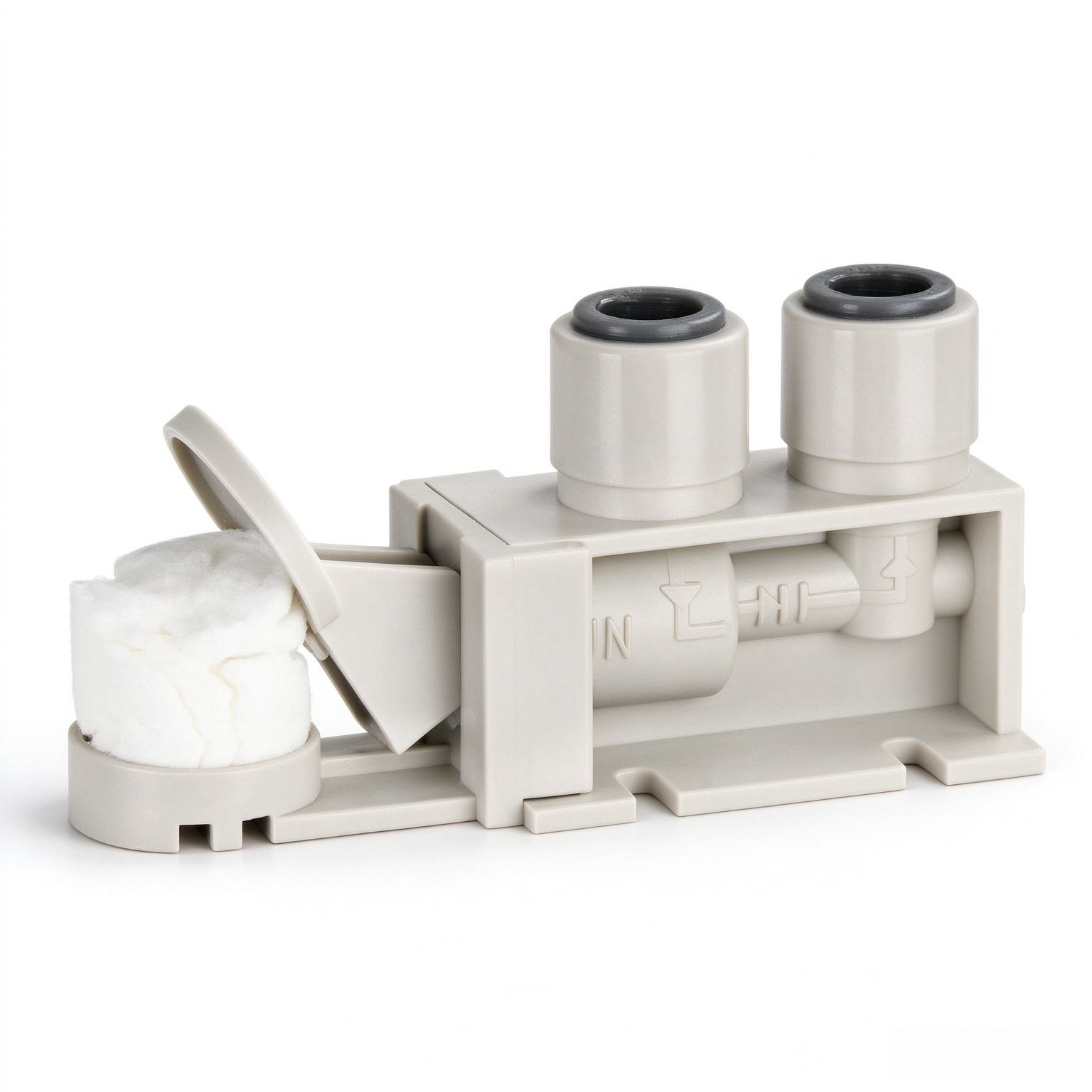
What it is: Inside is a water-absorbing pad. When the pad touches water, it expands, pushes against a spring-loaded switch, and closes the valve. The water stops. The whole process needs no electricity — it runs entirely on the force of the expanding pad.
Product photo:
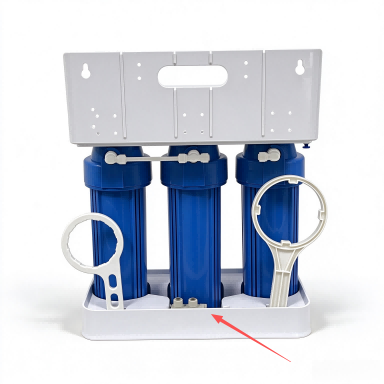
Installation scene:
Pros: No electricity needed. Works even in a power outage. Simple structure. Water touching the pad triggers shut-off.
Cons: The pad is single-use. Once triggered, it must be replaced. Until a new pad is installed, the device will not work again. It also depends on water actually reaching the pad. If the leak point is off to the side, or water runs along the pipe wall, it may not trigger. Installation is usually near the purifier base, so it cannot cover distant spots.
Who it suits: Homes with no outlet at the installation spot, or users who want something simple that does not depend on electricity. If someone is usually home and leaks are noticed quickly, the "replace after each trigger" downside matters less. Keep a few spare pads on hand.
Type 2: Built-in Electronic Sensor in Tankless Purifiers
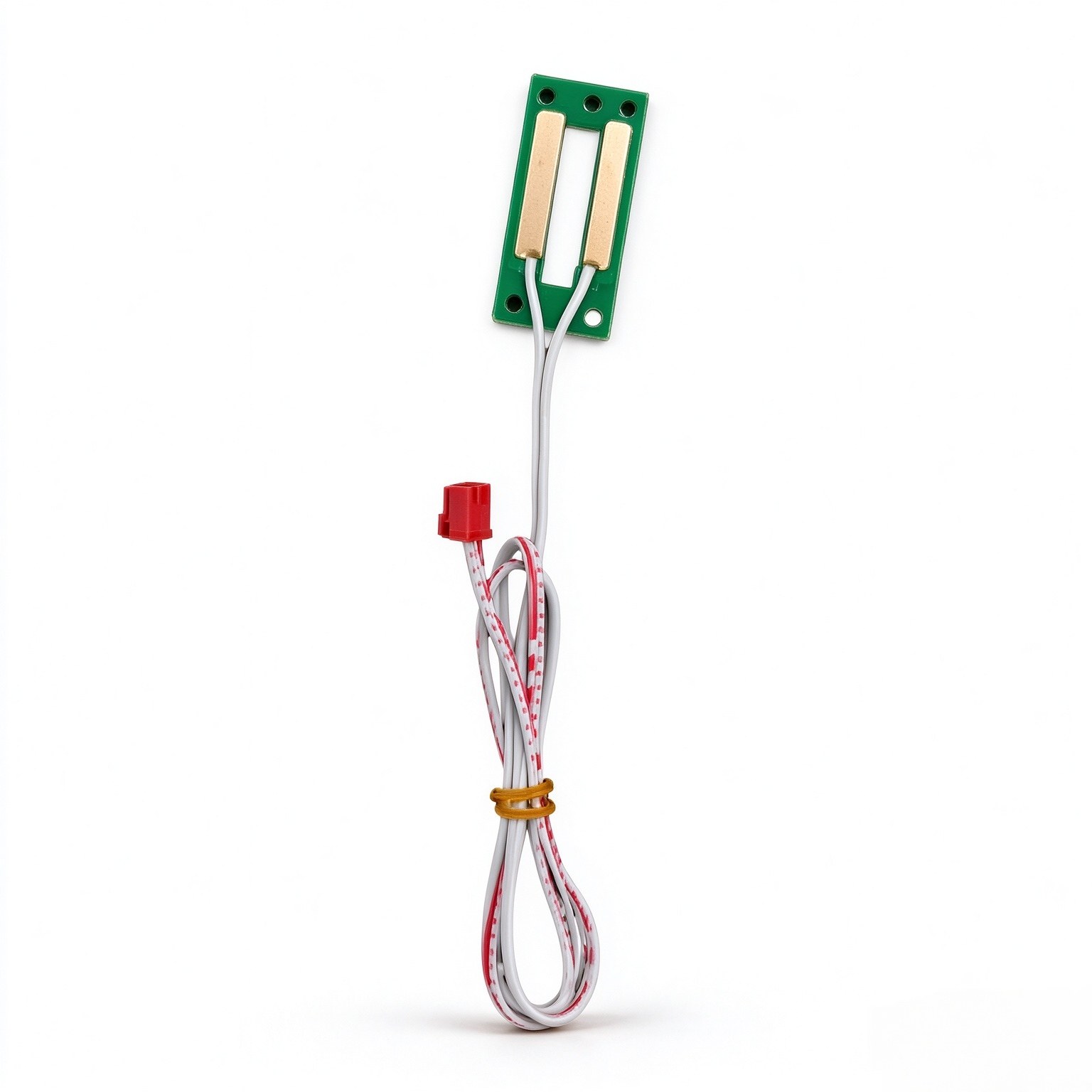
What it is: The sensor is installed at the bottom of a tankless water purifier and powered by the purifier's internal wiring. When it touches water, it sounds a beeping alarm.
Product photo:
Installation scene:
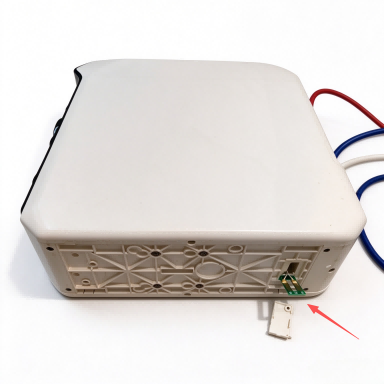
Pros: Fast response, small size, integrated with the purifier. No extra batteries and no additional wiring.
Cons: It only alarms — it does not shut off water. When the alarm sounds, a leak has already started, but water keeps flowing. If no one is home, the alarm can sound forever and the water will not stop.
Who it suits: Households where someone is usually home and can act on the alarm, or users who want to monitor the purifier itself.
Type 3: Battery-Powered Electronic Sensor
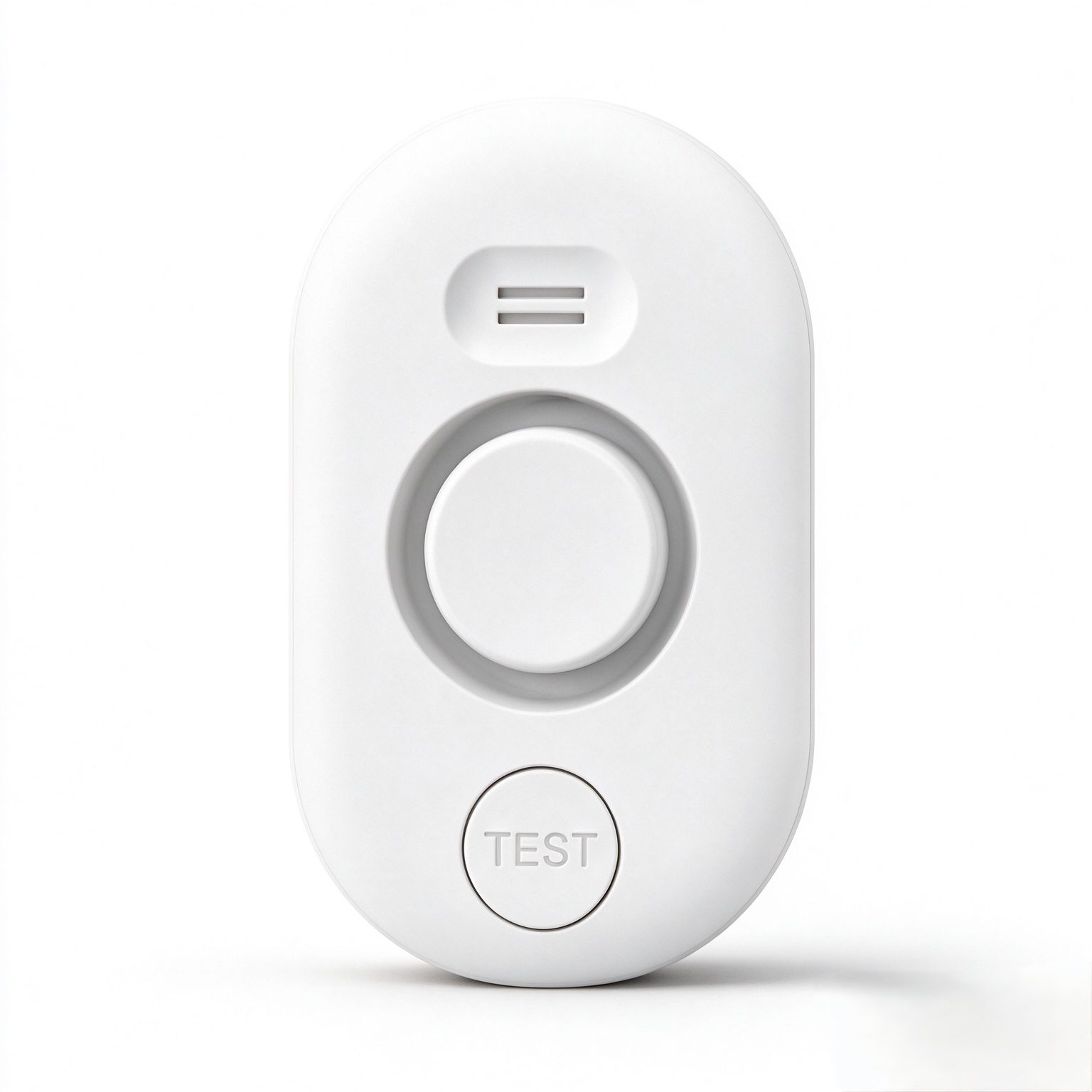
What it is: A self-contained unit with its own battery, placed on the floor or in a cabinet. Probes on the bottom sound an alarm when they touch water.
Product photo:
Installation scene:
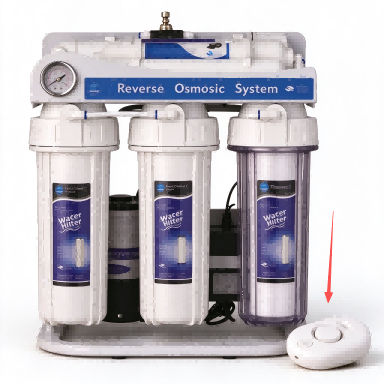
Pros: Easy to use, clean look, no wires, takes up little space. Runs on its own battery, so you can place it anywhere. Battery is replaceable. Dry the probes, press reset, and it is ready again.
Cons: Also alarm-only. It does not shut off water. After it sounds, someone still has to manually close the valve. If no one is home or the leak happens at night, its usefulness is limited.
Who it suits: Homes with no outlet in the cabinet but wanting an independent alert. Good for renters, retrofits, or purifiers that do not come with a built-in sensor.
Type 4: Electronic Sensor + Motorized Ball Valve
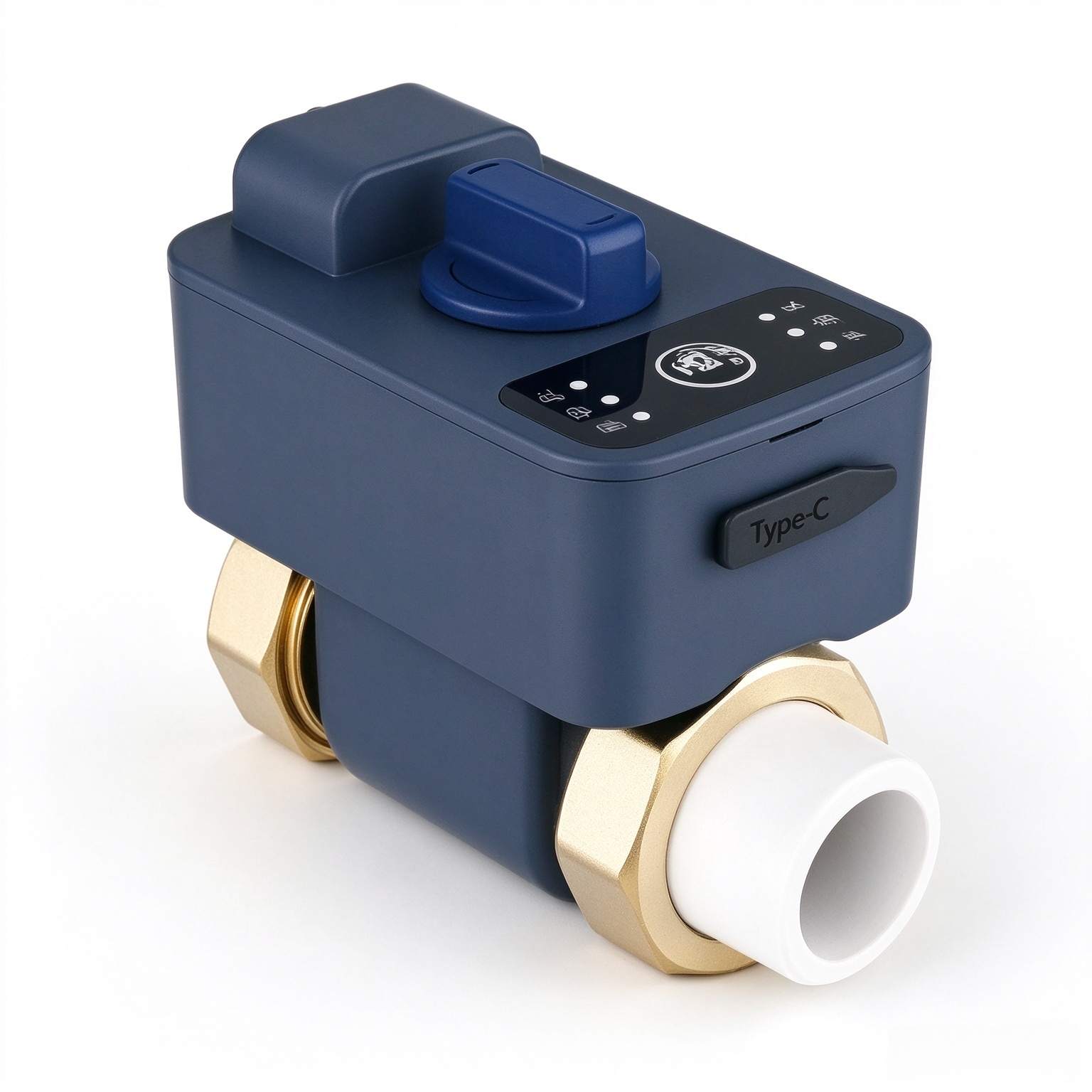
What it is: The electronic part detects the leak. The motorized ball valve shuts off the water. When water is detected, it sounds an alarm and drives the ball valve closed, cutting off the water supply. It is installed on the main inlet line.
Product photo:
Installation scene:
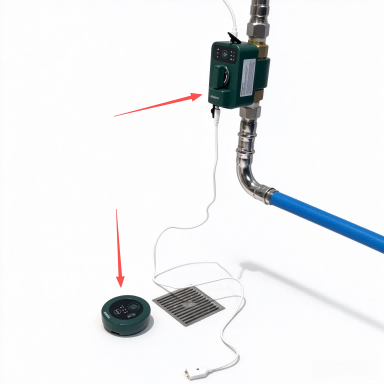
Pros: Detection and action are connected into one loop. When a leak is detected, it shuts off the water by itself — no need to wait for someone to come home or manually turn a valve. Installed on the main inlet line, it covers the entire water supply, not just the purifier. Manual operation is still possible, so you can open or close it during a power outage or emergency. No consumable parts. Dry it off, reset, and it is ready to use again.
Cons: Relatively higher cost. Installed on the main line, so it has some installation requirements.
Who it suits: Households that are often empty, frequent travelers, or homes with multiple water-using devices that want source-level control. Best for users who put automatic loss prevention first.
4. The Four Types Side by Side
| Comparison | Mechanical Leak Stop Valve | Built-in Sensor in Tankless Purifier | Battery-Powered Electronic Sensor | Electronic Sensor + Motorized Ball Valve |
|---|---|---|---|---|
| Power | No electricity | Purifier internal power | Battery | Battery or mains |
| Detection | Absorbent pad expands | Sensor touches water | Probes touch water | Electronic detection + motorized action |
| Action after detection | Closes internal valve | Alarm only | Alarm only | Alarm and shut-off |
| Automatic shut-off | Yes (but needs new pad) | No | No | Yes |
| Reset | Replace absorbent pad | Remove, dry, reinstall | Dry and press reset | Dry, press reset, manual option |
| Installation | Inside/outside purifier | Bottom of tankless purifier | Outside purifier | Main inlet line |
| Main advantage | No electricity | Integrated, fast alert | No wires, small, place anywhere | Automatic shut-off, widest coverage |
| Main limitation | Consumable, single-use | Alarm only | Alarm only | Relatively higher cost |
| Who it suits | No outlet, wants simple | Wants to monitor the machine | Wants flexible add-on alert | Wants source-level automatic shut-off |
5. What Alarm and Shut-Off Each Solve
Alarm solves "letting you know." It assumes someone can hear it and act quickly. If someone is usually home and leaks are found fast, an alarm can be a big help.
Shut-off solves "stopping the loss." It does not depend on anyone being present or reacting quickly. It closes the water as soon as it detects a leak. If the house is often empty, or the leak happens at night, shut-off value becomes very clear.
These two are not replacements for each other. They fit different living situations. If someone is home and you want to know first, an alarm is enough. If the house is often empty and you worry about growing damage, automatic shut-off brings more peace of mind. Having both is ideal, but which one you choose depends on your actual situation.
6. How to Judge Leak Protection When Buying a Purifier
Five steps:
-
Identify the type. Mechanical, built-in sensor, battery sensor, or motorized ball valve with automatic shut-off?
-
Check what it does after detection. Alarm only, or can it shut off water?
-
Check for consumables. Mechanical types need a new absorbent pad after each trigger. Factor in long-term convenience and cost.
-
Check installation and coverage. Inside the purifier covers the machine area. On the main inlet line covers the whole supply.
-
Check manual emergency operation. During a power outage, device failure, or emergency, can you still operate the valve by hand?
7. Summary: Choose What Fits, Not What Is Trendy
There is no single leak protection solution that suits everyone.
Mechanical types win on needing no electricity. Built-in sensors win on being integrated with the machine. Battery sensors win on flexibility. Motorized ball valve systems win on automatic shut-off. Each has its place, and each has limits.
As a water purifier manufacturer, we lay out all four types so you can judge based on your own situation: whether someone is usually home, whether there is an outlet in the cabinet, whether you care more about "knowing first" or "stopping the loss automatically," and what your budget and installation conditions allow. Thinking these through is more useful than chasing a single spec.
Good leak protection is not about whether those four words appear on a product page. It is about whether it fits your actual home. Choose by need, and you will not be swayed by a one-sided claim.
Please credit the source if you repost or quote this article.