

Why Is Water Quality So Important for Dental Autoclaves?
When it comes to dental instrument sterilization, most attention goes to temperature, pressure, and sterilization cycles. However, one essential factor is often overlooked: water quality.
Dental autoclave water quality plays an important role in sterilization equipment performance and maintenance. Choosing the right water for dental autoclaves helps reduce mineral deposits and protect internal components. Understanding dental autoclave water treatment is therefore essential for maintaining reliable equipment operation.
Ordinary water may contain dissolved minerals, salts, and other impurities. When heated repeatedly, some of these substances can accumulate inside the sterilizer, potentially causing scale buildup, corrosion, and other maintenance issues.
So, why does water quality matter so much? What happens when unsuitable water is used, and how can proper water treatment help protect dental equipment?
Let's take a closer look.
1. Why Does Water Quality Matter for Dental Autoclaves?
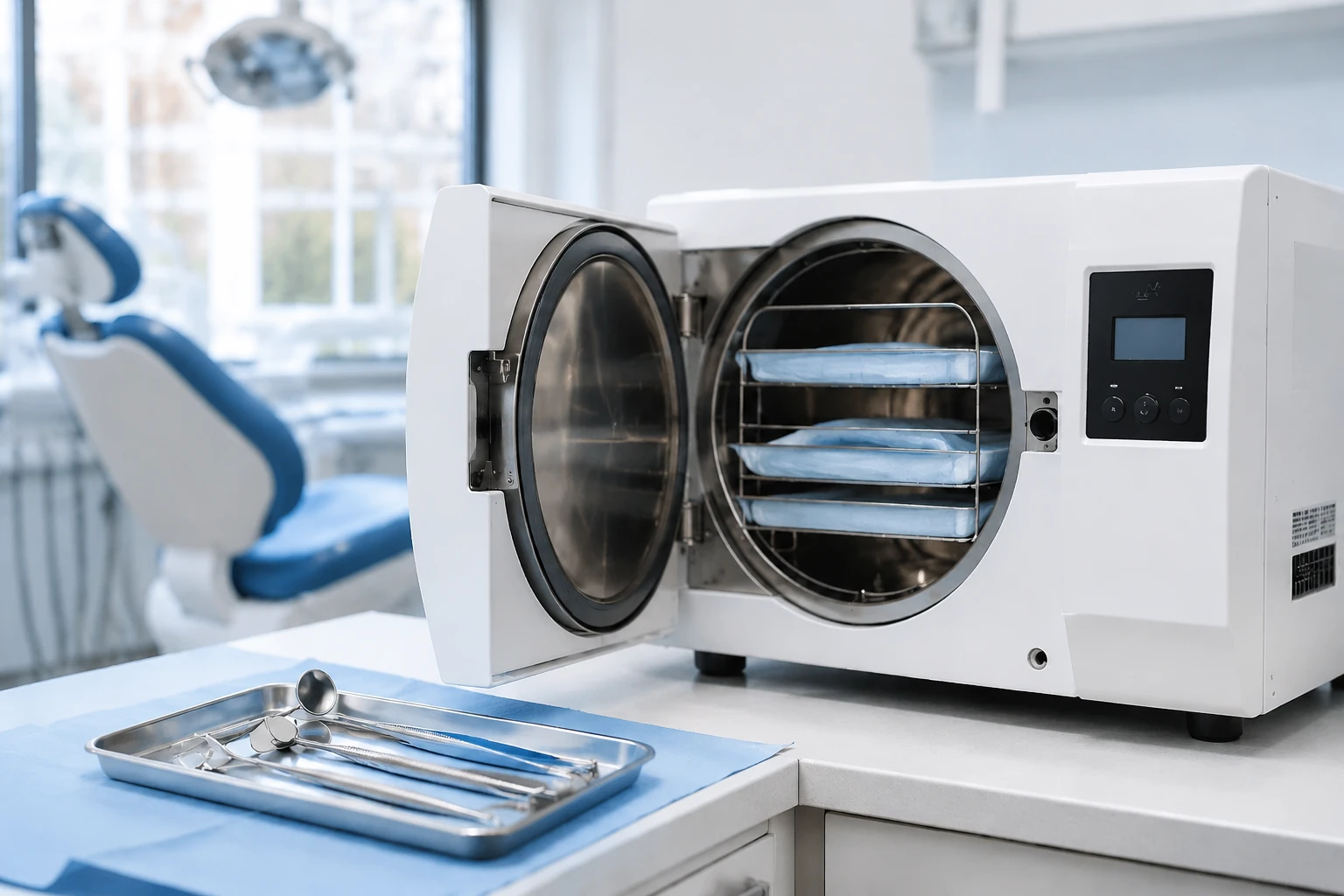
A dental autoclave uses pressurized steam to sterilize dental instruments under controlled temperature and pressure.
Water is heated to generate steam, which transfers heat to the instruments inside the sterilization chamber.
However, ordinary tap water may contain various dissolved substances, including:
-
Calcium and magnesium
-
Chlorides and dissolved salts
-
Silica and other minerals
-
Suspended particles and impurities
Although these substances may not be visible in the water, they can become a problem when water is repeatedly heated.
Some dissolved minerals can form deposits on heating elements, internal pipes, valves, and chamber surfaces.
Over time, these deposits may affect equipment condition and increase maintenance requirements.
This is why water suitable for drinking is not necessarily suitable for steam sterilization equipment.
2. What Happens When Poor-Quality Water Is Used?
Water quality problems are not always immediately visible. However, continuous use of unsuitable water may lead to several issues.
2.1 Mineral Buildup and Scaling
Calcium and magnesium are common minerals found in natural water.
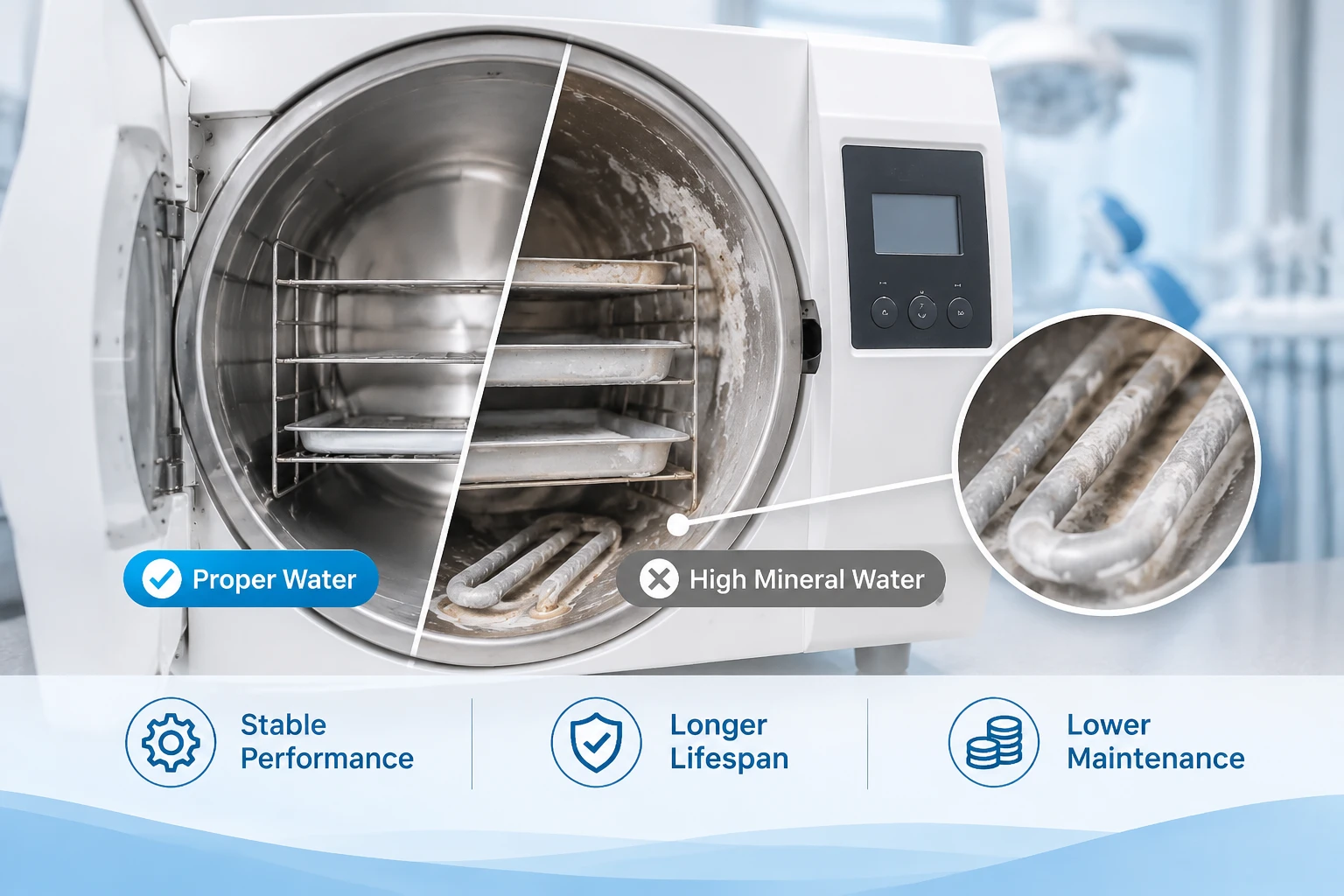
When water containing these minerals is heated, they can contribute to scale formation.
These deposits may accumulate on heating elements and internal surfaces, potentially reducing heat transfer efficiency and increasing cleaning requirements.
If left unaddressed, excessive scale buildup may affect the condition and performance of internal components.
2.2 Corrosion of Internal Components
Certain dissolved substances, particularly chlorides, can contribute to corrosion of susceptible metal components.
The presence of unsuitable water chemistry may increase the risk of damage to stainless steel surfaces, valves, and other internal parts.
The extent of corrosion depends on several factors, including water composition, material quality, temperature, and exposure time.
2.3 Stains and Residue on Dental Instruments
Mineral residues may remain on instrument surfaces after sterilization.
These deposits can appear as white spots, discoloration, or unwanted residue on stainless steel instruments and chamber surfaces.
Besides affecting appearance, such deposits may create additional cleaning requirements.
2.4 Increased Maintenance Requirements
As deposits accumulate, equipment may require more frequent cleaning, descaling, servicing, or component replacement.
For dental clinics that operate sterilization equipment every day, these issues can increase maintenance work and interrupt normal operations.
Maintaining suitable water quality helps reduce the risk of mineral deposits and supports better equipment maintenance.
3. What Water Quality Does a Dental Autoclave Require?
Not all purified water is the same. Dental autoclaves have specific water quality requirements depending on their manufacturer and model.
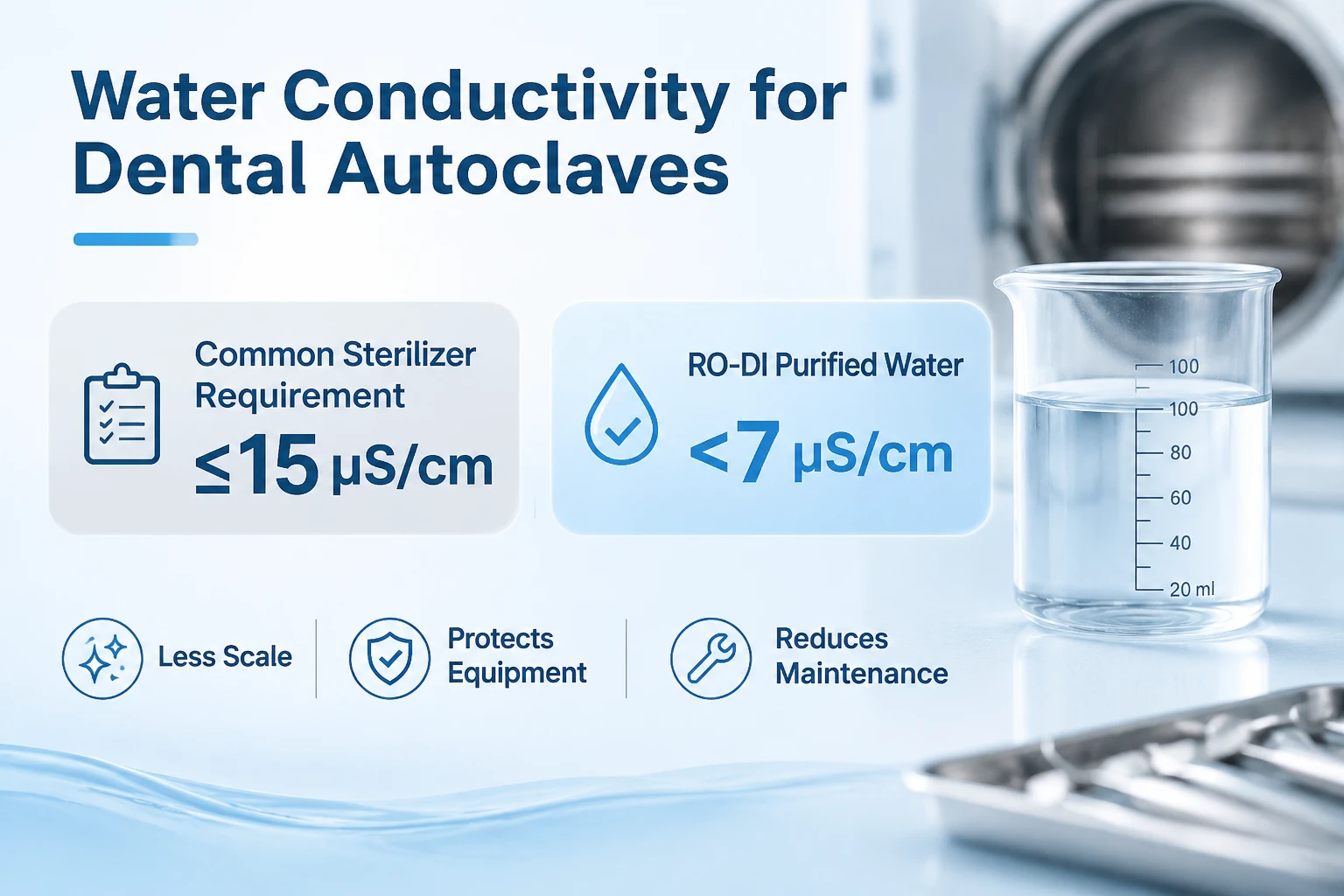
Many sterilizer specifications referencing EN 13060 use a feed water conductivity limit of 15 µS/cm at 20°C.
However, conductivity is only one part of water quality.
Other important parameters may include:
| Water Quality Parameter | Why It Matters |
|---|---|
| Conductivity | Indicates the level of dissolved ionic substances |
| Hardness | Related to calcium and magnesium content |
| Chlorides | May contribute to corrosion |
| Silica | May contribute to mineral deposits |
| pH | Helps assess the chemical characteristics of water |
The acceptable limits for each parameter should always be checked against the autoclave manufacturer's instructions.
Understanding Water Conductivity
Electrical conductivity measures how easily water conducts electricity.
It is commonly used as an indicator of dissolved ions in water.
Generally, lower conductivity indicates a lower concentration of dissolved ionic substances.
For many dental sterilizers, a commonly referenced conductivity limit is 15 µS/cm at 20°C.
This makes conductivity an important parameter when evaluating water quality for dental applications.
4. How Can Poor Water Quality Affect Equipment Performance?
The effects of unsuitable water are not limited to visible scale.
Water quality can influence several aspects of autoclave operation and maintenance.
Heating Efficiency
Mineral deposits on heating elements and heat-transfer surfaces may reduce heat transfer efficiency and increase the effort required to maintain operating conditions.
Internal Components
Corrosive substances and unsuitable water chemistry may affect metal surfaces, valves, and other internal components.
Cleaning and Maintenance
Scale and mineral residues may require additional cleaning and descaling procedures.
Equipment Reliability
Repeated exposure to unsuitable water may increase component wear and maintenance requirements over time.
It is important to understand that water quality is one of several factors affecting autoclave performance. Proper loading, operating temperature, pressure, cycle time, and regular equipment maintenance are also essential.
In other words, maintaining suitable water quality is part of protecting the equipment, not a replacement for proper sterilization procedures.
5. How Can Water Treatment Help Improve Water Quality?
Different water treatment technologies are available to reduce impurities and improve water quality.
Two commonly used technologies are Reverse Osmosis (RO) and Deionization (DI).
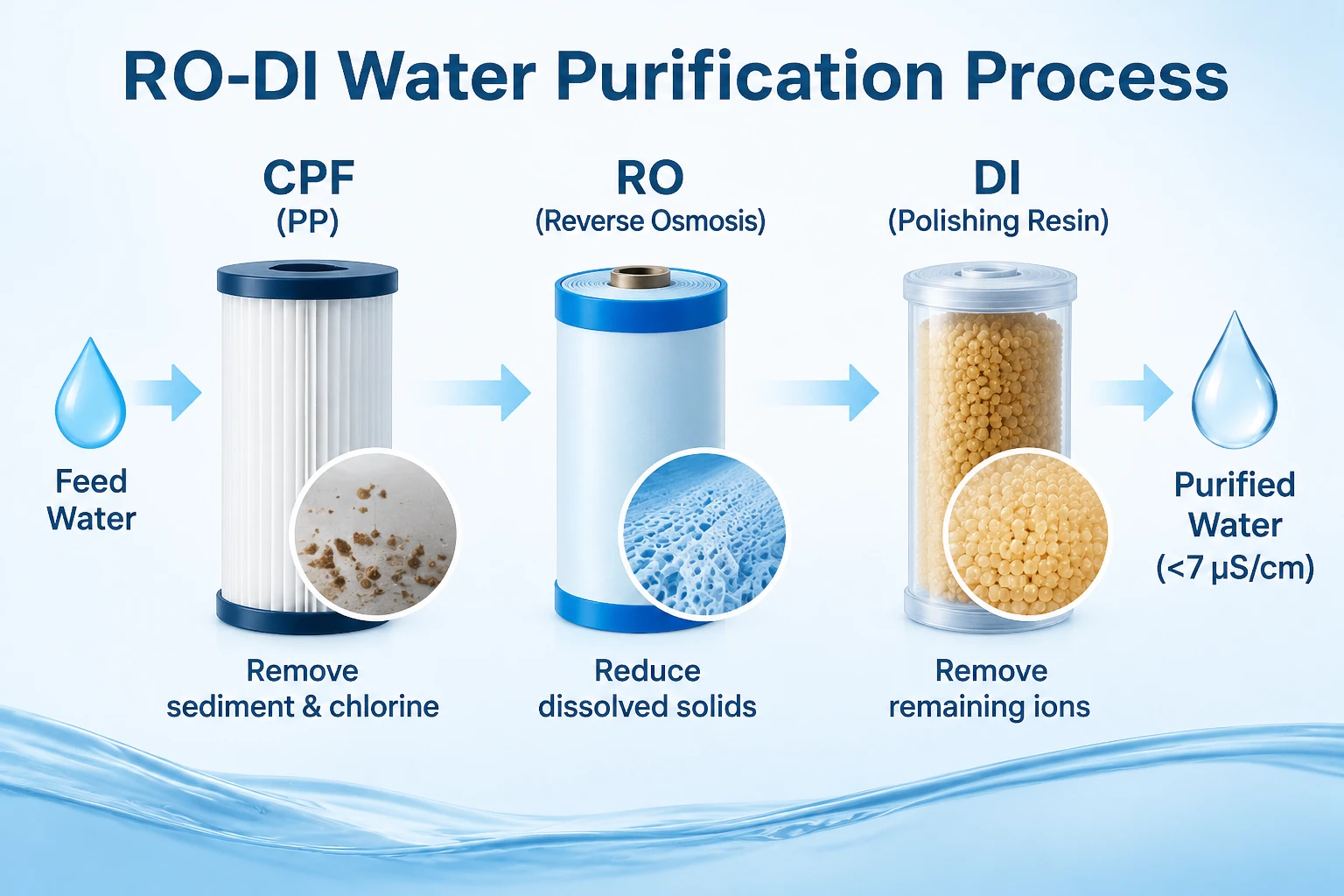
Stage 1: Pre-Filtration (CPF)
Pre-filtration helps remove sediment and suspended particles while reducing chlorine, protecting downstream purification components.
Stage 2: Reverse Osmosis (RO)
An RO membrane removes a large proportion of dissolved salts and other impurities through a semi-permeable membrane.
This significantly reduces the dissolved mineral content of the water.
Stage 3: Deionization (DI)
The DI stage uses ion exchange resin to further remove dissolved ions remaining after reverse osmosis.
This polishing process helps achieve very low conductivity.
CPF + RO + DI: Three stages working together to produce highly purified water for dental applications.
6. Water Distillation vs. RO-DI: Understanding the Different Methods
Water distillation is a traditional purification method widely used in dental clinics.
A distiller heats water until it evaporates, then collects the condensed steam as distilled water.
RO-DI systems use a different approach, combining membrane filtration and ion exchange instead of boiling water.
Both technologies can produce purified water, provided that the final water meets the requirements of the dental sterilizer.
Why Does Water Production Capacity Matter?
Apart from water quality, production capacity is another practical consideration for dental clinics.
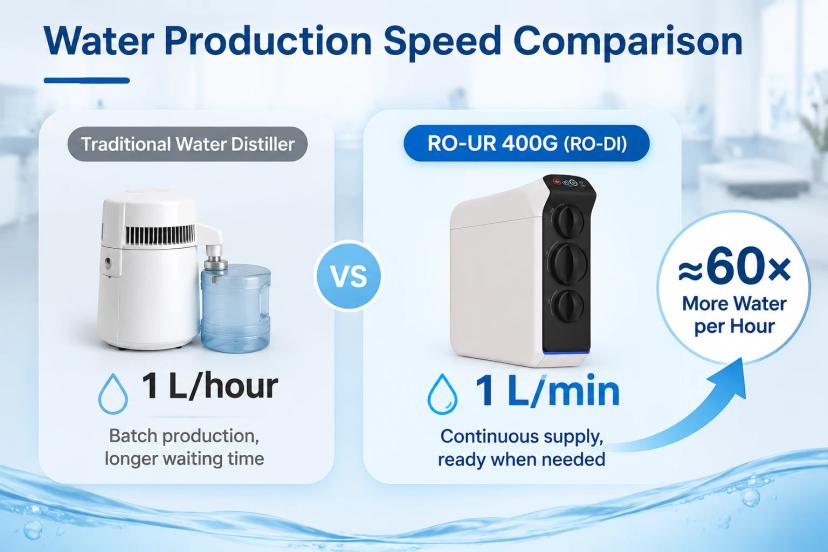
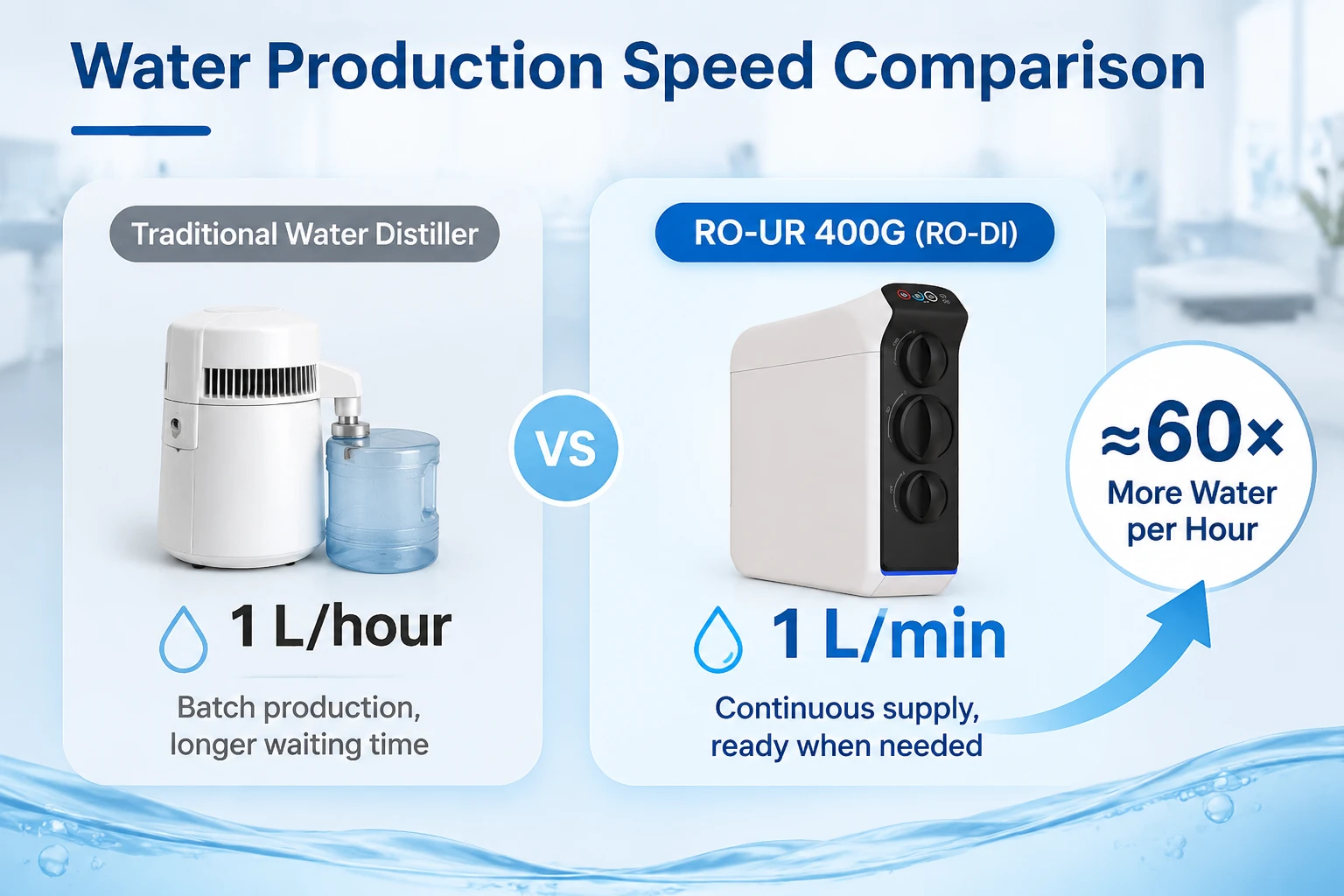
A conventional tabletop water distiller may produce approximately 1 liter per hour, depending on its model.
By comparison, the INTOPAQUA RO-UR 400G has a nominal production rate of approximately 1 liter per minute.
| Comparison | Traditional Distiller | RO-UR 400G |
|---|---|---|
| Production Rate | ~1 L/hour | ~1 L/minute |
| Nominal Hourly Output | ~1 L | ~60 L |
| Purification Method | Distillation | RO + DI |
At these nominal rates, the RO-UR can produce approximately 60 times more water per hour.
For clinics with frequent sterilization cycles, higher production capacity can reduce the waiting time associated with preparing separate batches of water.
Actual output depends on equipment specifications and operating conditions, and distiller production rates vary by model.
7. How to Maintain Suitable Water Quality for Dental Autoclaves
Choosing a suitable water treatment system is only the first step. Regular monitoring and maintenance are equally important.
Here are four practical recommendations:
1. Check the Autoclave Manufacturer's Water Requirements
Always refer to the equipment manual for conductivity, hardness, chloride, and other water quality limits.
2. Monitor Water Conductivity
Regular conductivity checks can help identify changes in water quality and indicate when further inspection may be needed.
3. Replace Filters and DI Cartridges on Time
Filter and resin replacement intervals depend on incoming water quality, daily consumption, and cartridge capacity.
4. Follow Equipment Maintenance Instructions
Regular inspection, cleaning, and maintenance help prevent mineral deposits from becoming more serious problems.
Good water quality management should be part of the clinic's routine equipment maintenance program.
8. RO-DI Water Purification for Dental Applications
Water quality is an important part of maintaining dental sterilization equipment. For this reason, selecting a suitable purification solution deserves careful consideration.
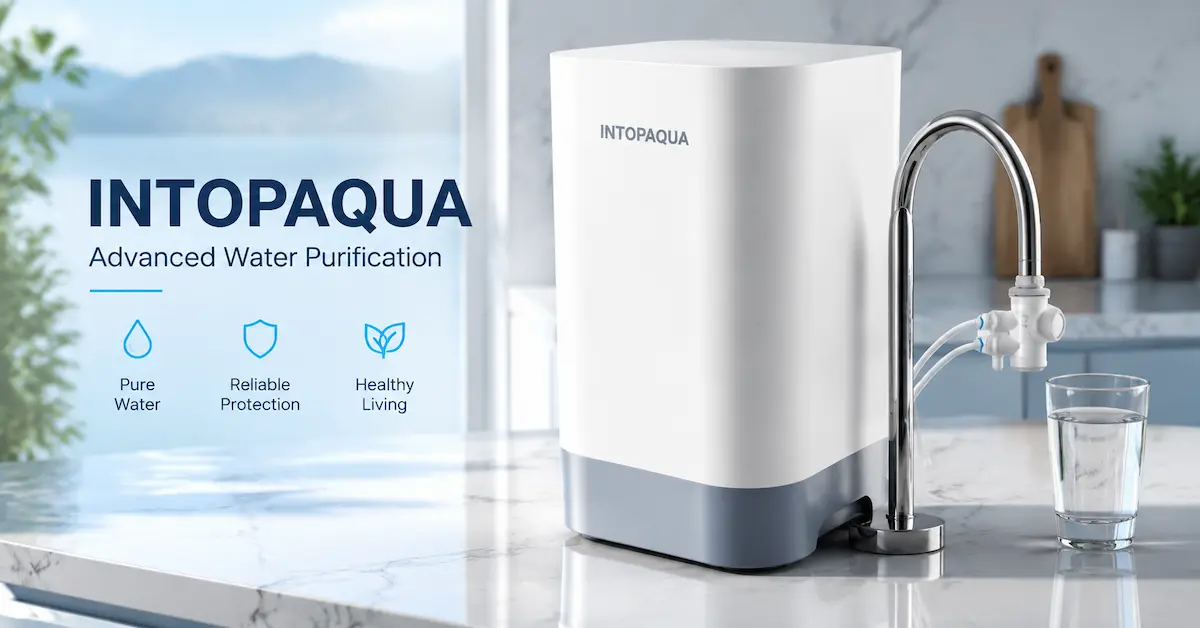
The INTOPAQUA RO-UR 400G is designed for dental water applications, combining three-stage purification technology with a high-flow water supply.
Its main characteristics include:
-
Below 7 µS/cm conductivity: Produces highly purified water with very low conductivity.
-
1 L/min production rate: Approximately 60 liters of nominal production per hour.
-
CPF + RO + DI filtration: Three-stage water purification.
-
On-demand water supply: Reduces reliance on separate water distillation batches.
-
Automatic flushing: Helps maintain RO membrane performance.
The system can be used in dental applications involving autoclaves, dental units, and ultrasonic cleaners, subject to appropriate water quality requirements and installation design.
The goal of water treatment is not simply to produce purified water, but to provide water that is suitable for the equipment using it.
9. Frequently Asked Questions (FAQ)
Q1. Why is water quality important for dental autoclaves?
Water quality is important because dissolved minerals and certain impurities can accumulate inside autoclaves during repeated heating.
This may lead to scale buildup, corrosion risks, instrument staining, and increased maintenance requirements.
Using water that meets the equipment manufacturer's specifications helps protect internal components and supports reliable equipment operation.
Q2. Can ordinary tap water be used in a dental autoclave?
It depends on the water quality and the autoclave manufacturer's requirements.
Ordinary tap water may contain minerals, chlorides, and other dissolved substances that exceed the permitted limits for certain sterilizers.
Always check the manufacturer's water specifications before choosing a water source.
Q3. What conductivity level is suitable for dental autoclaves?
Many sterilizer specifications reference a feed water conductivity limit of 15 µS/cm at 20°C.
However, the exact requirement varies by equipment model.
INTOPAQUA's RO-DI system can achieve conductivity below 7 µS/cm. Other water quality parameters must also meet the sterilizer manufacturer's requirements.
Q4. Does an RO-DI water purification system produce sterile water?
No. RO-DI produces highly purified water, but it should not be confused with sterile water.
Reverse Osmosis and Deionization reduce particles, dissolved impurities, and ions. They do not, by themselves, establish that the final water is microbiologically sterile.
Sterile water requires an appropriate validated sterilization process and microbiological controls.
For dental applications, the RO-DI system provides purified feed water, while the autoclave performs the sterilization process for dental instruments.
Q5. How often should autoclave water treatment filters be replaced?
There is no single replacement interval that applies to every system.
Filter and DI cartridge life depends on incoming water quality, daily water consumption, and the treatment capacity of each cartridge.
Regular water quality monitoring and following the manufacturer's recommended replacement schedule are the best ways to maintain consistent performance.
Conclusion
Water quality plays an important role in dental autoclave operation and maintenance.
Dissolved minerals may contribute to scale buildup, while certain impurities can increase corrosion risks and leave unwanted residues on instruments and internal surfaces.
Understanding water conductivity, hardness, chloride content, and other water quality parameters helps dental clinics make better decisions when selecting a suitable water treatment solution.
Maintaining suitable water quality is not just about producing cleaner water. It is also about protecting equipment, reducing unnecessary maintenance, and supporting reliable daily sterilization workflows.
Good sterilization equipment deserves good water quality.