

A water filter can look correct on paper and still fail after installation.
The specification may be strong. The filter cartridge may use good media. The housing may look thick. The supplier may say the materials are compliant. The price may also look reasonable. But when the unit is installed and water pressure comes in, a small leak appears between the housing and the cap.
For a household user, that leak is annoying. For a distributor, installer, private-label brand, or project buyer, it becomes a much bigger problem. It can lead to returns, complaints, service visits, damaged trust, and extra cost that was never shown in the quotation.
That is why choosing a reliable water filter manufacturer should not stop at cartridge material, treated water capacity, or price. For B2B buyers, leak-proof design depends on the parts that are easiest to overlook: the O-ring, the sealing groove, the cap structure, housing roundness, wall thickness, and injection molding control.
This guide explains why water filters leak after installation, how to evaluate a leak-proof water filter supplier, and what details should be checked before placing OEM, ODM, or wholesale water filter orders.
What B2B buyers should check before comparing water filter price
A good water filter is not just a combination of a cartridge, housing, tubing, and fittings. It is a pressure-bearing system. Once installed, every part must work together under water pressure, pressure fluctuation, and repeated use.
For busy buyers, the first answer is simple: most installation leaks do not come from the biggest component. They often come from small sealing details.
A filter housing may not be cracked. The tubing may not be broken. The cartridge may not be the problem. The leak may come from a low-grade O-ring, poor groove precision, cap warpage, uneven wall thickness, or an oval filter housing that cannot seal evenly.
For B2B procurement, a leak-proof water filter should be judged by both visible specifications and hidden manufacturing details.
| Buyer Question | Why It Matters | What to Ask the Supplier |
|---|---|---|
| Does the unit have whole-system certification? | Component compliance is not the same as system reliability | Is the full assembled system tested, or only some materials? |
| What material is used for the O-ring? | The seal controls leakage between housing and cap | Is it food-grade silicone, EPDM, NBR, or another material? |
| Is the housing single-seal or double-seal? | Redundant sealing reduces leakage risk | Does the design use one O-ring or two independent seals? |
| How is housing roundness controlled? | Oval housings create uneven sealing pressure | Do you inspect diameter consistency after molding? |
| How is the cap groove controlled? | Poor groove size can damage or loosen the O-ring | Do you inspect groove width, depth, and fit? |
| Is the housing wall thickness uniform? | Uneven cooling may cause warpage | How do you control injection molding and mold design? |
Why do water filters leak after installation?
Water filter leakage usually happens when sealing pressure is not evenly maintained around the connection area. In most common designs, the key connection is between the filter housing and the cap.
When water pressure enters the system, the seal must remain stable. If one part shifts, deforms, hardens, or fails to compress correctly, water will find the weakest path.
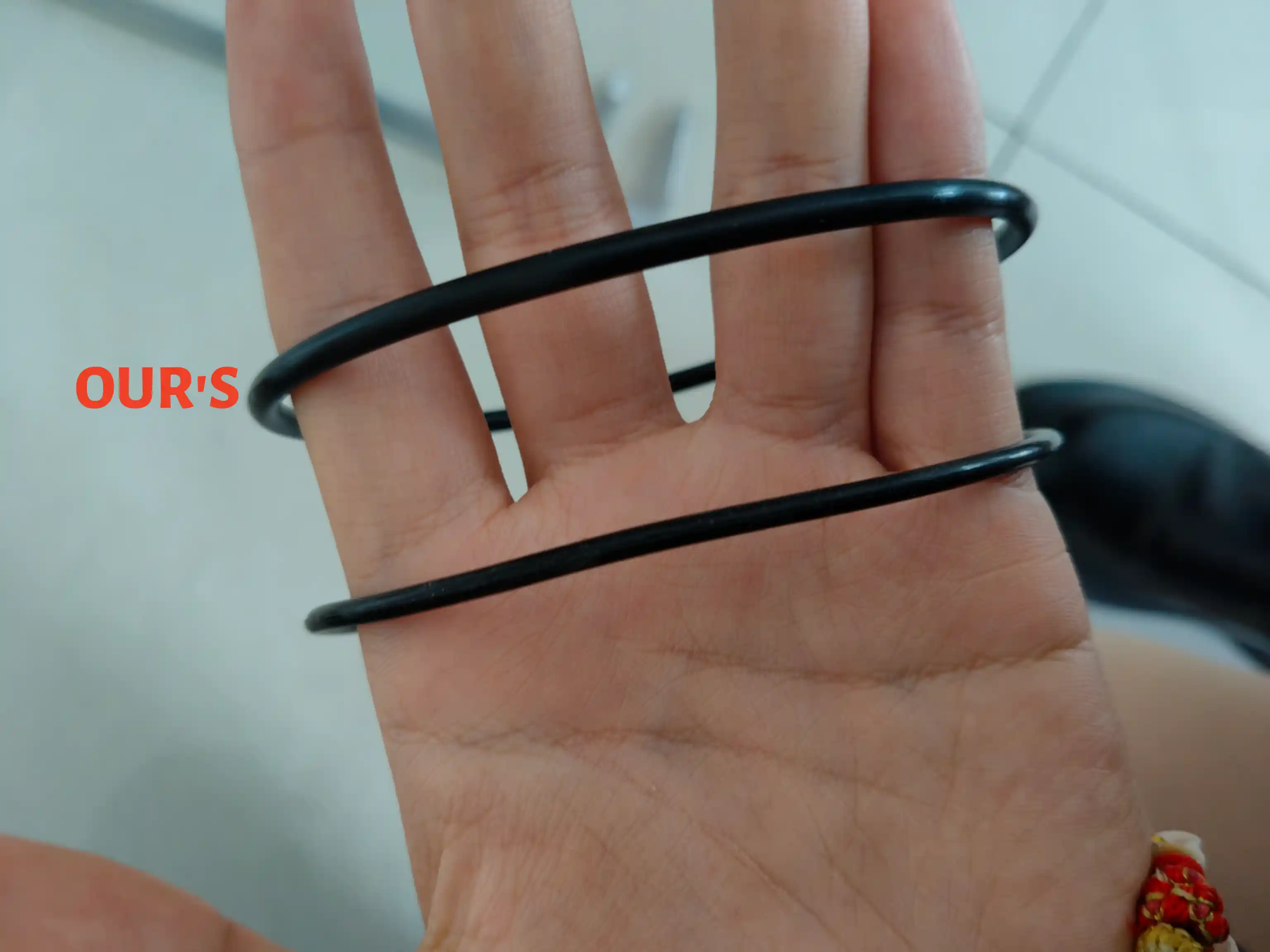
Common leak points in a water filter system
Leaks may appear in several places, but housing-cap leakage is one of the most common complaints in B2B after-sales cases.
| Leak Location | Possible Cause | Procurement Risk |
|---|---|---|
| Housing and cap connection | Poor O-ring material, groove mismatch, cap warpage | High return rate after installation |
| Tubing connection | Loose fitting, poor tolerance, weak locking structure | Installer complaints and field service cost |
| Filter cartridge interface | Poor fit between cartridge and head | Unstable flow or bypass risk |
| Housing body | Weak material, uneven wall thickness, pressure shock | Safety and durability concern |
| Threaded area | Poor machining or injection accuracy | Slow seepage after tightening |
Why small sealing parts affect the whole water filter
A water filter is only as reliable as its weakest sealing point.
The O-ring is small and low-cost, but it carries real pressure responsibility. The groove around it looks simple, but a small deviation can change compression. The cap may look flat, but if it warps slightly after molding, the seal may not sit evenly.
These are not details a buyer can judge from a product photo. They must be verified through supplier questions, sample inspection, and production quality control.
A practical example from installation feedback
A buyer may order a water filter with a high-fill cartridge and strong housing. The unit passes visual inspection. The installer tightens the housing. Water is turned on.
At first, everything looks normal. After pressure stabilizes, water slowly appears at the cap edge. The problem is not always the installer. It may be that the O-ring was too hard, the groove was too shallow, or the housing was slightly out of round.
This is why professional buyers should evaluate sealing design before discussing only unit price.
Whole-system NSF certified water filter vs component certification
Certification is usually one of the first questions in B2B water filter procurement. It should be. Certification helps buyers reduce compliance risk, especially when selling into markets that care about drinking water safety.
But there is an important difference between whole-system certification and component-level certification.
What does whole-system certification mean for water filter buyers?
Whole-system certification means the complete assembled product has gone through testing as a unit. This is a stronger signal than only saying that one material, one seal, or one supplier component is certified.
In practical terms, a complete system may need to withstand pressure testing, water hammer testing, material safety checks, and performance-related evaluation. It requires more investment and better consistency.
For B2B buyers looking for a whole-system NSF certified water filter, this distinction matters.
What does component certification mean?
Component certification means certain parts or materials used in the product may come from certified suppliers. This is useful, but it does not automatically prove the assembled unit performs reliably under pressure.
For example, a certified material does not guarantee the O-ring groove is correct. A certified housing material does not guarantee the cap will not warp. A certified cartridge material does not prove the complete system is leak-proof.
How INTOPAQUA handles certification and material selection
Several INTOPAQUA water filter series have passed whole-system NSF certification. Water-contact materials such as housings, seals, tubing, and fittings are sourced from suppliers with relevant certification support.
For B2B buyers, this provides two layers of confidence: system-level reliability and material-level traceability.
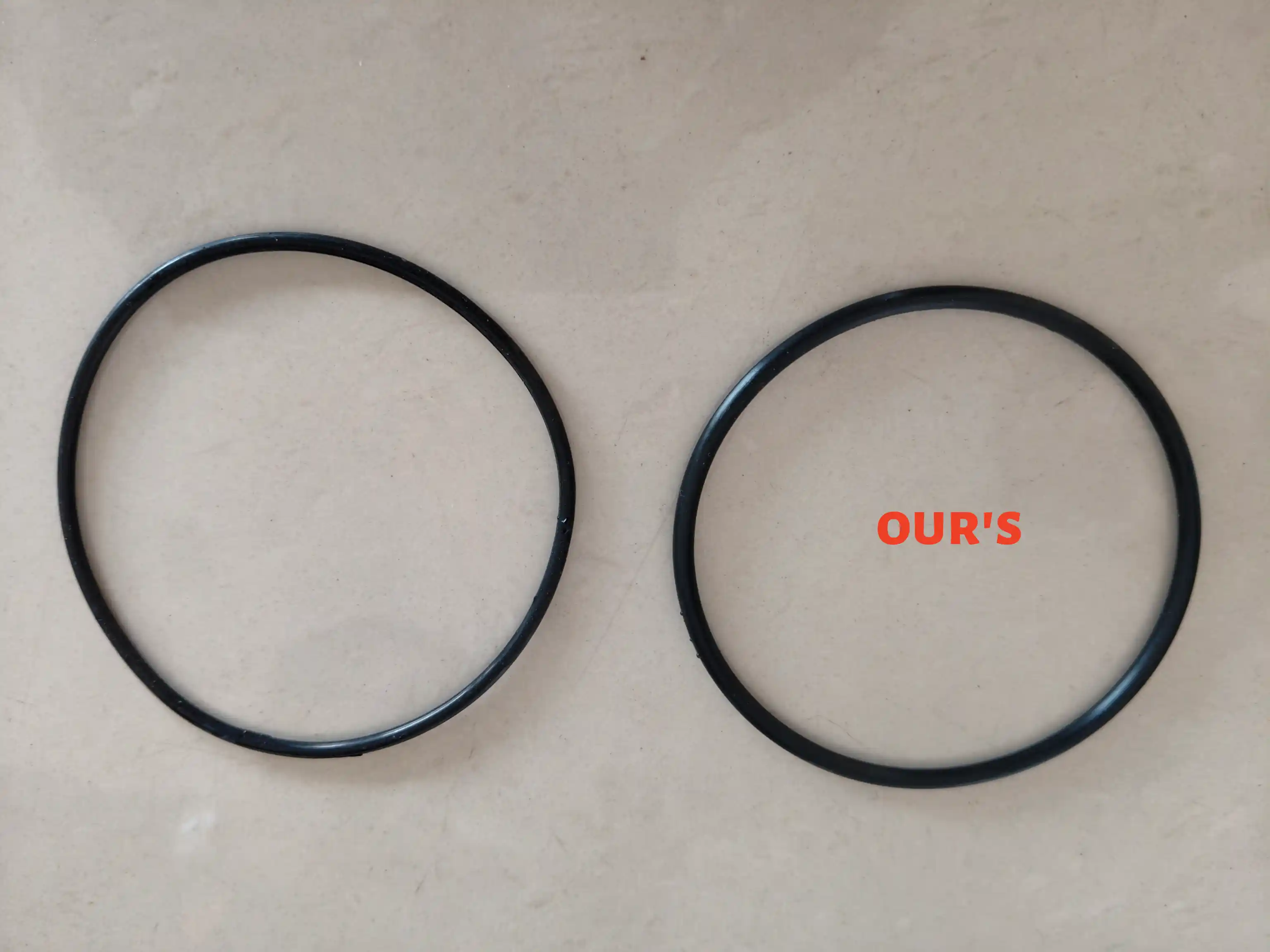
Why O-ring material is critical for leak-proof water filter design
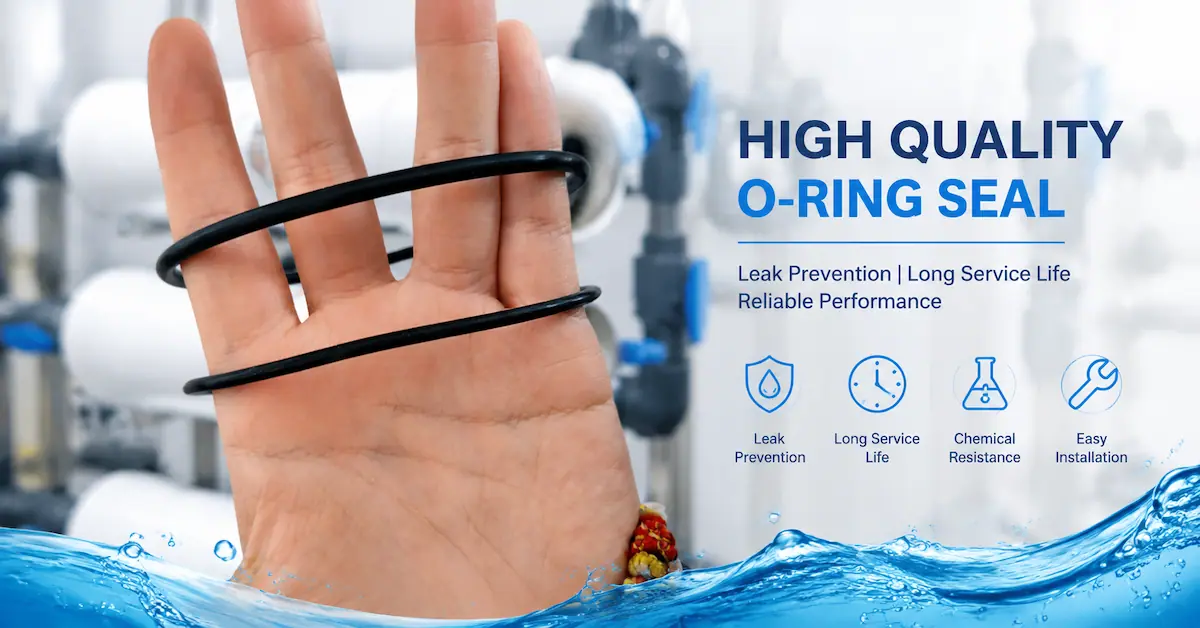
The O-ring is the sealing ring installed between the filter housing and the cap. It looks simple, but it is one of the most important parts in the whole water filter.
If the O-ring fails, the system leaks.
Food-grade silicone seal vs ordinary rubber seal
Some manufacturers choose ordinary NBR, low-grade EPDM, or recycled rubber compounds to reduce cost. These materials may work in basic conditions, but they can create long-term risks.
A poor seal may become too hard. It may lose elasticity after compression. It may deform under pressure. It may crack after long-term water exposure. Once that happens, leakage is only a matter of time.
Food-grade silicone is a better option for drinking water contact applications because it offers stable elasticity, low compression set, aging resistance, and good water-contact performance.
For buyers comparing water filter suppliers, asking about the O-ring material is not a minor detail. It is a direct question about leakage risk.
Why compression set matters
Compression set refers to how well a rubber or silicone part returns to its original shape after being compressed.
If an O-ring stays flattened after long-term pressure, it loses sealing force. Even if it looked correct at the beginning, leakage may appear later.
For distributors and OEM brands, this matters because product failure may not happen during sample testing. It may happen after the product reaches end users.
What to ask your supplier about O-rings
Ask these questions before placing bulk orders:
- What material is used for the O-ring?
- Is the seal food-grade?
- Is the hardness controlled by batch?
- Is the compression ratio checked?
- Does the supplier use one seal or two seals?
- Can the seal be traced to a material supplier?
These questions are simple, but they can reveal whether the supplier understands sealing engineering or only assembles parts.
Single-seal vs double-seal filter housing: which is better for B2B orders?
A single-seal filter housing uses one O-ring between the cap and housing. A double-seal filter housing uses two independent O-rings to create a redundant sealing structure.
For low-pressure and low-risk applications, a single seal may be enough. But for B2B customers selling into markets with higher reliability expectations, a double-seal design is safer.
How double-seal filter housing reduces leakage risk
A double-seal structure creates two sealing barriers. If the first seal is slightly affected by installation, shipping vibration, or pressure fluctuation, the second seal can still help maintain system integrity.
This does not mean a double-seal design can replace good molding precision. It cannot. But when combined with accurate groove design and quality silicone seals, it provides stronger protection.
Why redundant sealing is useful for OEM water filter programs
OEM buyers are not only buying a product. They are protecting their brand reputation.
If a product leaks after installation, the end user rarely blames the O-ring. They blame the brand printed on the product. That is why OEM and ODM buyers should pay attention to redundant sealing design before confirming private-label production.
When to consider double-seal design
A double-seal structure is especially valuable for:
- Whole house water filter systems
- Commercial water filter housings
- Under-sink water purifier systems
- High-pressure installation environments
- Products sold through installers or distributors
- Private-label programs where after-sales cost matters
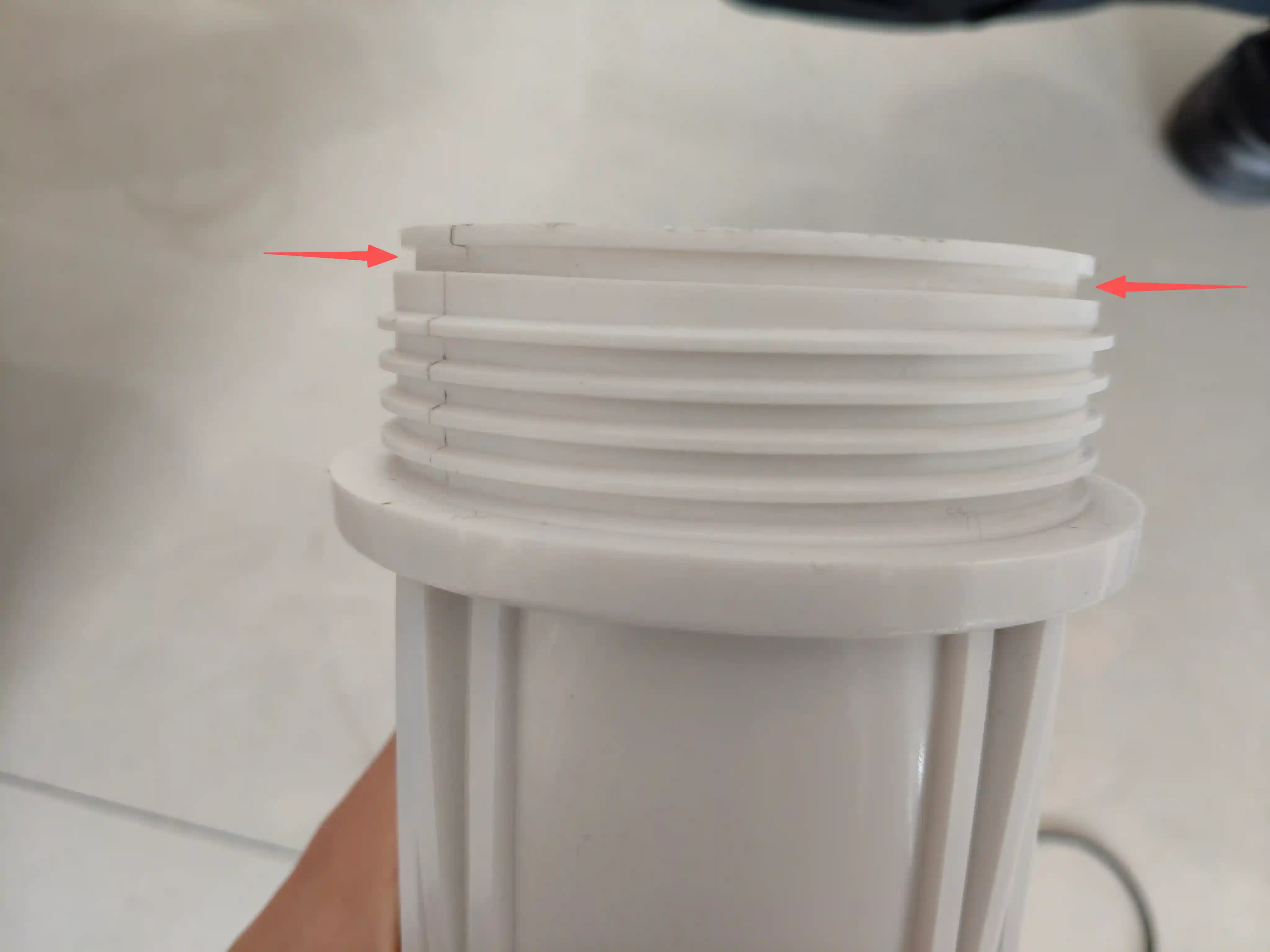
O-ring groove precision: the hidden factor behind water filter leakage
Even a good O-ring can fail if the groove is poorly designed.
The groove must hold the seal in the right position and create the right compression after tightening. If the groove is too shallow, the O-ring may be over-compressed. If it is too deep, sealing pressure may be insufficient. If it is too wide, the O-ring may shift. If it is not round enough, compression will not be even.
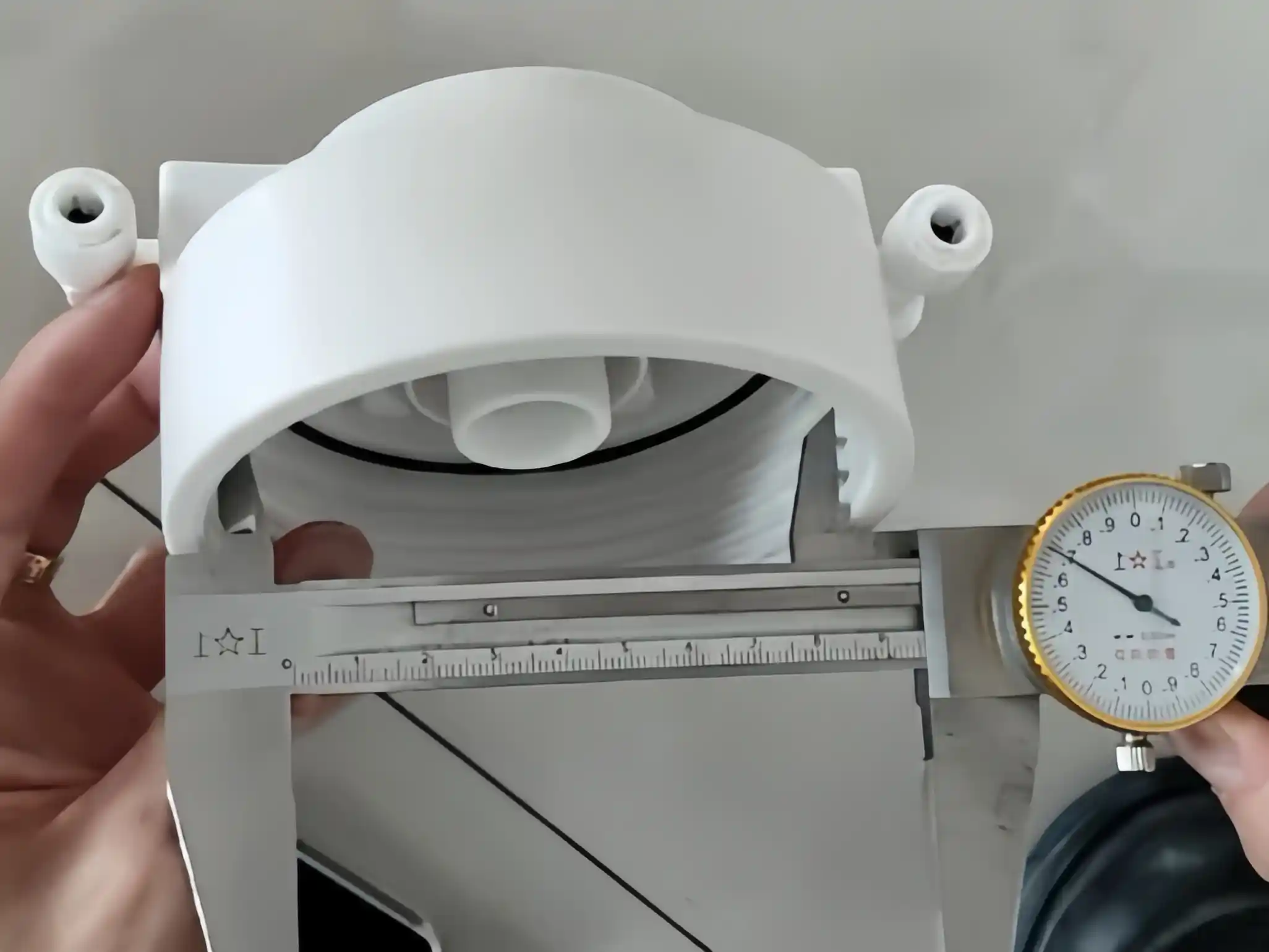
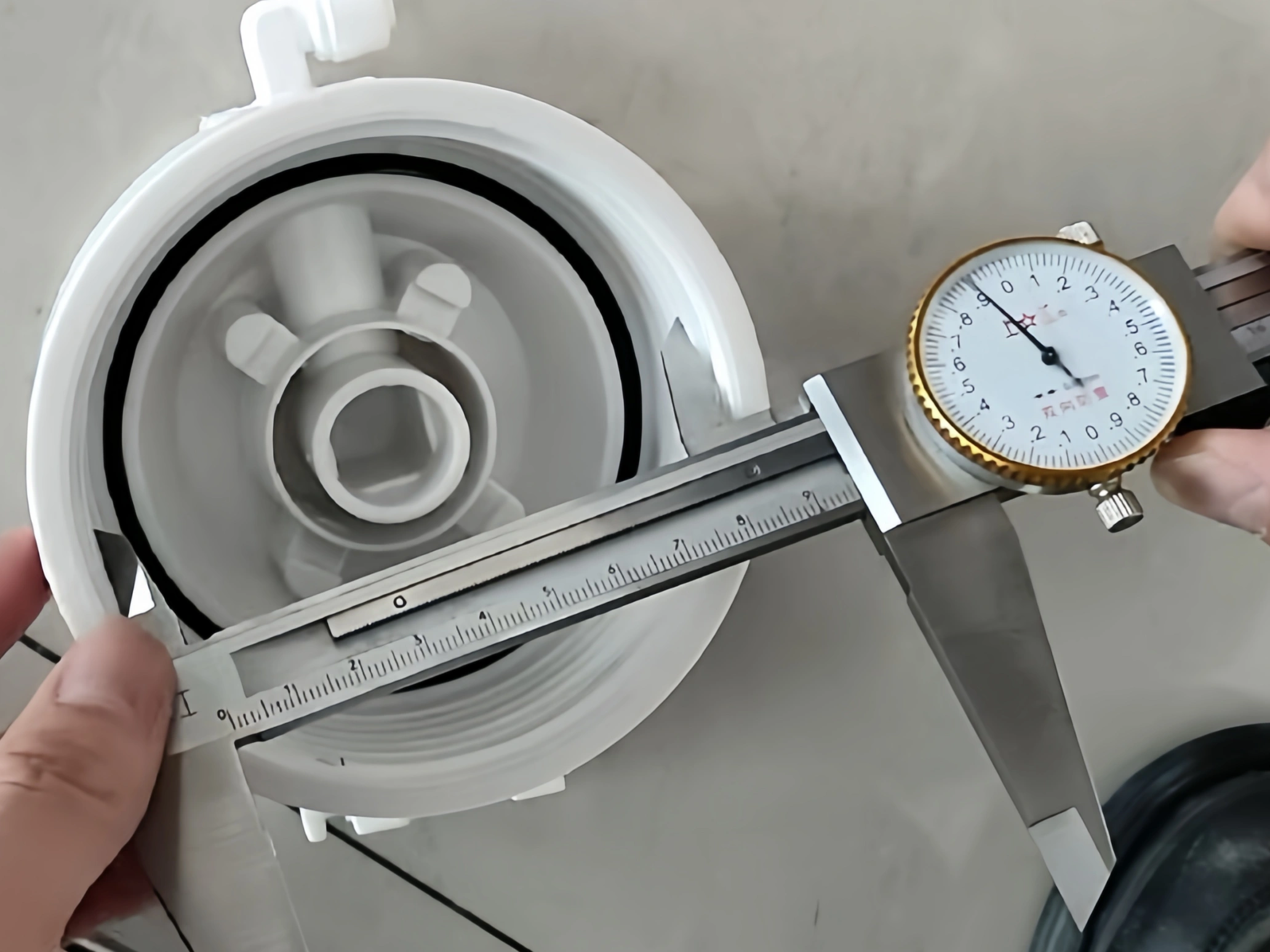
What is O-ring groove dimension inspection?
O-ring groove dimension inspection checks whether the groove width, depth, roundness, and finish are within the design tolerance.
For precision-injected water filter parts, this inspection should be part of the quality control process. It should not be left to guesswork.
Why groove precision affects long-term stability
During installation, the housing and cap are tightened together. The O-ring is compressed into the groove. If the groove design is wrong, the O-ring may twist, pinch, flatten, or move out of position.
The product may pass a quick water test but still fail after pressure cycling.
Supplier capability behind groove quality
Good groove precision requires more than a good drawing. It depends on:
- Mold accuracy
- Injection molding stability
- Material shrinkage control
- Cooling process control
- Regular mold maintenance
- Dimensional inspection after production
This is one of the differences between a professional water filter manufacturer and a simple assembly supplier.
Filter housing roundness and cap warpage: the hard parts behind a soft seal
The O-ring is the soft part of the seal. The housing and cap are the hard structure that supports it.
If the hard structure is not accurate, the soft seal cannot do its job well.
Why housing roundness matters in leak-proof water filters
A filter housing should be round. If it becomes slightly oval, the gap between the housing and cap will not be even.
In one direction, the fit may be too tight. In another direction, it may be too loose. The tight side may create stress. The loose side may create leakage.
High-roundness filter housing production depends on mold design, stable injection pressure, balanced cooling, and controlled ejection.
Why cap warpage causes leakage
Cap warpage can happen when wall thickness is not uniform. If some areas cool faster than others after injection molding, internal stress may pull the cap out of shape.
The cap may still look acceptable at first glance. But when it is tightened onto the housing, one side may not press the O-ring evenly.
That small uneven gap can become a leak path.
What professional manufacturers control during molding
A reliable water filter manufacturer should control:
- Wall thickness uniformity
- Injection pressure stability
- Cooling time
- Mold temperature
- Part ejection balance
- Post-molding dimensional inspection
For B2B buyers, these are not factory-only details. They are after-sales risk details.
Filter cartridge quality still matters, but it is not the only question
Sealing design prevents leakage. Filter cartridge quality controls filtration performance. Both matter.
Many buyers focus on the cartridge, and that is correct. But if the system leaks, even a good cartridge cannot save the user experience.
Coconut shell activated carbon and full-fill cartridge design
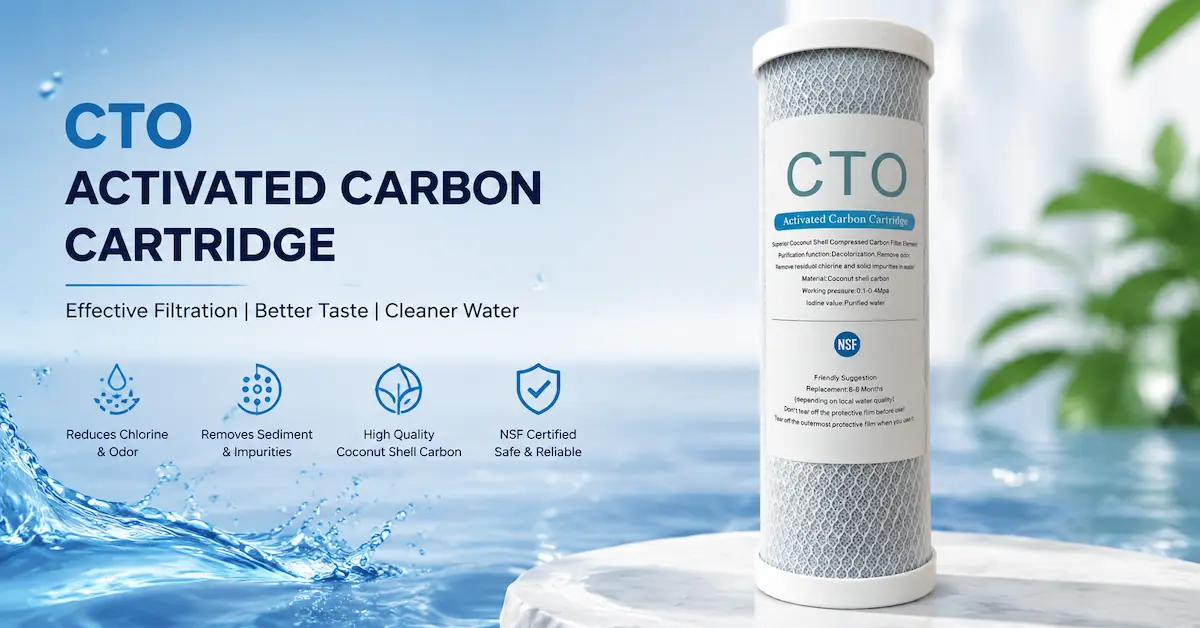
Coconut shell activated carbon is commonly used in water filtration because of its adsorption performance. A high-fill cartridge can support better service life and stable performance when designed correctly.
At INTOPAQUA, coconut shell activated carbon with high iodine value is used in selected products. The cartridge fill level follows design specifications instead of reducing media weight to lower cost.
For buyers comparing high-fill coconut shell carbon cartridges, it is worth checking both material quality and actual fill consistency.
Why buyers should compare cartridge and housing together
A strong cartridge inside a weak housing is not a reliable product. A thick housing with poor sealing is also not reliable.
The best result comes from a balanced system: good media, accurate cartridge structure, strong housing, stable cap design, proper O-ring material, and controlled assembly.
Practical inspection before approving samples
When you receive samples, check:
- Cartridge weight and fill consistency
- Housing wall thickness
- O-ring material and placement
- Cap fit and tightening feel
- Water test under pressure
- Any seepage after standing under pressure
- Packaging protection during shipping
This simple inspection can prevent many problems before mass production.
How to choose a leak-proof water filter manufacturer for OEM and wholesale orders
A reliable water filter supplier should be able to explain the product in engineering terms, not only sales terms.
If a supplier only talks about price, capacity, and attractive appearance, that is not enough. For B2B projects, the supplier should be able to explain sealing design, material selection, testing, quality control, and traceability.
Supplier evaluation checklist for B2B water filter buyers
| Evaluation Area | Strong Supplier Signal | Warning Sign |
|---|---|---|
| Certification | Can explain whole-system and component certification clearly | Uses “certified” without details |
| O-ring material | Uses food-grade silicone or suitable water-contact seal material | Cannot confirm seal material |
| Sealing design | Offers double-seal or tested sealing structure | Only relies on basic single seal |
| Groove precision | Has mold control and dimension inspection | No inspection data or tolerance control |
| Housing quality | Controls roundness and wall thickness | Only checks appearance |
| Cartridge fill | Uses specified media and fill weight | Cartridge feels light or inconsistent |
| Testing | Performs pressure and leakage testing | Only does visual inspection |
| OEM support | Can support logo, packaging, sample confirmation, and documentation | Cannot provide structured process |
Factory vs trading company for water filter procurement
A trading company may be useful for sourcing many categories. But for leak-sensitive water filter products, factory control matters.
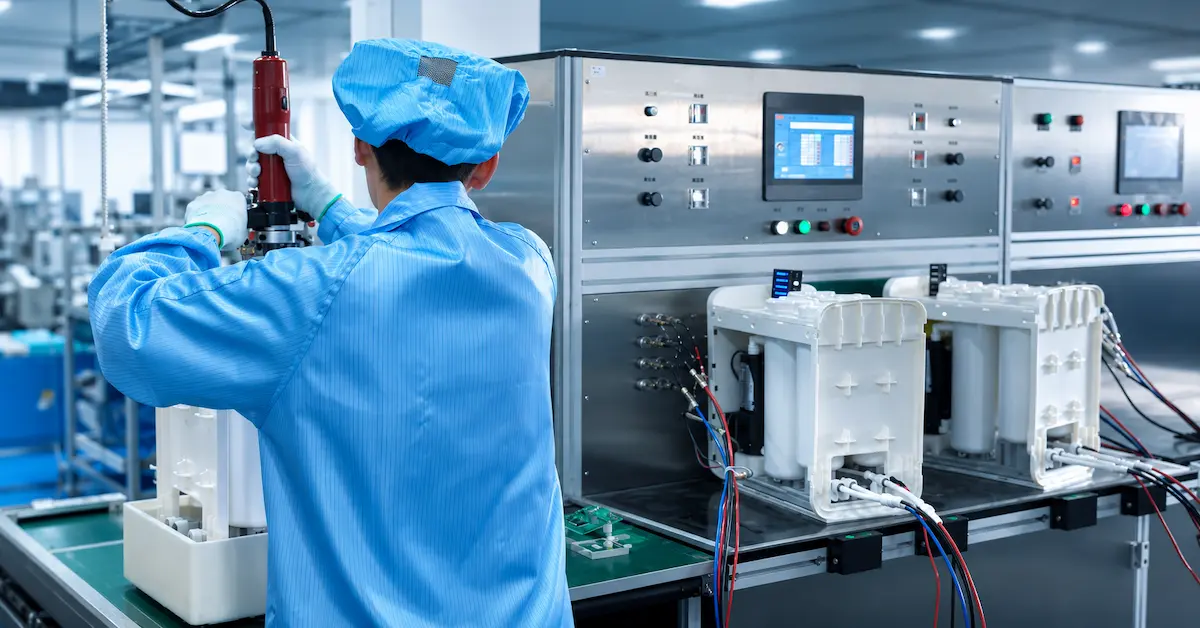
A factory can better control mold design, injection molding, material sourcing, assembly, testing, and batch consistency. It can also respond faster when technical changes are needed.
For OEM and ODM buyers, this can reduce communication gaps and improve long-term stability.
Why long-term supplier cooperation is better than one-time price chasing
The lowest quotation may look attractive at first. But if cost reduction happens in hidden areas such as seals, wall thickness, cartridge fill, or inspection time, the real cost appears later.
Returns, complaints, replacements, freight, and brand damage are often more expensive than the small savings made during procurement.
A reliable supplier helps buyers avoid those hidden costs.
How INTOPAQUA approaches leak-proof water filter manufacturing
At INTOPAQUA, we pay close attention to the small details that decide whether a water filter performs well after installation.
We focus on food-grade sealing materials, double-seal structure where required, O-ring groove accuracy, housing roundness, wall thickness design, and water-contact material traceability. These details are part of our daily production thinking, not after-sales explanations.
Our production focus for leak-proof water filters
| Production Detail | Our Focus | Buyer Benefit |
|---|---|---|
| O-ring material | Food-grade silicone for selected sealing applications | Better elasticity and sealing stability |
| Sealing structure | Double-seal design for stronger leak protection where applicable | Lower leakage risk after installation |
| Groove control | Attention to groove fit and molding precision | More stable O-ring compression |
| Housing roundness | Dimensional control after injection molding | Better cap fit and sealing consistency |
| Cap wall design | Uniform wall thickness to reduce warpage risk | More even sealing pressure |
| Material traceability | Water-contact materials sourced with certification support | Easier compliance review for B2B buyers |
| Pressure testing | Focus on pressure-bearing performance | More confidence before market launch |
OEM and ODM water filter support
For OEM and ODM buyers, we can support product selection, sample confirmation, private-label requirements, packaging discussion, and order planning.
The goal is not only to deliver a product. The goal is to help customers reduce leakage complaints, protect their brand reputation, and build a stable product line for their target market.
What buyers can discuss with us before ordering
You can share your target market, expected flow rate, installation environment, certification requirements, packaging needs, and budget range. Our team can help review which product structure is more suitable for your sales channel or project use.
This is especially useful for distributors, importers, private-label brands, installers, and project buyers who need stable long-term supply.

Water filter leakage prevention: a practical 10-step buying method
A buyer does not need to become an engineer to reduce leakage risk. But the buying process should include the right checks.
Step-by-step inspection before placing a bulk water filter order
- Confirm whether certification is whole-system or component-level.
- Ask what O-ring material is used and whether it is suitable for drinking water contact.
- Check whether the housing uses a single-seal or double-seal design.
- Ask how the O-ring groove is controlled during molding.
- Review housing wall thickness and pressure-bearing design.
- Ask whether housing roundness is inspected.
- Check cap flatness and possible warpage risk.
- Compare cartridge media, fill weight, and service life claims.
- Request sample testing under realistic pressure conditions.
- Confirm packaging, installation instructions, and after-sales responsibility before mass production.
Why this method works
This method moves the buying decision from appearance and price toward real system reliability. It helps buyers identify whether a supplier understands the product deeply or only sells by catalog.
Best use cases for this checklist
This checklist is useful when sourcing:
- Whole house water filters
- Under-sink water purifier systems
- Commercial water filter housings
- Replacement filter cartridges
- OEM water filter products
- Private-label water filtration systems
- Distributor-grade water treatment products
FAQ: Water filter leakage, sealing design, and B2B procurement
What causes a water filter to leak after installation?
Common causes include poor O-ring material, incorrect O-ring groove dimensions, cap warpage, uneven housing roundness, loose fittings, weak threads, or improper tightening. In B2B procurement, leakage often comes from small sealing and molding details rather than the main filter cartridge.
Is the O-ring really important in a water filter?
Yes. The O-ring is one of the most important sealing parts between the housing and cap. If the O-ring loses elasticity, shifts, twists, or is made from low-grade material, the water filter may leak under pressure.
Which O-ring material is better for drinking water filters?
Food-grade silicone is often preferred for drinking water filter sealing because it offers good elasticity, aging resistance, water-contact suitability, and low compression set. Buyers should confirm the exact material with the supplier.
What is a double-seal filter housing?
A double-seal filter housing uses two independent O-rings instead of one. This creates redundant sealing protection and helps reduce leakage risk in higher-reliability applications.
Is whole-system NSF certification better than component certification?
Whole-system certification is generally a stronger signal because the complete assembled unit is tested as a system. Component certification only shows that certain materials or parts may meet relevant requirements. B2B buyers should ask suppliers to clarify the difference.
How can I check if a filter housing is high quality?
Check wall thickness, roundness, cap fit, sealing design, pressure test results, material traceability, and sample performance after installation. A visual check alone is not enough.
Why does cap warpage cause leakage?
If the cap is warped, it cannot press the O-ring evenly around the housing. This may leave tiny gaps that allow water to seep out when pressure enters the system.
Why does housing roundness matter?
A housing that is slightly oval creates uneven fit with the cap. Some areas may be too tight while others are too loose. This can cause leakage, stress, or cracking.
Should B2B buyers choose the lowest water filter price?
Not always. A very low price may come from savings in hidden areas such as seal material, wall thickness, cartridge fill, inspection time, or packaging. The lowest unit price can become expensive if it leads to returns and complaints.
What should I ask a water filter manufacturer before OEM production?
Ask about certification, O-ring material, sealing structure, groove inspection, housing roundness, pressure testing, cartridge media, fill weight, MOQ, lead time, packaging, logo options, and after-sales support.
Can a good cartridge prevent leakage?
No. A good cartridge improves filtration performance, but leakage is usually related to sealing structure, housing quality, cap fit, fittings, or installation. Cartridge quality and sealing design must both be evaluated.
How can INTOPAQUA support B2B buyers?
INTOPAQUA supports B2B buyers with water filter product selection, OEM and ODM discussion, sample confirmation, quality control, water-contact material traceability, and leak-risk-focused manufacturing details.
Final thoughts for B2B water filter buyers
A water filter is not difficult to understand from the outside. But stable performance depends on details that are easy to miss.
The O-ring, groove, cap, housing roundness, wall thickness, cartridge fill, and pressure testing all work together. If one of them is ignored, leakage risk increases.
For distributors, importers, OEM brands, and project buyers, a leak-proof water filter is not only a product feature. It is part of your after-sales cost control and brand protection.
If you are looking for a water filter manufacturer that pays attention to sealing structure, material selection, molding precision, and long-term reliability, INTOPAQUA can help you review your requirements and recommend a suitable solution for your market.
Contact us to discuss OEM water filter supply, sample testing, private-label options, or wholesale water filtration system orders.