

For many distributors, installers, and private-label brands, the hardest problem with a household RO system is not only water filtration. It is what happens after installation.
A tankless RO water purifier may have good flow rate, compact size, and modern design, but if it leaks under the sink, the customer will not remember the membrane quality first. They will remember the wet cabinet, damaged flooring, service call, and after-sales complaint.
That is why leak protection has become one of the most important buying points for compact RO water purifier projects. For B2B buyers, a safe product is not just a product feature. It directly affects return rate, installer confidence, brand reputation, and long-term repeat orders.
INTOPAQUA designs compact tankless RO systems around a four-layer leak protection structure: fewer internal connectors, active leak detection, full pressure and air tightness testing, and intelligent long-running protection. The goal is simple: reduce leakage risk from design, production, and real-life use instead of relying only on after-sales service.
Why buyers search for a tankless RO water purifier with leak protection
When buyers search for a tankless RO water purifier, they usually already understand the basic value of reverse osmosis. They know RO systems can reduce dissolved solids and improve drinking water quality. What they need to know next is whether the unit can stay stable after months or years of daily use.
For importers and distributors, leakage is a commercial risk. One small leak can lead to product returns, installer complaints, warehouse replacement cost, or negative reviews. For brand owners, it can weaken customer trust even if the filtration performance is acceptable.
What should distributors check before buying a tankless RO water purifier?
Distributors should check the full waterway structure, not only the exterior design. A good tankless RO water purifier should make leakage prevention visible in its engineering logic.
The most important questions are:
| Buyer concern | What to check in the tankless RO water purifier | Why it matters |
|---|---|---|
| Leak risk | Number of connectors, tubes, O-rings, and joints | Every connection can become a possible leak point |
| Safety response | Leak sensor and automatic water shutoff | Reduces damage when abnormal water is detected |
| Factory quality | Pressure test and air tightness test | Finds weak points before shipment |
| User behavior | Long-running auto shutdown | Helps prevent accidents caused by misuse |
| After-sales cost | Test records, stable components, traceability | Makes distributor support easier |
Buyer check: does the tankless RO water purifier reduce internal connectors?
A traditional RO purifier often uses multiple PE tubes and quick-connect fittings between filters, pump, valves, membrane housing, and faucet. Each connector needs a seal. Each seal can age, loosen, deform, or be installed incorrectly.
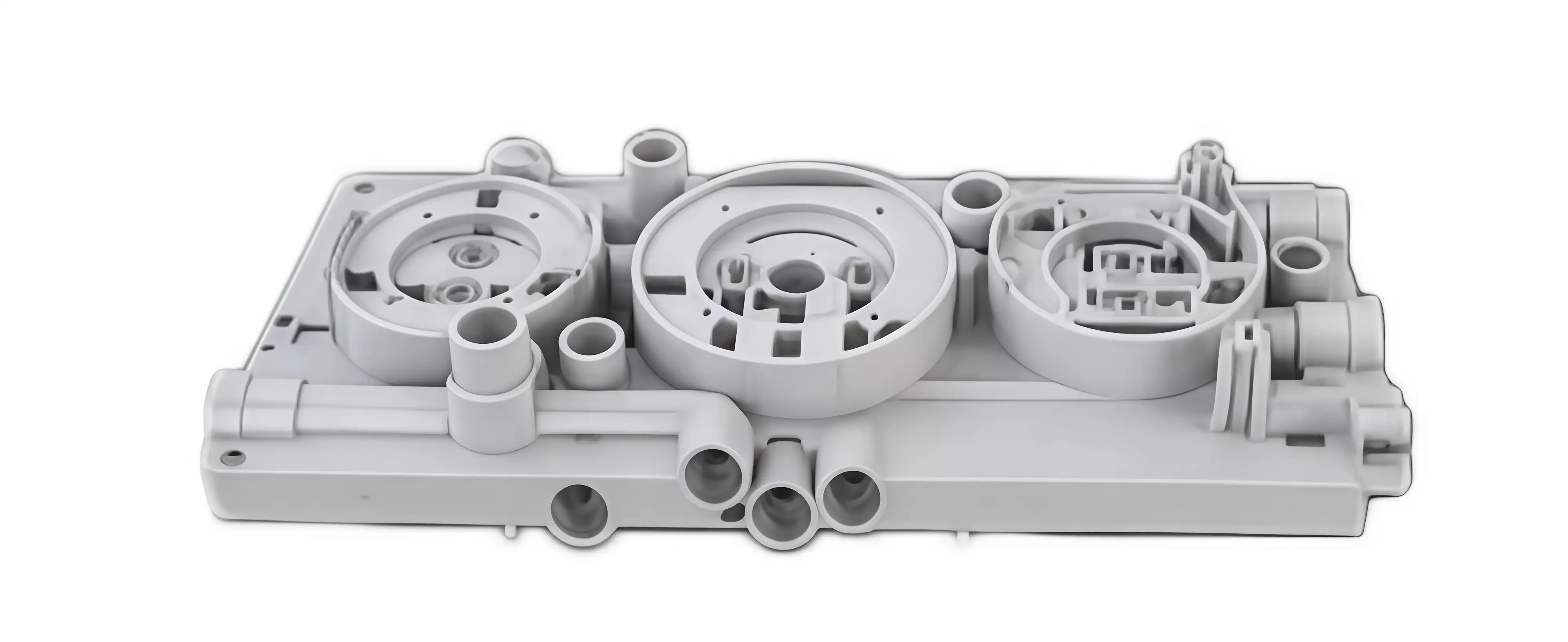
A compact tankless RO water purifier with an integrated waterway board reduces this risk by replacing many separate tubes with molded internal water channels. Fewer connectors mean fewer sealing points and fewer assembly variables.
What is leak protection in a tankless RO water purifier?
Leak protection in a tankless RO water purifier means more than adding one sensor at the bottom of the machine. A reliable design should prevent leaks before they happen, detect abnormal water quickly, stop water flow when needed, and protect the unit during unusual operation.
For B2B buyers, this matters because a product is not used in one perfect lab condition. It may be installed by different technicians, placed in different cabinets, used with different water pressure, and handled by different families. A safer design has to consider all of these conditions.
How does an integrated waterway board improve a tankless RO water purifier?
An integrated waterway board is a molded base that contains internal flow channels. Instead of using many tubes to connect every component, water flows through the internal structure of the board.
This brings three direct advantages for buyers:
- Fewer external connectors and fewer potential leak points
- More consistent assembly in mass production
- A cleaner internal layout, which helps compact product design
In a typical traditional RO design, the number of internal connectors may reach around 15 to 20. In INTOPAQUA compact tankless RO systems, the integrated waterway structure can reduce the remaining external connectors to about 5 to 6, depending on the model.
Supplier question: how many connectors does the tankless RO water purifier use?
When comparing suppliers, ask for the approximate number of internal connectors in the tankless RO water purifier. This question is simple, but it tells you a lot about the engineering level.
A supplier that only talks about appearance may not have solved the real waterway risk. A supplier that can explain the connector count, waterway board structure, sealing method, and testing process is usually more prepared for long-term B2B cooperation.
How does a leak protection board protect a tankless RO water purifier?
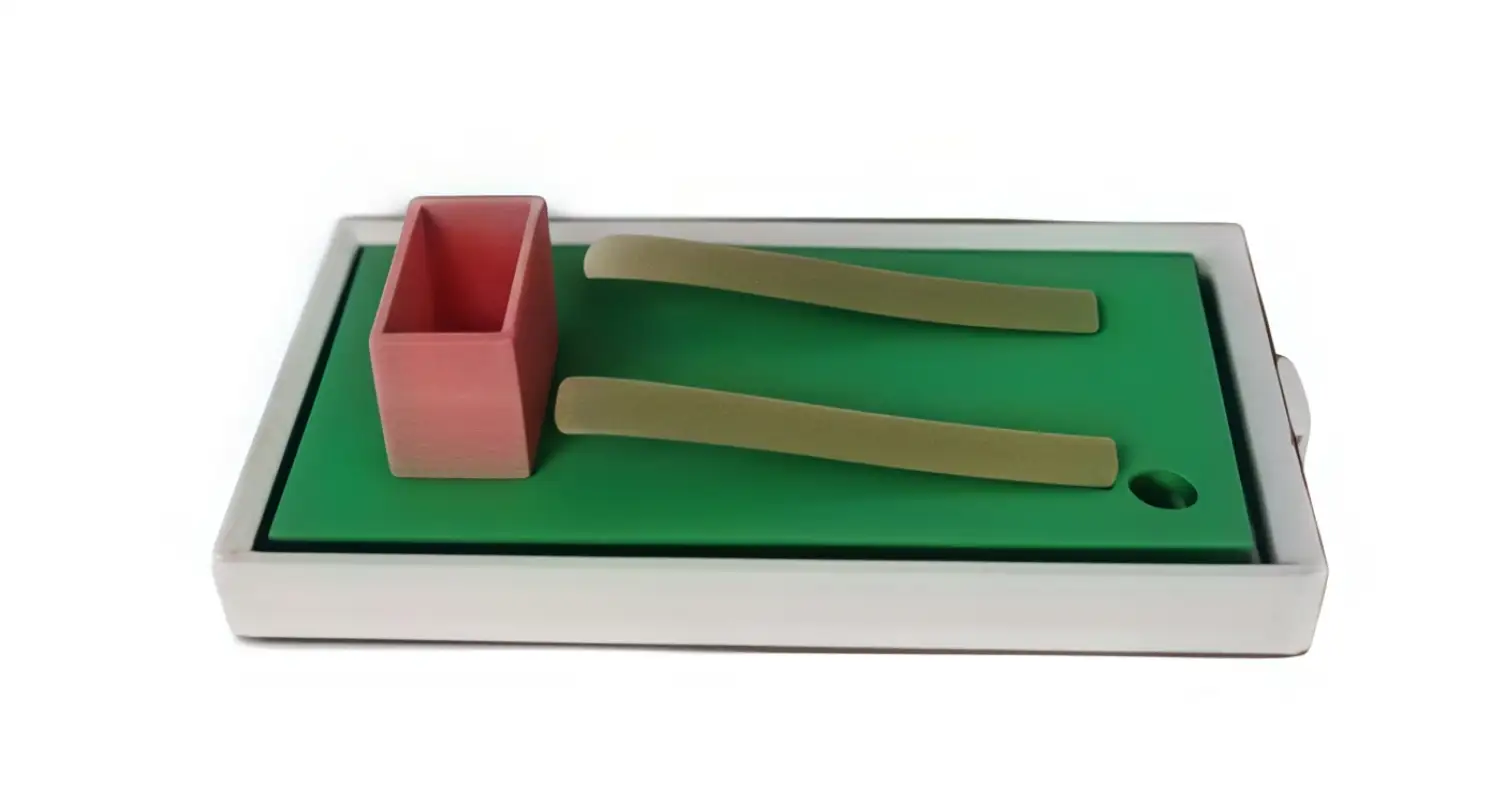
A leak protection board is usually placed at the lowest part of the unit. If water collects in the base, the sensor is triggered. The control system can then give an alarm and shut off the inlet water supply.
This is important for under-sink use. Many leaks do not appear immediately on the floor. They start inside a cabinet, behind the unit, or under the machine. By the time the user notices the problem, damage may already be serious.
Buyer question: will the tankless RO water purifier shut off when water is detected?
A professional tankless RO water purifier should not only detect water. It should also respond. For buyers, the key point is automatic inlet shutoff. A warning sound or light is useful, but shutoff is what reduces further water damage when nobody is at home.
Ask your supplier whether the leak protection board is standard, optional, or only available on high-end models. For private-label projects, making leak protection standard can improve customer trust and reduce future disputes.
Which testing process should a tankless RO water purifier supplier use?
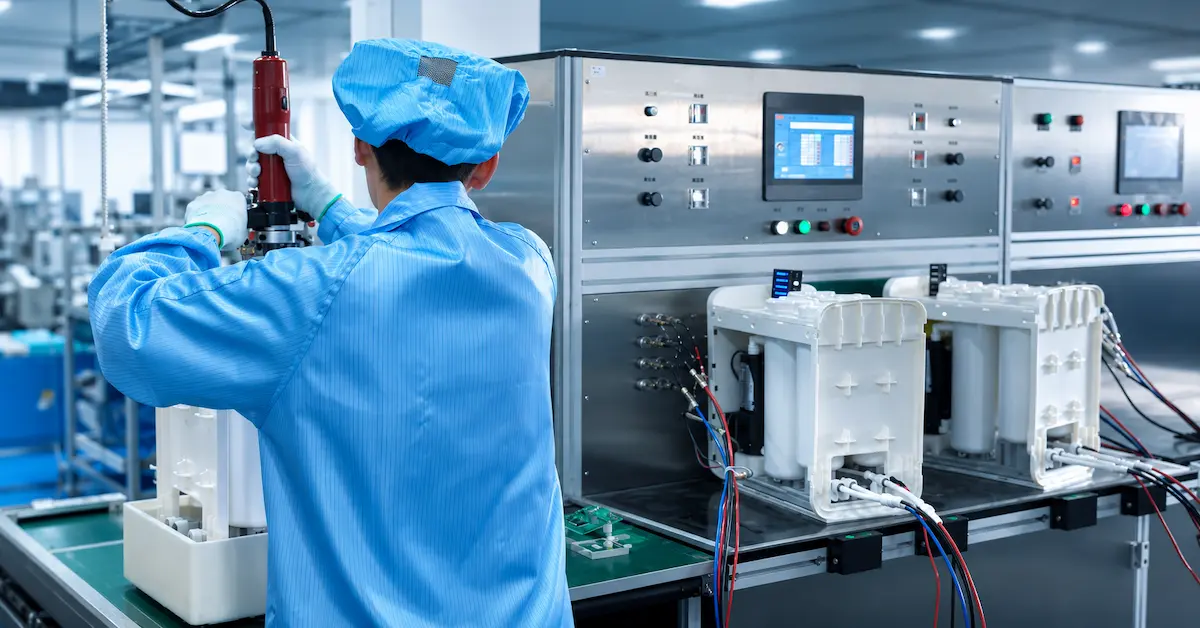
Even the best product design can fail if production testing is weak. For B2B orders, the factory process matters as much as the product structure.
A reliable tankless RO water purifier supplier should test waterway sealing before shipment. Two tests are especially important: high-pressure testing and air tightness testing.
Why should tankless RO water purifier buyers ask for high-pressure testing?
High-pressure testing checks whether the waterway structure, fittings, valves, filter housings, and sealing points can withstand pressure above normal operating conditions.
In real homes, water pressure is not always stable. Municipal pressure changes, sudden faucet closure, water hammer, and temperature changes can all stress the system. High-pressure testing helps screen out weak assemblies before they enter the market.
Buyer check: what pressure test records can the tankless RO water purifier factory provide?
For a serious order, buyers should not only ask, “Do you test it?” A better question is:
“What pressure level do you use, how long do you test, and can the test process be recorded?”
A factory that can provide clear testing conditions, inspection steps, and traceability is easier to work with when your project grows from sample order to container shipment.
Why should tankless RO water purifier buyers ask for air tightness testing?
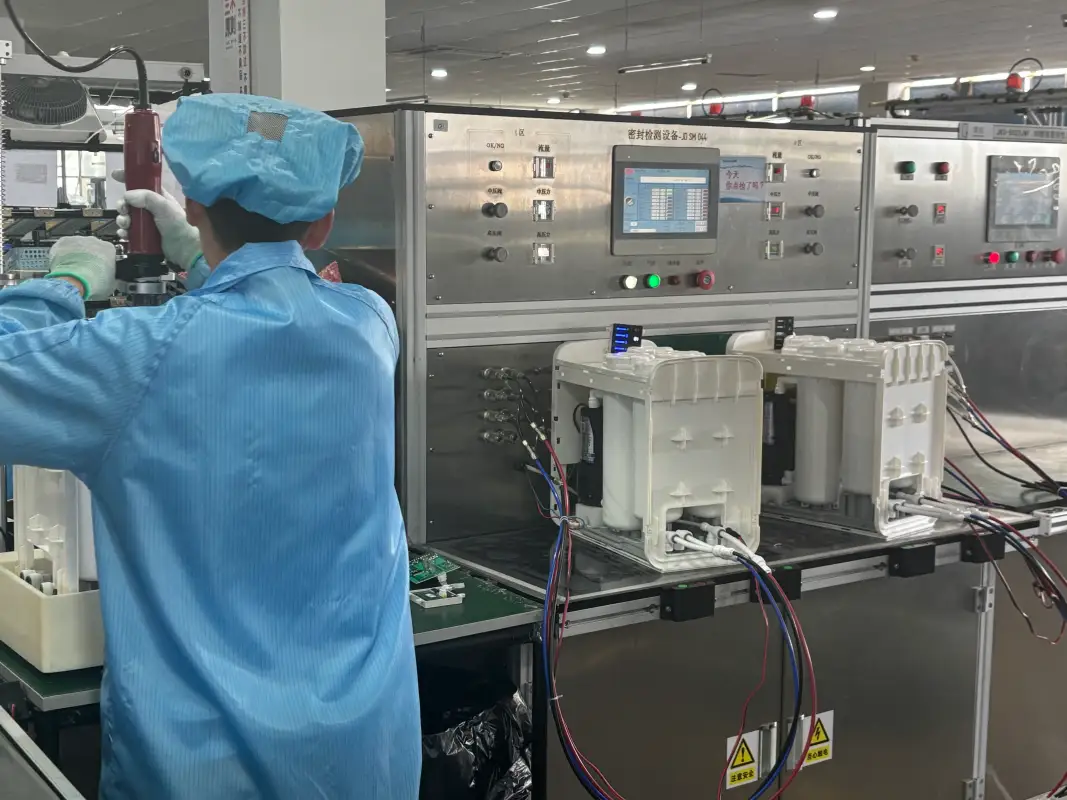
Air tightness testing is used to find tiny leakage paths that may not be visible during a quick water test. Compressed air is introduced into the system, and the test equipment monitors whether pressure drops.
Air can pass through very small gaps. That makes air tightness testing useful for detecting micro leaks, assembly defects, or weak sealing points.
Supplier question: is every tankless RO water purifier tested or only sampled?
For mass production, this question is important. Sampling can reduce risk at batch level, but it cannot replace full inspection for waterway sealing.
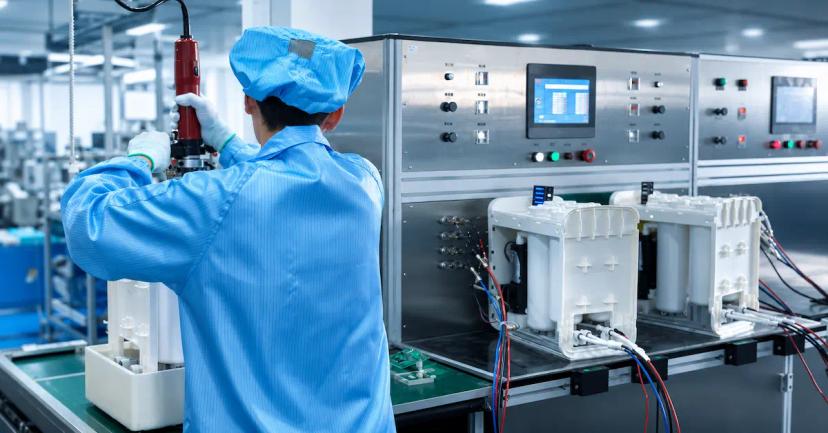
For products installed in kitchens and cabinets, every unit should be treated seriously. INTOPAQUA integrates pressure and air tightness testing into the production process so each finished unit can be screened before shipment.
How does a tankless RO water purifier prevent misuse and long running time?
Real users do not always use products exactly as engineers expect. Some users forget to turn off the faucet. Some children may leave water running. Some customers may connect the purifier to another container or hose for unusual water use.
That is why intelligent running-time protection is useful.
Why does a 30-minute shutdown matter in a tankless RO water purifier?
In normal household use, a tankless RO water purifier does not need to run continuously for a long time. Most daily drinking water use takes only a few minutes.
If the unit keeps running for 30 minutes, it may mean the faucet has been left open, the user is filling a large container, or the machine is being used in an unusual way. INTOPAQUA compact RO systems include a 30-minute automatic shutdown logic to stop operation and protect the machine.
Buyer check: what happens when the tankless RO water purifier runs too long?
Ask the supplier whether the machine has a maximum continuous running time. If yes, ask what happens after the limit is reached.
A practical system should stop operation and require the user to restart it intentionally. This helps protect the booster pump, reduce unnecessary membrane wear, save energy, and reduce the chance of water-related accidents caused by human error.
Tankless RO water purifier leak protection comparison for B2B buyers
Leak protection is easier to understand when comparing traditional design with integrated compact design.
| Comparison point | Traditional RO system | Compact tankless RO water purifier with integrated protection |
|---|---|---|
| Internal structure | Many tubes, fittings, and separate connectors | Integrated waterway board with fewer external joints |
| Leak prevention | Depends heavily on installation quality | Risk reduced from product structure |
| Leak detection | Often optional or missing | Leak protection board can detect abnormal water |
| Factory testing | May rely on batch sampling | Pressure and air tightness testing can be built into production |
| User misuse protection | Limited | 30-minute shutdown can reduce long-running risk |
| Distributor value | Higher after-sales uncertainty | Lower complaint risk and easier brand positioning |
Which tankless RO water purifier design is better: traditional tubing or integrated waterway?
For price-sensitive markets, traditional tubing systems may still be used. They can be familiar to technicians and easy to repair. However, they usually have more connectors and more assembly points.
For brand owners, online sellers, premium distributors, and OEM projects, an integrated tankless RO water purifier is often a better long-term choice. It can improve appearance, reduce internal complexity, and lower after-sales pressure.
Buyer decision: which tankless RO water purifier design lowers after-sales risk?
If your target market has strict customer expectations, high service cost, or strong review culture, choose the design with fewer leak points and clearer testing records. The cheapest unit is not always the lowest-cost unit after returns, service calls, and reputation loss are included.
How to choose a tankless RO water purifier supplier for OEM/ODM projects
A good supplier should not only sell a product. For B2B buyers, the supplier should help you reduce market risk before shipment.
When selecting a tankless RO water purifier supplier, look at product engineering, production control, customization ability, certification support, and after-sales cooperation.
What should a tankless RO water purifier supplier provide for private label buyers?
Private-label buyers need more than a product catalog. They usually need stable specifications, packaging support, logo options, sample confirmation, test reports, spare parts, and clear communication.
A qualified supplier should support:
- Appearance customization
- Logo and packaging customization
- Waterway layout discussion
- Smart display or control function options
- Sample confirmation before mass production
- Quality inspection before shipment
- Spare parts and after-sales support
Procurement check: can the tankless RO water purifier factory customize appearance and functions?
Before placing an OEM/ODM order, confirm what can be customized and what requires a new mold. Ask about sample lead time, tooling cost, minimum order quantity, packaging design, and whether functional changes affect certification or testing.
A factory-type supplier has stronger control over structure, assembly, testing, and traceability. This is especially important when you want to build a long-term product line instead of buying one mixed batch.
What certifications should tankless RO water purifier buyers confirm?
Certification requirements depend on the target market. Buyers should confirm electrical safety, water-contact material requirements, packaging label requirements, and any local compliance documents required by distributors or retailers.
Do not treat certification as a final step after production. It should be discussed before the sample stage, especially if you are customizing appearance, control logic, internal components, power supply, or packaging.
Buyer check: does the tankless RO water purifier match your target market requirements?
Before confirming a model, share your selling country, distribution channel, voltage requirement, plug type, packaging language, and expected compliance documents with the supplier. This helps avoid later delays, repeated testing, or packaging rework.
Tankless RO water purifier buying checklist for importers and distributors
A clear buying checklist can save weeks of back-and-forth communication. It also helps buyers compare different suppliers using the same standard.
| RFQ item | What to ask the tankless RO water purifier supplier | Why it matters |
|---|---|---|
| Waterway design | Does the model use an integrated waterway board? | Helps evaluate leak prevention from structure |
| Connector count | How many main waterway connectors are inside? | Fewer connectors usually means lower leak risk |
| Leak sensor | Is a leak protection board included? | Helps reduce damage after abnormal water detection |
| Auto shutoff | Does the inlet water stop after leak detection? | Important for homes when users are away |
| Pressure test | Is each unit pressure tested before shipment? | Verifies sealing under stress |
| Air tightness test | Is every unit checked for micro leaks? | Finds small leaks before shipment |
| Long-running protection | Does the unit stop after continuous operation? | Helps prevent misuse-related problems |
| OEM/ODM | What appearance, logo, and function options are available? | Supports brand differentiation |
| MOQ | What is the sample MOQ and mass order MOQ? | Helps plan purchasing budget |
| Lead time | What is the sample and production lead time? | Helps manage launch schedule |
| After-sales | Are spare parts and technical support available? | Reduces distributor service burden |
What questions should buyers ask before ordering a tankless RO water purifier?
Before ordering, buyers should ask practical questions, not only price questions.
Good questions include:
- How is the internal waterway designed?
- How many connectors are used?
- Is leak protection standard?
- What happens when the leak sensor is triggered?
- Is every unit tested before shipment?
- Can you provide inspection records?
- What parts are easy to replace?
- What OEM/ODM options are realistic for my order quantity?
- What documents are available for my market?
- What after-sales support do you provide for distributors?
RFQ checklist: what details should buyers send to a tankless RO water purifier supplier?
To get a useful quotation, send the supplier your target market, expected annual quantity, preferred flow rate, voltage, plug type, packaging language, logo requirement, certification requirement, sample deadline, and target price range.
The more complete your RFQ is, the easier it is for the supplier to recommend the right model instead of giving a general price list.
Tankless RO water purifier FAQ for buyers
1. What is the main advantage of a tankless RO water purifier?
A tankless RO water purifier saves space, avoids a bulky storage tank, and can provide a cleaner modern installation for household kitchens and compact under-sink areas.
2. Why does leak protection matter when buying a tankless RO water purifier?
Leak protection matters because the unit is often installed under the sink or inside a cabinet. A small leak may not be noticed quickly and can lead to after-sales complaints or property damage.
3. Is an integrated waterway board better for a tankless RO water purifier?
For many B2B projects, yes. An integrated waterway board reduces separate tubes and connectors, which helps lower leakage risk and improves production consistency.
4. Does a tankless RO water purifier still need a leak protection board?
Yes. The integrated waterway board helps prevent leaks, while the leak protection board detects abnormal water and triggers a protective response.
5. What should happen when a tankless RO water purifier detects leakage?
The system should alert the user and shut off the inlet water supply. Shutoff is more important than alarm alone because it reduces further water damage.
6. Why should buyers ask about pressure testing for a tankless RO water purifier?
Pressure testing helps confirm whether the waterway structure and sealing points can withstand conditions above normal use before the unit leaves the factory.
7. Why is air tightness testing useful for a tankless RO water purifier?
Air tightness testing can detect tiny gaps that may not be found in a quick visual inspection. It is helpful for improving sealing reliability in mass production.
8. Is a 30-minute automatic shutdown necessary for a tankless RO water purifier?
It is a practical safety feature. If the unit runs unusually long, shutdown can protect the pump, reduce membrane wear, and lower misuse-related risk.
9. What should importers check before choosing a tankless RO water purifier supplier?
Importers should check waterway design, leak protection logic, testing process, OEM/ODM support, production capacity, spare parts, and target-market documents.
10. Can a tankless RO water purifier be customized for private label brands?
Yes. Depending on order quantity and project needs, appearance, logo, packaging, smart functions, and selected components can often be customized.
11. What causes leakage in a poor-quality tankless RO water purifier?
Common causes include too many connectors, weak O-rings, poor assembly, unstable fittings, improper filter installation, or lack of proper testing before shipment.
12. How can distributors reduce after-sales complaints for a tankless RO water purifier?
Choose a supplier with integrated waterway design, leak detection, automatic shutoff, full testing, traceable inspection records, and stable spare parts support.

Where to buy a tankless RO water purifier with OEM leak protection support
Choosing a tankless RO water purifier is not only about flow rate, price, or product appearance. For B2B buyers, the safer decision is to choose a supplier that understands leakage risk from engineering, production, and user behavior.
INTOPAQUA compact tankless RO systems use four layers of protection: integrated waterway structure, leak detection board, pressure and air tightness testing, and 30-minute automatic shutdown. This approach helps distributors, installers, and brand owners reduce after-sales pressure and build stronger customer confidence.
If you are looking for a tankless RO water purifier supplier for wholesale, OEM, ODM, or private-label projects, INTOPAQUA can provide product selection support, sample discussion, customization options, and technical advice based on your target market and purchasing plan.