

The Unseen Backbone: Why the Pressure Tank Defines Your System's Success
Before examining a specific solution, it's crucial to understand the operational burden placed on a pressure tank. It is a vessel in constant dynamic stress, enduring relentless cycles of pressurization and depressurization. It interfaces directly with treated water, making material inertness non-negotiable. It must resist environmental corrosion, microbial influence, and physical impact, all while maintaining dimensional stability over a decades-long service life. A failure here is not a simple leak; it is a catastrophic system shutdown, potential water quality compromise, and significant financial liability. Therefore, the selection criteria must shift from price-point to performance-profile.
INTOPAQUA enters this demanding landscape with a clear ethos: "Where Purity Flows." This is not a slogan but a systems engineering principle, evident in every layer of their product architecture, from the molecular structure of the liner to the macroscopic verification of its burst strength.
Deconstructing Durability: A Multi-Layer Material & Engineering Analysis
The strength of an INTOPAQUA tank is not monolithic; it is a synergistic result of purpose-engineered layers.
1. The Inner Sanctum: High-Density Polyethylene (HDPE) Liner
The liner is the critical barrier between the stored medium and the structural shell. INTOPAQUA utilizes HDPE, and the choice is a deliberate rejection of inferior alternatives like LDPE.
-
Tensile Strength Differential: HDPE offers a tensile strength of approximately 4550 PSI, compared to LDPE's 1700 PSI. This quantifiable difference translates directly to superior resistance to deformation under cyclic pressure, reducing fatigue and extending service life.
-
Dimensional Rigidity: With overall length controlled to a +/- 3mm tolerance, the liner ensures perfect, predictable integration within the FRP shell, eliminating stress points caused by poor fit.
-
Barrier Properties: Its low moisture absorption prevents hydrolysis and maintains integrity. The option for opaque, sunlight-blocking liners (beyond standard Natural, Black, or Blue) is a strategic solution for hot, humid climates, proactively inhibiting algae and biofilm formation—a common failure mode in clear or translucent tanks.
2. The Structural Dynamo: Fiber-Reinforced Plastic (FRP) Shell
This is where the "reinforced" in FRP proves its worth. The shell is a composite matrix where high-strength glass fibers are embedded in a resin system via complete seamless molding technology.
-
Weight-to-Strength Ratio: Weighing only one-third of an equivalent steel tank, the FRP shell revolutionizes logistics and installation. Handling costs plummet, and structural support requirements are simplified.
-
Corrosion Immunity: Unlike steel, which requires cathodic protection and coatings, FRP is intrinsically 100% rustproof and resistant to a wide spectrum of chemical corrosives, making it ideal for demanding environments.
-
Seamless Integrity: The seamless molding process is a key differentiator. It eradicates the weak points and potential leak paths inherent in welded or seamed constructions, whether metal or plastic.
3. The High-Performance Interface: Glass-Filled Polypropylene Threads
Ports and connections are typical failure points. INTOPAQUA reinforces these with glass-filled polypropylene.
-
Chemical & Thermal Resilience: This material maintains high strength and chemical resistance at elevated temperatures (150-200°F melting point), ensuring connections remain secure and leak-free even under thermal cycling or aggressive fluid contact.
-
Abrasion Resistance & Dimensional Control: It withstands the mechanical wear of repeated installation and servicing, and precise molding guarantees a perfect seal with industry-standard fittings.
The Proof is in the Protocol: Testing Standards That Redefine Reliability
Certifications like NSF 44 for residential water treatment units are a baseline. INTOPAQUA's internal validation standards are engineered to operate far beyond this baseline, providing a substantial safety and longevity margin.
| Performance Test | NSF 44 Standard (Baseline) | INTOPAQUA Standard (Performance) | Engineering Implication |
|---|---|---|---|
| Pressure Cycle Test | 100,000 cycles (0-150 PSI) | 250,000 cycles (0-150 PSI) | 2.5x the lifespan under operational fatigue stress. Directly correlates to longer warranty periods and lower lifetime replacement costs. |
| Burst Pressure Test | Not explicitly defined in NSF 44 for this margin. | 600 PSI (4x Max Operating Pressure) | A massive safety factor of 4.0. Provides critical protection against system malfunctions like pump failure or valve closure, preventing catastrophic incidents. |
| Pressure-Temperature Test | Not covered by NSF 44. | Performance standard 2x higher than typical manufacturers. | Validates performance in extreme environments where temperature fluctuations affect material properties and pressure dynamics—a real-world condition often overlooked. |
The Bottom Line for B2B Buyers: Specifying a tank that meets the INTOPAQUA standard is an exercise in risk mitigation and lifecycle cost reduction. You are not buying a component rated to just survive its warranty period; you are investing in an asset designed to reliably outlast the system around it.
System Integration Flexibility: A Platform, Not Just a Product
A superior tank is useless if it cannot be seamlessly integrated. INTOPAQUA’s product philosophy embraces configurability.
-
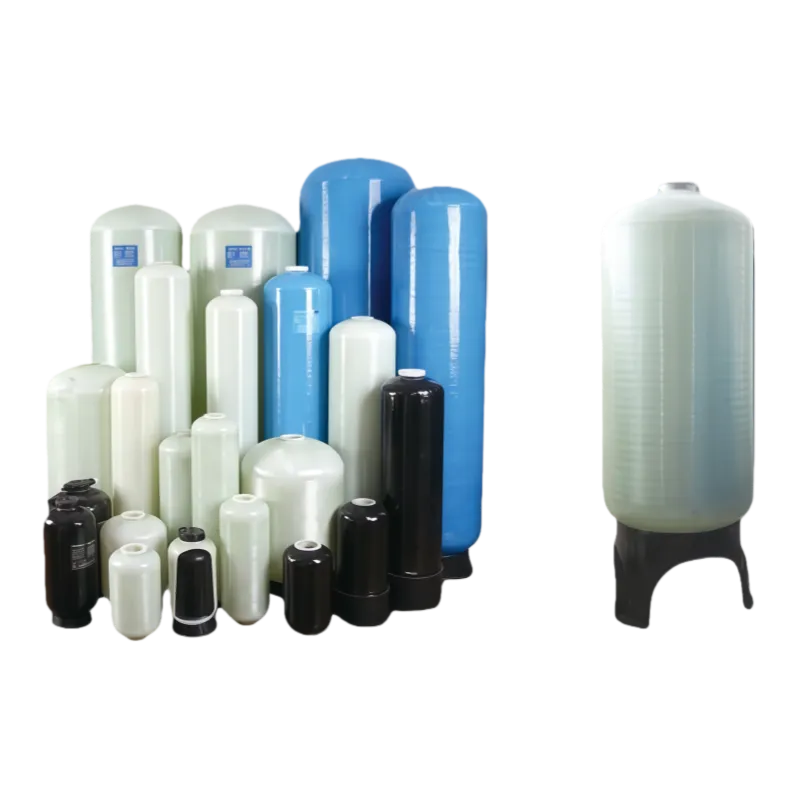
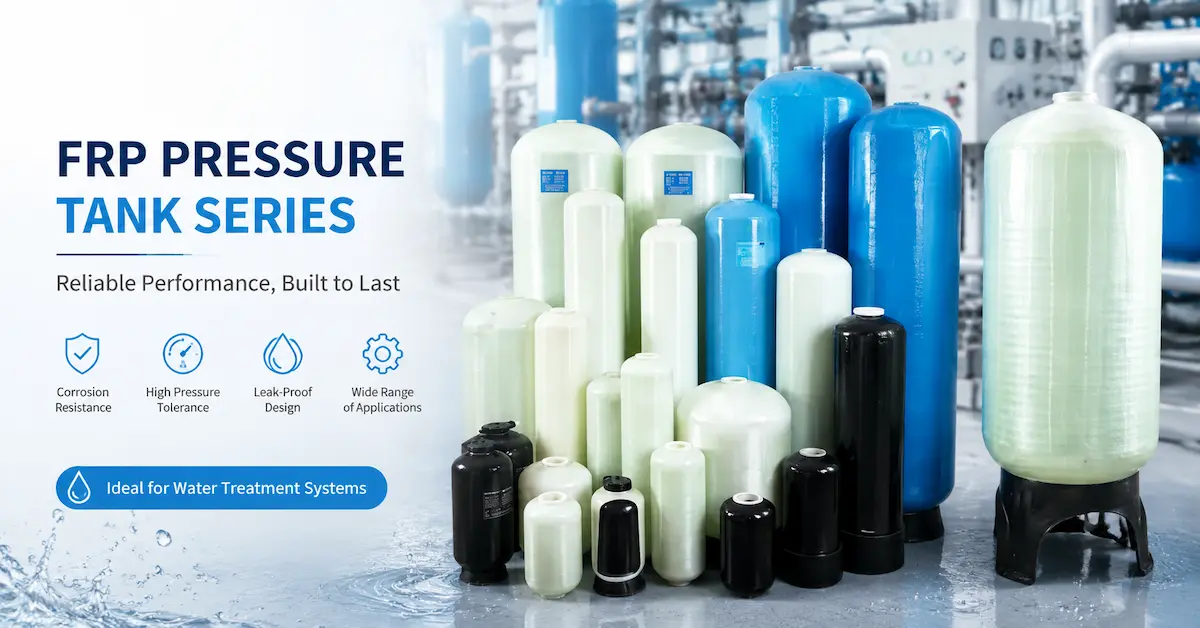
Comprehensive Sizing: With diameters from 5" to 63" and heights from 13" to 86", the range covers everything from under-sink residential units to large-scale commercial or light industrial arrays.
-
Flow Path Options: Availability of both top and bottom opening types provides hydraulic design flexibility for system engineers to optimize piping layouts and reduce head loss.
-
Modular Jacketing System: The extensive range of jackets—Round (Plastic/Stainless Steel), Square, Polygon—serves multiple purposes: protective armor against physical impact, UV stabilization for outdoor installations, and a clean, professional aesthetic for client-facing equipment rooms. Matching caps and covers complete a protected, finished assembly.
Operational Parameters & Specifications at a Glance
-
Max Operating Pressure: 150 PSI (10.5 Bar)
-
Operating Temperature Range: 34°F to 122°F (1°C to 50°C)
-
Minimum Ambient Temperature: -22°F (-30°C)
-
Max Vacuum Rating: 140 mm Hg
-
Key Certifications: NSF 44 (Structural & Material), NSF/ACS (UK Water Regulations), KTW, W270 (European Material Suitability), REACH (EU Chemical Compliance).
Conclusion: Specifying for the Long Term in a World of Short-Term Solutions
The water treatment industry is rife with commoditized components where competition focuses primarily on upfront cost. INTOPAQUA’s FRP pressure tank systems represent a deliberate pivot back to engineering-led value.
For the B2B decision-maker—whether an OEM assembling branded systems, an engineering firm designing a municipal project, or a facility manager overseeing a critical process water system—the calculus is clear. The incremental investment in a tank built to these standards pays dividends in:
-
Reduced Downtime: Fewer failures mean higher system availability.
-
Lower Maintenance Costs: Corrosion-proof, fatigue-resistant designs minimize inspection and replacement cycles.
-
Risk Mitigation: Superior safety factors and certifications protect against liability.
-
System Integrity: Guaranteed material purity ensures the tank never becomes the contaminant source in a purification chain.
In specifying an INTOPAQUA tank, you are not just purchasing a container; you are anchoring your fluid system with a component engineered to ensure that purity, indeed, flows without compromise.