

Introduction: The Overlooked Cornerstone of Dental Care – Water
In dental clinics, much attention is rightly paid to advanced chairs, high-precision scanners, and durable instruments. Yet, one crucial "consumable" is often overlooked: water. From the cooling spray and mouthwash of dental units to the water used in sterilizers, water is integral to every procedure. The quality of water directly impacts infection control standards, the operational lifespan of equipment, and ultimately, treatment outcomes. The Reverse Osmosis (RO) water purification system stands as an indispensable technological cornerstone, guarding this vital "lifeline."
Part 1: Why Dental Clinics Need Professional Water Purification: Challenges and Risks
While municipal tap water may appear clear, it harbors multiple risks for dental care:
-
Microbiological Contamination Risk: Bacteria and viruses (e.g., Legionella) from water lines can be aerosolized through sprayers, potentially inhaled by patients or causing wound infections, leading to cross-contamination.
-
Chemical Damage: Chlorine, heavy metals, and other substances in water can irritate the patient's oral cavity, affect the curing of materials (like adhesives), and contribute to instrument corrosion.
-
Physical Clogging and Scaling: Calcium and magnesium ions (i.e., scale) and suspended particles in water can gradually clog the extremely fine internal tubing and pathways of dental equipment. This not only causes malfunctions and poor water flow but also severely compromises the efficacy of sterilizers, as scale can encase microorganisms, allowing them to survive the sterilization process.
Traditional solutions, like purchasing bottled distilled water or using water distillers, come with drawbacks: high cost, slow production speed, risk of secondary contamination during storage, and inability to supply multiple devices simultaneously. Therefore, a central purification system capable of consistently and reliably producing high-purity water is essential.
Part 2: Reverse Osmosis Technology – The "Gold Standard" for Dental Water Purification
Among various water treatment technologies, Reverse Osmosis is widely recognized as the "gold standard" for dental clinic water.
-
Core Principle: The RO membrane is the heart of the system, with pores as small as 0.0001 microns (approximately one-millionth the width of a human hair). Driven by water pressure, water molecules pass through the membrane, while the vast majority of contaminants—including bacteria, viruses, heavy metal ions, and dissolved solids—are effectively rejected and flushed away with wastewater.
-
Output Standard: Water processed by a RO system is of extremely high purity, virtually free of ions and microorganisms, achieving a "sterile pure water" grade that fully meets the stringent requirements for dental treatment water.
Part 3: Specific Applications of RO Systems in Dental Clinics
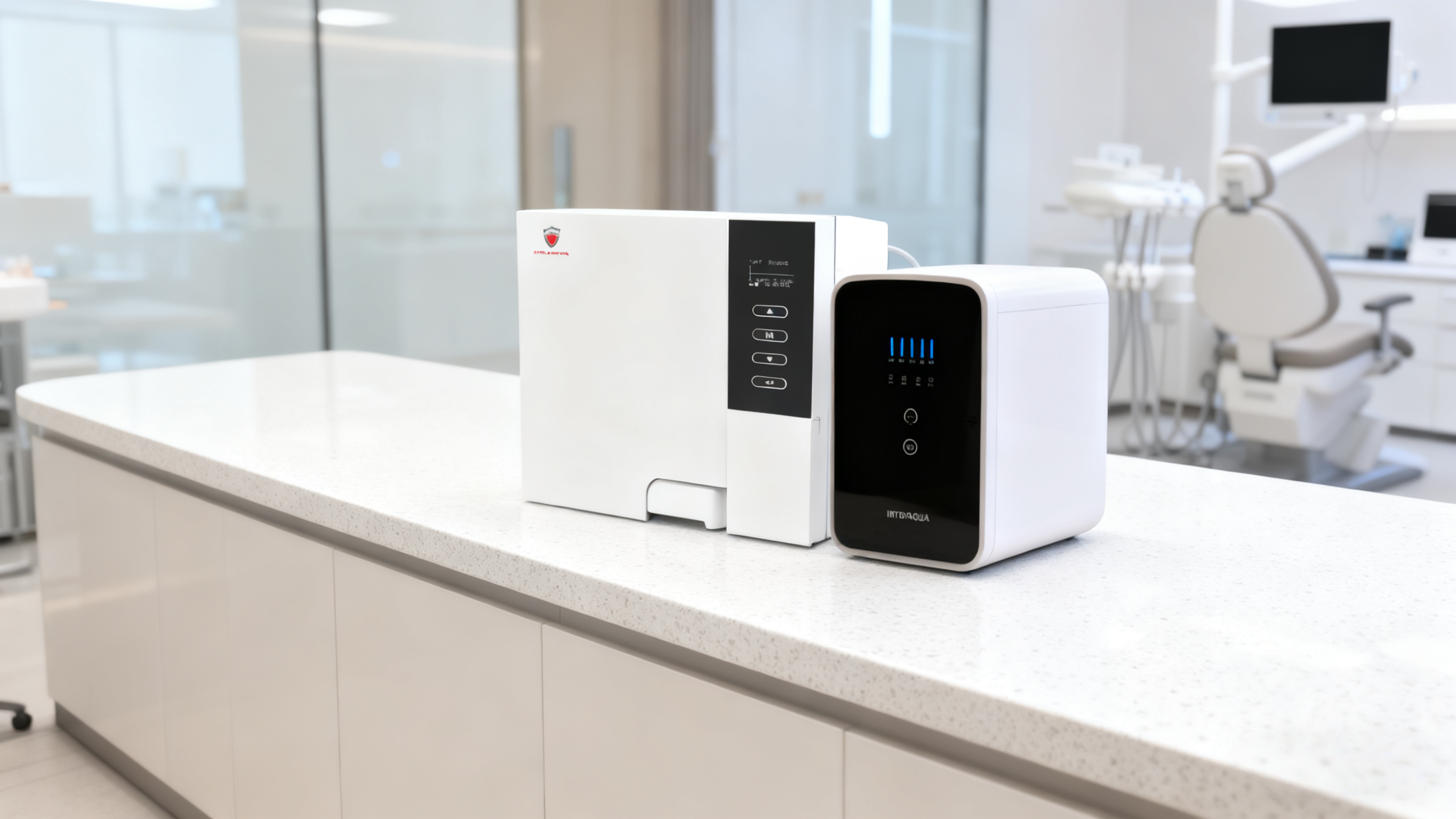
A central RO system can act as the "pure water heart" of the entire clinic, supplying the following critical areas:
-
Dental Units: Provides cooling and rinse water for triple syringes and high-/low-speed handpieces. A pure water source prevents patient contact with contaminated water and avoids scale clogging the handpieces' intricate internal waterways.
-
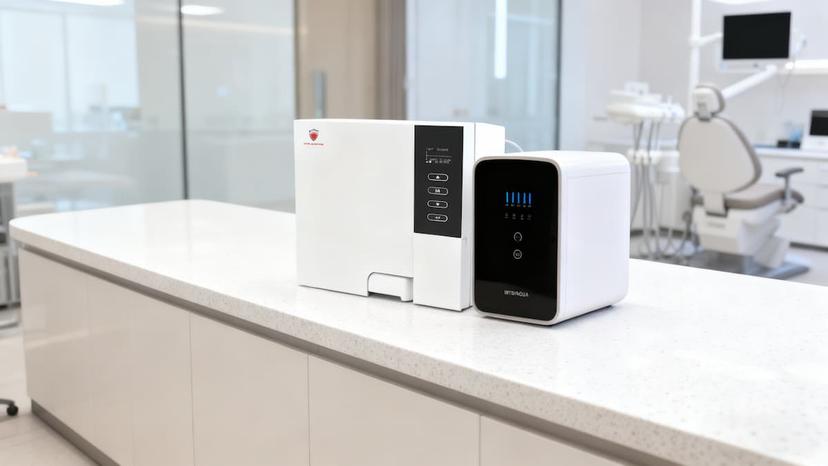
Autoclaves (Steam Sterilizers): Autoclaves require pure water to operate. This prevents scale from depositing on the chamber walls and heating elements. Scale drastically reduces thermal efficiency, leading to sterilization failure and significantly shortening the sterilizer's lifespan.
-
Ultrasonic Cleaners: Using pure water for instrument cleaning prevents water spots and mineral residue, ensuring instruments are spotless and dry, maintaining their optimal condition.
-
Rinse Area: Provides patients with fresh-tasting, safe water for rinsing, enhancing their experience.
Part 4: Six Core Advantages of Investing in a Reverse Osmosis System
Introducing a professional RO system into a dental clinic yields returns that far exceed its initial cost.
-
Enhances Infection Control and Ensures Safety
This is the paramount advantage. The RO system eliminates the risk of pathogen transmission via the water source at its origin, significantly reducing the infection risk during procedures and building a robust safety barrier for both staff and patients. -
Protects Expensive Dental Equipment, Reduces Repair Costs
Pure water, free from scale and particulate matter, effectively prevents clogged pipelines, valve failures, and reduced efficiency of heating elements in expensive chairs and sterilizers. This translates directly into lower equipment failure rates, fewer repair bills, and extended equipment lifespans. -
Improves Treatment Efficiency and Workflow
Modern high-flow RO systems (e.g., 400G, 600G models) can supply multiple devices simultaneously with stable, ample water flow. Dentists can perform continuous treatments without waiting for water production, ensuring seamless procedures and increasing daily patient capacity. -
Achieves Operational Cost Savings
Compared to the long-term recurring cost of purchasing bottled distilled water, an RO system is a capital investment with long-term returns. Once installed, the cost of produced water is minimal. It eliminates the hassle and ongoing expense of ordering, handling, and storing bottled water. -
Intelligent Management for Easy, Worry-Free Operation
New-generation RO systems integrate smart features:-
Filter Life Reminder: Clearly displays filter status, avoiding guesswork and enabling better planning.
-
Automatic Flushing: Periodically cleans the RO membrane automatically, maintaining high performance and extending its life.
-
Leakage Alarm: Monitors in real-time and provides early warnings to prevent water damage.
These features make daily maintenance straightforward and intuitive, reducing the management burden on nurses or assistants.
-
-
Enhances Clinic's Professional Image and Patient Trust
Owning and informing patients about the use of a professional water purification system demonstrates attention to detail and a commitment to high-quality care. This meticulous focus on safety significantly boosts patient trust and loyalty.
Part 5: How to Choose the Right RO System for Your Clinic?
Consider these key factors when selecting a system:
-
Flow Rate & Capacity: Calculate total water demand based on the number of chairs and daily patient volume. Choose a model with adequate flow rate (e.g., 400G/600G) to ensure uninterrupted supply during peak hours.
-
Filtration Stages: Ensure the system includes comprehensive pre-filtration (sediment filter, carbon block) and the core RO membrane to guarantee final water quality and RO membrane longevity.
-
Smart Features: Prioritize models with filter reminders, auto-flush, and leakage alarms for "worry-free" operation.
-
Brand & Service: Select a brand specializing in this field, capable of providing reliable installation, after-sales support, and technical service.
Conclusion: A Strategic Shift from "Cost" to "Investment"
Viewing a Reverse Osmosis water purification system as essential medical equipment, rather than a mere expense, is a strategic decision for the modern dental practice manager. It is more than just a water producer; it is a guardian of the safety system, a protector of equipment assets, and a booster of operational efficiency. In an environment increasingly focused on healthcare quality and safety, investing in a reliable RO system lays the most solid foundation for your clinic's long-term stability and excellence reputation.